Will Your Vehicle Run Fine Without Catalytic Converters
Will your vehicle run fine without catalytic converters? The short answer is yes — your engine will still fire up and drive. But removing these essential parts comes with serious risks to performance, legality, and your wallet. This guide breaks down exactly what happens when you cut off catalytic converters and why most experts say you should think twice.
You have probably heard the debate about catalytic converters more than once. Maybe a friend told you their truck runs better after they cut one off. Or perhaps you saw a video online showing a car roaring down the street with a loud, raw exhaust sound. The question keeps coming up: will your vehicle run fine without catalytic converters?
The truth is not as simple as a yes or no. Your car will technically keep running. The engine does not need the catalytic converter to ignite fuel or spin the wheels. However, running without one opens up a whole can of worms. You face legal trouble, sensor problems, bad smells, and even potential engine damage over time. Let us walk through everything you need to know before you make any decisions about your exhaust system.
Key Takeaways
- Your vehicle will run: The engine can operate without a catalytic converter, but you will notice changes in how it feels and sounds.
- Performance changes occur: You may see a slight horsepower gain, but fuel efficiency often drops and the exhaust smell gets worse.
- It is illegal in most places: Removing catalytic converters violates emissions laws in the United States and many other countries.
- Check engine light will appear: Without the converter, oxygen sensors read incorrectly, triggering warning lights and error codes.
- Replacement costs vary: A new catalytic converter can cost several hundred to over a thousand dollars depending on your vehicle.
- Environmental harm is real: These devices reduce harmful exhaust fumes that contribute to air pollution and health problems.
📑 Table of Contents
- What Does a Catalytic Converter Actually Do?
- Will Your Vehicle Run Without a Catalytic Converter?
- Performance Changes After Removing Catalytic Converters
- The Legal Risks of Cutting Off Catalytic Converters
- Signs Your Catalytic Converter Is Failing
- Should You Remove or Replace Your Catalytic Converter?
- Key Takeaways
- Conclusion
What Does a Catalytic Converter Actually Do?
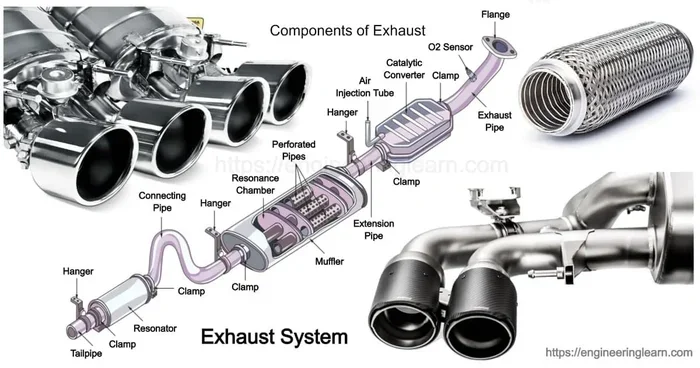
Before we answer whether your car runs fine without one, it helps to understand what this part does. A catalytic converter sits in your exhaust system between the engine and the tailpipe. Its main job is to clean up the harmful gases your engine produces during combustion.
Here is how it works in simple terms. Hot exhaust fumes flow through the converter. Inside, there are precious metals like platinum, palladium, and rhodium. These metals trigger chemical reactions that turn dangerous gases into less harmful ones. Carbon monoxide becomes carbon dioxide. Nitrogen oxides break down into nitrogen and oxygen. Unburned hydrocarbons get converted into water vapor and carbon dioxide.
Without this process, your vehicle pumps out much dirtier exhaust fumes. These pollutants contribute to smog, acid rain, and serious health problems like respiratory disease. So while the converter adds some backpressure to your exhaust flow, it plays a vital role in pollution control and keeping the air clean.
Will Your Vehicle Run Without a Catalytic Converter?
Let us get straight to the point. Yes, your vehicle will run without a catalytic converter. The combustion process happens inside the engine. The catalytic converter is part of the exhaust system, not the engine itself. If you remove it, exhaust gases still exit through the pipes. The engine still fires. The wheels still turn.
But here is the catch. Running without a converter changes how your entire vehicle behaves. Many car owners who remove their converters report a few common things. The engine sounds louder and more aggressive. There is a slight improvement in throttle response at high RPMs. But the exhaust smell becomes much stronger and more unpleasant. You may also notice your check engine light comes on almost immediately.
So technically, your car drives. But “running fine” means different things to different people. If running fine means no warning lights, legal registration, and clean exhaust, then no — your vehicle will not run fine at all.
What Happens to the Exhaust Flow?
When you remove the catalytic converter, you create less restriction in the exhaust path. This is often called an exhaust delete or muffler delete in street talk. With less backpressure, exhaust gases leave the engine faster. Some drivers notice a small bump in horsepower, usually around 5 to 10 HP. The effect is more noticeable on older vehicles with restrictive stock converters.
However, modern cars are designed with the converter in mind. Engineers tune the entire exhaust system as one unit. Removing the converter disrupts this balance. You might gain a little power at the top end, but you could lose torque in the low range. The overall driving experience often feels worse, not better.
Performance Changes After Removing Catalytic Converters
Many people ask about performance gains after cutting off their catalytic converters. Let us look at what actually changes when this part goes missing.
Horsepower: You might see a small increase, especially on older models. But on modern engines with computer controls, the gain is often negligible. The engine control unit, or ECU, adjusts the air-fuel mixture based on sensor readings. Without proper readings from the oxygen sensors near the converter, the ECU cannot optimize performance.
Fuel Efficiency: Here is where things get interesting. Most drivers actually see worse gas mileage after removing their converters. Why? Because the oxygen sensors give incorrect data to the ECU. The engine runs rich, meaning it burns more fuel than it needs. Over time, this costs you more money at the pump.
Exhaust Sound: This is the one change almost everyone notices. The exhaust becomes significantly louder and deeper. Some people love the aggressive tone. Others find it annoying and embarrassing. Keep in mind that a loud exhaust does not equal more power. It just equals more noise.
Exhaust Fumes: The smell is something nobody talks about enough. Without the converter doing its job, your exhaust releases much higher levels of carbon monoxide and other harmful gases. If you have any leaks in the exhaust system, these fumes can enter the cabin. That is a serious health risk.
Quick Tip: Track Your Fuel Economy
If you are thinking about removing your catalytic converter, use a fuel tracking app for a few weeks first. Then compare your numbers after the removal. Most drivers are surprised to see their mileage drop. The small performance gain does not outweigh the extra fuel cost over time.
The Legal Risks of Cutting Off Catalytic Converters
This is where things get serious. In the United States, removing a catalytic converter is illegal under federal law. The Clean Air Act makes it a violation to disconnect, remove, or tamper with any emissions control device. This applies to both on-road and off-road vehicles in most states.
Here is what you need to know about the legal side.
- Federal Law: The EPA enforces emissions standards nationwide. Fines for removing a catalytic converter can reach up to $2,500 per violation.
- State Laws: Many states have their own strict emissions testing programs. California, for example, has some of the toughest rules in the country. Vehicles must pass a smog check, and a missing converter will cause an automatic fail.
- Inspection Failures: Most states require annual or biennial emissions inspections. A vehicle without a catalytic converter will not pass. You could lose registration and face fines every time you renew.
- Dealership and Warranty Issues: If your vehicle is still under warranty, removing the converter voids emissions-related warranty coverage. Any damage caused by the removal becomes your problem.
Some people try to get around the law by claiming they are going off-road only. While enforcement is harder on private land, you still cannot legally register or title a vehicle that has been modified to remove emissions equipment. If you sell the vehicle later, you must disclose the modification, which dramatically lowers resale value.
Common Mistakes People Make
One of the biggest mistakes is assuming that because a shop will do the work, it must be legal. Not all shops follow the law. Some will happily cut off your converter and sell you a straight pipe. But the legal responsibility falls on you, the vehicle owner. If you get caught, the fine and consequences are yours to deal with.
Another mistake is not understanding that modern vehicles have multiple oxygen sensors. Even if you replace the converter with a straight pipe, the ECU will still detect the change. Most vehicles from 1996 onward use OBD-II systems that will flag the missing converter as a fault code. You cannot simply unplug the sensors without dealing with the check engine light and error codes.
Signs Your Catalytic Converter Is Failing
Sometimes the question of removing a converter comes up because the original one is going bad. A failing converter can cause a range of problems. Before you think about cutting it off, learn to recognize the warning signs.
Check Engine Light: This is the most common sign. A failing converter triggers OBD codes like P0420 or P0430, which indicate catalyst system efficiency is below threshold. Use an OBD scanner to read the codes and confirm the issue.
Rotten Egg Smell: A healthy converter converts hydrogen sulfide into odorless sulfur dioxide. When the converter fails, you get a strong rotten egg smell from the exhaust. This is one of the most noticeable signs.
Reduced Engine Performance: A clogged converter restricts exhaust flow. You may feel sluggish acceleration, especially under heavy load. The engine might feel like it is struggling to breathe.
Dark Exhaust Smoke: Black or dark smoke from the tailpipe can indicate the converter is not processing exhaust gases properly. This often points to an overly rich fuel mixture that has damaged the converter over time.
Rattling Noise: Inside the converter, there is a honeycomb structure. When it breaks apart, you will hear a rattling sound, especially when starting the engine or idling. This means the converter needs replacement.
When Replacement Makes More Sense Than Removal
If your converter is failing, replacing it is almost always the better choice. Yes, a new converter can be expensive. The catalytic converter replacement cost ranges from $300 to over $2,500 depending on your vehicle make and model. But the alternative — driving without one — brings legal problems, poor fuel economy, and potential engine damage.
Before spending money on a new converter, have a mechanic diagnose the root cause. Sometimes a converter fails because of an underlying issue like a misfiring spark plug or a leaking fuel injector. Fixing those problems first can prevent a new converter from failing too.
Should You Remove or Replace Your Catalytic Converter?
This is the big decision, and it comes down to a few key factors. Let us walk through the options so you can make an informed choice.
Choose Replacement If: Your vehicle needs to pass emissions testing. You want to keep your warranty intact. You care about fuel efficiency. You drive the vehicle on public roads regularly. You want to avoid legal trouble and fines.
Consider Removal Only If: The vehicle is off-road only and never registered for street use. You have explored all other options and the converter replacement cost is truly prohibitive. You fully accept the legal and performance trade-offs. You understand the risks and are willing to deal with the consequences.
For most everyday drivers, the answer is clear. Keep the converter and replace it if needed. The small cost of a new part saves you from headaches, fines, and safety risks down the road.
Expert Insight: What Mechanics Say
Most experienced mechanics will tell you the same thing. Removing a catalytic converter is a shortcut that creates more problems than it solves. Yes, the part can be expensive. Yes, it can fail over time. But the exhaust system was engineered as a complete unit. Every component — from the exhaust manifold to the tailpipe — works together. When you remove one piece, the whole system suffers.
Mechanics also point out that modern converters are much more durable than older ones. A well-maintained converter can last 100,000 miles or more. Regular oil changes, proper fuel use, and timely spark plug replacements go a long way toward keeping your converter healthy for years.
Key Takeaways
- Your vehicle will run: The engine can operate without a catalytic converter, but you will notice changes in how it feels and sounds.
- Performance changes occur: You may see a slight horsepower gain, but fuel efficiency often drops and the exhaust smell gets worse.
- It is illegal in most places: Removing catalytic converters violates emissions laws in the United States and many other countries.
- Check engine light will appear: Without the converter, oxygen sensors read incorrectly, triggering warning lights and error codes.
- Replacement costs vary: A new catalytic converter can cost several hundred to over a thousand dollars depending on your vehicle.
- Environmental harm is real: These devices reduce harmful exhaust fumes that contribute to air pollution and health problems.
Conclusion
So, will your vehicle run fine without catalytic converters? The honest answer is that it will run — but not fine. You will deal with a louder exhaust, worse fuel economy, a check engine light, and potential legal trouble. The slight performance gain does not come close to outweighing the downsides.
If your converter is failing, invest in a proper replacement. Yes, it costs money upfront. But it saves you from bigger problems later. If you are tempted by the loud sound or the idea of a quick fix, think about the long-term costs. Fines, failed inspections, and poor engine performance add up fast.
Your vehicle is a complex machine where every part has a purpose. The catalytic converter is not just an expensive piece of metal. It is a critical component that protects your engine, your wallet, and the environment. Take care of it, and it will take care of you for miles to come.
Frequently Asked Questions
Can I pass an emissions test with a removed catalytic converter?
No. In virtually all states that require emissions testing, a vehicle without a catalytic converter will fail immediately. The OBD-II system will also flag the missing converter, making it impossible to pass inspection legally.
How much does it cost to replace a catalytic converter?
Replacement costs range from $300 to over $2,500 depending on your vehicle. Luxury cars and trucks with expensive converters can cost more. Always get a quote from a trusted mechanic before deciding on any exhaust work.
Will removing the catalytic converter trigger the check engine light?
Yes, almost certainly. Modern vehicles use oxygen sensors to monitor converter efficiency. When the ECU detects the converter is missing or not functioning, it stores a fault code and illuminates the check engine light.
Can I drive my car without a catalytic converter temporarily?
Technically yes, you can drive short distances without one. However, the check engine light will be on, the exhaust will be much louder, and harmful fumes will increase. It is not recommended for regular driving or long trips.
What happens if I get caught driving without a catalytic converter?
You can face fines ranging from a few hundred dollars to over $2,500 depending on your state. You may also fail your vehicle inspection and could have your registration suspended in some areas.
Does removing the catalytic converter add horsepower?
The gain is usually very small, around 5 to 10 HP at most. On modern fuel-injected engines, the ECU compensates for the change, often negating any performance benefit. The louder sound is the most noticeable change, not the power.