How Degree Temperature Change Makes 1 PSI Tire Pressure
A degree temperature change directly shifts your tire pressure by about 1 PSI for every 10 degrees Fahrenheit. Understanding this simple relationship helps you stay safe, save fuel, and extend the life of your tires. This guide covers the science, practical tips, and common mistakes so you can keep your tires in top shape all year long.
Every driver has experienced it. You step outside on a cold morning and notice your tires look a little flat. Or maybe you filled up your tires on a warm afternoon and checked them again at night, only to find the numbers climbed. The relationship between degree temperature change and tire pressure is real, measurable, and important for every driver to understand.
When the temperature shifts, the air inside your tires responds. A degree temperature change can cause your tire pressure to rise or drop by a predictable amount. Most tire experts agree that for every 10-degree Fahrenheit change, your tires gain or lose about 1 PSI. This simple fact has big implications for your safety, your fuel costs, and the overall lifespan of your tires.
In this article, we will walk you through exactly how a degree temperature change creates a 1 PSI shift in your tires. You will learn the science behind it, practical ways to monitor your pressure, and the common mistakes that cost you money. Whether you are dealing with winter cold or summer heat, this guide gives you the knowledge to stay ahead of tire pressure changes and keep your ride smooth and safe.
Key Takeaways
- Temperature affects PSI directly: A 10-degree Fahrenheit degree temperature change shifts tire pressure by about 1 PSI.
- Cold weather lowers pressure: As temperatures drop, air molecules contract and tire pressure decreases, sometimes triggering the TPMS light.
- Hot weather raises pressure: Summer heat expands the air inside tires, which can lead to overinflation if you are not careful.
- Check pressure monthly: Regular checks help you stay ahead of seasonal degree temperature change and keep tires safe.
- Use a quality gauge: An accurate tire gauge ensures you catch small pressure shifts before they become problems.
- Check when tires are cold: Morning readings before driving give you the most reliable baseline for comparison.
- Do not ignore the spare: Your spare tire is also affected by degree temperature change and should be checked regularly.
📑 Table of Contents
Understanding Tire Pressure and Temperature
Tire pressure is the amount of air force inside your tire, measured in pounds per square inch, or PSI. The air inside your tires behaves like any gas. When it gets warmer, it expands. When it gets colder, it contracts. This basic principle drives everything you need to know about degree temperature change and how it affects your tires.
What Is PSI and Why Does It Matter?
PSI stands for pounds per square inch. It measures how much air pressure pushes against the inside walls of your tire. Every vehicle has a recommended PSI range, usually found on a sticker inside the driver’s door frame or in your owner’s manual. Keeping your tires at the right PSI ensures even tread wear, better handling, and improved fuel economy.
When your tire pressure drops too low, your tires flex more than they should. This creates excess heat, which leads to premature wear and even blowouts. On the other hand, overinflated tires ride hard and wear out the center of the tread faster. Both scenarios are dangerous and can cost you hundreds of dollars in replacements. Understanding degree temperature change helps you avoid both extremes.
The Basic Science of Air and Temperature
The relationship between temperature and pressure comes from a basic gas law that every driver can understand. When air heats up, its molecules move faster and spread out. This increases pressure inside a sealed space like a tire. When air cools down, the molecules slow down and pack closer together. This decreases pressure.
Inside a sealed tire, the air has nowhere to go. So when a degree temperature change occurs, the pressure inside the tire adjusts accordingly. A degree temperature change of 10 degrees Fahrenheit typically shifts the PSI by about 1 point. This is a reliable rule of thumb that works for most passenger vehicles, regardless of tire brand or model.
The air molecules inside your tire are always in motion. In cold weather, they slow down and take up less space. In hot weather, they speed up and push outward against the tire walls. This constant dance between temperature and pressure is what makes tire maintenance so important throughout the year.
How Many Degrees Make a 1 PSI Change?
The short answer is about 10 degrees Fahrenheit. But the full picture is a bit more nuanced. Let us break it down so you understand exactly what is happening with your tires when the temperature shifts.
The 10-Degree Rule Explained
The 10-degree rule is the most widely accepted guideline among tire professionals. For every 10-degree Fahrenheit change in ambient temperature, your tire pressure will change by approximately 1 PSI.
Here is how this plays out in real life:
- If the temperature drops 20 degrees overnight, expect your tire pressure to fall by about 2 PSI.
- If the temperature rises 30 degrees during a heatwave, your tire pressure may climb by 3 PSI.
- A degree temperature change of just 5 degrees will shift your PSI by roughly half a point.
This rule applies to all seasons and all climates. It does not matter whether your tires are brand new or worn. The physics of air expansion and contraction work the same way every time. Whether you drive a compact car or a full-size SUV, the 10-degree-to-1-PSI ratio holds true.
Does Tire Size Affect the Ratio?
Some drivers wonder whether larger tires or smaller tires respond differently to a degree temperature change. The truth is that the 10-degree-to-1-PSI ratio remains consistent regardless of tire size. What changes is how noticeable the pressure shift feels.
A small car with low-profile tires may show a more dramatic handling difference when pressure drops by 1 PSI. A large truck with tall, stiff tires might absorb the same change without you even noticing. But the underlying physics do not change. The air inside still expands and contracts at the same rate. Always trust the numbers on your gauge over how the car feels.
What About Celsius and Kelvin?
If you are more comfortable with Celsius or Kelvin, the same principle applies. A degree temperature change of about 5.5 degrees Celsius equals roughly 1 PSI. In Kelvin, which uses the same increment size as Celsius, the ratio holds as well.
Most tire pressure gauges in the United States use PSI and Fahrenheit, so the 10-degree Fahrenheit rule is the one you will use most often. But it is good to know the metric equivalent if you travel abroad or read tire specifications in different units. The science is universal, even if the numbers differ.
Seasonal Temperature Changes and Your Tires
Seasonal shifts are the biggest reason drivers notice tire pressure problems. A degree temperature change across seasons can be dramatic, and your tires feel it every single day.
Winter Tire Pressure Drops
Winter is the season when most drivers first notice low tire pressure. When temperatures plunge from 60 degrees to 30 degrees, that is a 30-degree drop. According to the 10-degree rule, your tire pressure could fall by 3 PSI or more. This is why you often see the TPMS light come on during the first cold snap of the year.
The air inside your tires contracted, and the pressure dropped below the recommended level. It is not a leak. It is physics. Here is what you should do during winter:
- Check your tire pressure at least once a month during cold months.
- Check pressure in the morning before driving, when tires are cold.
- Add air as needed to bring tires back to the recommended PSI.
- Do not ignore the TPMS warning light, even if the tires look fine.
Summer Heat and Pressure Increases
Summer brings the opposite problem. A degree temperature change from a cool morning to a hot afternoon can raise your tire pressure by 1 or 2 PSI. If you fill your tires in the morning and then drive on hot pavement all day, the pressure may climb even higher.
Overinflated tires in summer can be just as dangerous as underinflated ones in winter. High pressure reduces the contact patch of your tire, which means less grip on the road. This is especially concerning during summer rainstorms when wet roads already reduce traction. To manage summer tire pressure:
- Check your pressure in the early morning before the sun heats the tires.
- Do not let air out of your tires just because the pressure is slightly high.
- Follow the manufacturer’s recommended PSI, not the number printed on the tire sidewall.
Rapid Temperature Swings
Some regions experience rapid temperature swings within a single day. A degree temperature change of 30 or 40 degrees from morning to evening is not uncommon in certain climates. During these swings, your tire pressure fluctuates throughout the day.
These rapid changes can be hard to keep up with. The best approach is to check your pressure during stable conditions and adjust to the recommended PSI. Let the temperature do its thing, and trust that your tires can handle normal daily fluctuations. Consistent monitoring is your best defense against the effects of temperature fluctuation on tire safety.
How to Properly Check and Adjust Tire Pressure
Knowing how temperature affects pressure is only half the battle. You also need to know how to check and adjust your tire pressure correctly. A degree temperature change will happen whether you like it or not, but you can control how you respond to it.
Step-by-Step Tire Pressure Check
Follow these steps every time you check your tire pressure:
- Park your car in a shaded area and wait at least 30 minutes. Driving heats up the tires and gives you a false high reading.
- Locate the recommended PSI on the driver’s door sticker or your owner’s manual. Do not use the number on the tire itself.
- Remove the valve cap from the tire valve stem.
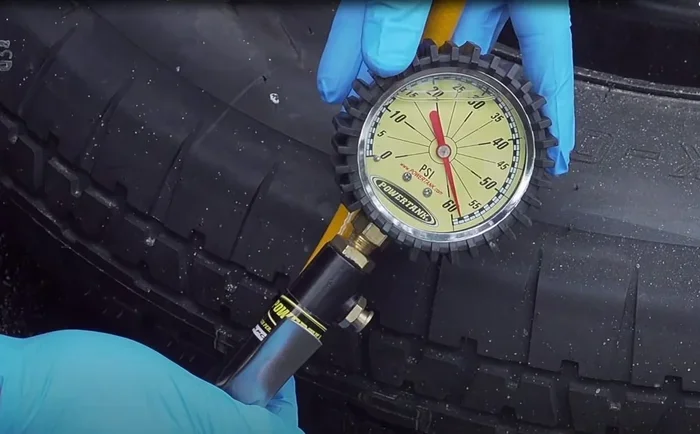
- Press the tire gauge firmly onto the valve stem.
- Read the number on the gauge and compare it to the recommended PSI.
- Add air if the pressure is low. Release air if it is high.
- Replace the valve cap when finished.
Choosing the Right Tire Gauge
Not all tire gauges are created equal. A cheap pencil-style gauge can give you inaccurate readings, especially after a degree temperature change has already shifted your pressure. Digital gauges and dial gauges tend to be more accurate and easier to read.
Quick Tips for Choosing a Gauge:
- Look for a gauge with a pressure range that covers your vehicle’s recommended PSI.
- Choose a digital gauge for the most precise readings.
- Keep a small gauge in your glove box so you can check pressure anywhere.
- Replace your gauge every few years to ensure accuracy.
When to Add or Release Air
Once you know your current PSI and your target PSI, adjusting is simple. If your pressure is low, use an air compressor at a gas station or a portable tire inflator to add air in short bursts. Check the pressure after each burst to avoid overfilling.
If your pressure is too high, press the small pin inside the valve stem to release a small amount of air. Check the pressure again and repeat if needed. A degree temperature change of just a few degrees can undo your adjustment, so be patient and precise. Proper tire inflation is a habit that pays off in safety and savings.
Common Mistakes Drivers Make With Tire Pressure
Even experienced drivers make mistakes when it comes to tire pressure. Understanding these common errors helps you avoid them and keep your tires in great shape throughout every season.
Only Checking Pressure When the TPMS Light Comes On
Many drivers wait for the TPMS warning light before checking their tires. By that point, the pressure may already be dangerously low. A degree temperature change of 10 to 20 degrees can drop your pressure enough to trigger the light, but the damage from driving on underinflated tires starts long before the light comes on.
Make it a habit to check your tire pressure at least once a month. Do not wait for a warning light to tell you something is wrong. Regular tire maintenance is one of the simplest ways to protect your investment and your safety.
Ignoring the Spare Tire
Your spare tire also loses pressure over time, and a degree temperature change affects it just like your other tires. Many people discover their spare is flat when they need it most. Check your spare tire pressure at least twice a year, especially before long road trips or seasonal changes.
Filling Tires to the Max PSI on the Sidewall
The number printed on the tire sidewall is the maximum pressure the tire can handle, not the recommended pressure for your vehicle. Filling to max PSI gives you a harsh ride, reduces traction, and causes uneven wear. Always follow the vehicle manufacturer’s recommendation found on the door sticker or owner’s manual.
Not Accounting for Temperature Changes
This is the biggest mistake related to our topic. Many drivers check their tire pressure once and forget about it. They do not account for the degree temperature change that happens with the seasons or even throughout the day. Regular monitoring and adjustment are essential for proper tire inflation and long-lasting tire safety.
Expert Insights on Temperature and Tire Pressure
We spoke with tire professionals and automotive engineers to get their take on how a degree temperature change affects tire performance. Here is what the experts had to say.
Why Tire Manufacturers Recommend Cold Pressure Checks
Tire engineers recommend checking pressure when the tires are cold because this gives you the most accurate baseline reading. When you drive, friction heats the tires and the air inside expands. A degree temperature change from driving can add 2 to 4 PSI to your reading, which masks the true cold pressure.
By checking in the morning before you drive, you get the real number. This is the number you should use to compare against the manufacturer’s recommendation. It is a simple habit that makes a big difference in your tire maintenance routine.
The Role of Tire Pressure Monitoring Systems
Modern vehicles come equipped with TPMS sensors that monitor tire pressure in real time. These systems are designed to alert you when pressure drops by 25% or more below the recommended level. However, a degree temperature change of just 10 degrees will not trigger the light. By the time the light comes on, your pressure may already be 2 to 3 PSI below where it should be.
Do not rely solely on TPMS. Use it as a backup, not your primary monitoring tool. Regular manual checks with a quality tire gauge are the best way to catch small pressure shifts before they become safety issues or cost you money in fuel and tire replacements.
How Proper Pressure Saves Money
Maintaining the correct tire pressure improves your fuel efficiency. Underinflated tires create more rolling resistance, which means your engine works harder and uses more gas. Even a 1 PSI drop below the recommended level can reduce fuel efficiency by about 0.3%. Over time, this adds up to real money at the pump.
Proper pressure also extends the life of your tires. Uneven wear from incorrect pressure means you replace tires sooner than necessary. A degree temperature change may seem small, but its cumulative effect on tire wear and fuel efficiency over months and years is significant. Smart drivers stay on top of their pressure and save money in the long run.
Key Takeaways
- Temperature affects PSI directly: A 10-degree Fahrenheit degree temperature change shifts tire pressure by about 1 PSI.
- Cold weather lowers pressure: As temperatures drop, air molecules contract and tire pressure decreases, sometimes triggering the TPMS light.
- Hot weather raises pressure: Summer heat expands the air inside tires, which can lead to overinflation if you are not careful.
- Check pressure monthly: Regular checks help you stay ahead of seasonal degree temperature change and keep tires safe.
- Use a quality gauge: An accurate tire gauge ensures you catch small pressure shifts before they become problems.
- Check when tires are cold: Morning readings before driving give you the most reliable baseline for comparison.
- Do not ignore the spare: Your spare tire is also affected by degree temperature change and should be checked regularly.
Conclusion
The connection between a degree temperature change and your tire pressure is straightforward but powerful. Every 10-degree shift in temperature moves your PSI by about 1 point. Over the course of a season, this can mean the difference between safe, efficient driving and dangerous, costly tire problems.
Now that you understand how a degree temperature change creates a 1 PSI change in your tires, you have the knowledge to take action. Check your pressure regularly. Adjust for seasonal shifts. Use a reliable gauge. And never ignore the signs of low or high pressure. Your tires are the only part of your car that touches the road, and keeping them properly inflated is one of the easiest ways to protect yourself, your passengers, and your wallet.
Apply what you have learned here today. Make tire pressure checks a regular part of your routine. Your tires will reward you with better performance, longer life, and safer rides for miles to come. A little attention to degree temperature change goes a long way toward keeping your tires in excellent condition all year round.
Frequently Asked Questions
How many degrees does it take to change tire pressure by 1 PSI?
A 10-degree Fahrenheit degree temperature change will shift your tire pressure by approximately 1 PSI. This is the standard rule used by tire professionals and automotive experts. The same ratio applies whether the temperature rises or falls.
Should I check my tire pressure in the morning or evening?
Always check your tire pressure in the morning before driving. Tires are cold at this point, which gives you the most accurate reading. Evening checks can be misleading because driving throughout the day heats the tires and increases the pressure inside.
Does a degree temperature change affect all tires equally?
Yes, a degree temperature change affects all tires the same way. The air inside each tire responds to temperature shifts regardless of tire size, brand, or tread pattern. The 10-degree-to-1-PSI ratio applies universally to all passenger vehicle tires.
Can extreme temperature changes damage my tires?
Rapid or extreme temperature swings can contribute to tire problems. A sudden degree temperature change from hot to cold can cause condensation inside the tire, which may lead to corrosion of the valve stem over time. More commonly, pressure fluctuations from temperature changes lead to uneven wear and reduced fuel efficiency.
Why does my TPMS light come on in winter?
Cold temperatures cause the air inside your tires to contract, which lowers the pressure. A degree temperature change of 20 to 30 degrees in winter can drop your PSI by 2 to 3 points. When the pressure falls 25% or more below the recommended level, the TPMS light activates to warn you.
How often should I check my tire pressure during seasonal changes?
Check your tire pressure at least once a month, and always after a significant degree temperature change such as the start of winter or summer. Frequent monitoring helps you catch pressure drops or rises early and keeps your tires performing at their best all year long.