What Causes a Car to Mix Oil and Water in the Engine
When oil and water mix in your car’s engine, it can cause serious damage if left unchecked. This problem usually stems from a failed head gasket, cracked engine block, or damaged oil cooler. Recognizing the early signs — like milky oil or white exhaust smoke — can save you from expensive repairs. Understanding the root cause helps you take action before the engine suffers permanent harm. This guide breaks down every cause, symptom, and fix in simple terms.
You pop the hood, check your oil, and notice something looks off. The oil on your dipstick has a thick, milky, tan color instead of the usual amber hue. That milky substance means oil and water are mixing inside your engine. And that is never a good sign.
Your car’s engine relies on two completely separate fluid systems. Oil lubricates the moving metal parts. Coolant (also called antifreeze) keeps the engine from overheating. These systems should never touch. When they do, things go wrong fast. The good news? Understanding what causes this problem helps you act quickly and avoid a totaled engine.
In this article, we will walk through every reason oil and water mixing in engine happens. We will cover the warning signs, how mechanics find the problem, what repairs cost, and how to prevent it from happening again. Whether you are a DIY mechanic or just someone who wants to understand their car better, this guide has you covered.
Key Takeaways
- Head gasket failure is the #1 reason oil and water mix inside the engine.
- Coolant leaking into the oil pan creates a milky brown residue on your dipstick.
- White smoke from the exhaust is a major red flag that coolant is burning in the combustion chamber.
- Engine overheating can warp the cylinder head and cause gasket failures over time.
- Regular maintenance and early detection can prevent costly engine repairs.
- Oil cooler leaks and cracked engine blocks are less common but still serious causes.
- Driving with mixed oil and water even briefly can lead to catastrophic engine failure.
📑 Table of Contents
- How Oil and Water End Up Mixing in Your Engine
- The Most Common Causes of Oil and Water Mixing
- Warning Signs That Oil and Water Are Mixing
- How Mechanics Diagnose Oil and Water Contamination
- Repair Options and What They Cost
- Prevention Tips to Keep Oil and Water Separated
- Can You Still Drive With Mixed Oil and Water?
- Final Thoughts
How Oil and Water End Up Mixing in Your Engine
To understand the causes, you need to know how your engine handles oil and coolant. These two fluids live in separate channels inside the engine block and cylinder head. Oil flows through galleries to lubricate bearings, pistons, and camshafts. Coolant flows through passages around the cylinders to absorb heat.
A gasket sits between the engine block and the cylinder head. This gasket seals both systems and keeps them apart. When that seal breaks, coolant can leak into the oil galleries or oil can leak into the cooling system. The result? Contaminated oil that loses its lubricating power.
Why Mixing Oil and Water Is So Dangerous
Oil and water do not mix naturally. When coolant gets into your oil, it creates a sludge-like substance. This sludge does not lubricate well. Metal parts start grinding against each other. Bearings wear out. Cylinder walls get scored. Within a short time, the engine can seize up entirely.
On the flip side, oil leaking into the cooling system reduces the coolant’s ability to transfer heat. The engine runs hotter. Overheating causes even more damage. It is a vicious cycle that snowballs quickly if you ignore it.
The Most Common Causes of Oil and Water Mixing
Several problems can break the seal between your oil and coolant systems. Some are more common than others. Let us look at each one in detail.
1. Blown Head Gasket
A blown head gasket is the most frequent culprit behind car mixing oil and water. The head gasket sits between the engine block and the cylinder head. It seals the combustion chambers, oil passages, and coolant channels all at once.
Over time, heat and pressure wear the gasket down. Hot spots develop. The gasket warps or cracks. Once the seal fails, coolant seeps into the oil return galleries. You might notice coolant disappearing from the reservoir without any visible leaks underneath the car.
Common reasons a head gasket fails include:
- Engine overheating from a stuck thermostat or low coolant
- Improper installation during a previous gasket replacement
- Age and wear after 100,000+ miles of driving
- Hot spots caused by uneven cylinder head tightening
2. Cracked Cylinder Head
The cylinder head sits on top of the engine block. It houses the valves, spark plugs, and camshafts. Cast iron and aluminum heads can both develop cracks over time.
Repeated overheating episodes are the leading cause of cracked cylinder heads. When the engine gets too hot, the metal expands unevenly. Tiny cracks form. Coolant leaks through those cracks into the oil system. In some cases, the crack is so small that it only appears under pressure.
A cracked head is more serious than a blown gasket because it often means the head needs replacement or professional machining. Welding a cracked cylinder head can work, but it depends on the crack location and material.
3. Cracked Engine Block
Engine blocks are built tough, but they are not indestructible. A cracked block is one of the most expensive problems you can face. Coolant leaks through the crack into the oil galleries or vice versa.
Engine block cracks usually happen because of:
- Severe overheating that the block cannot handle
- Freezing temperatures when coolant is not properly mixed with antifreeze
- Cast iron fatigue after many years of use
- Over-tightening of head bolts during assembly or repair
Unlike a head gasket, a cracked block often means the engine needs replacement or a full rebuild. That is why catching the problem early matters so much.
4. Failed Oil Cooler Seal or Gasket
Many modern vehicles come equipped with an oil cooler. This small radiator-like device keeps the engine oil at the right temperature. The oil cooler has its own set of seals and O-rings.
When the oil cooler seal fails, coolant can leak into the oil supply line. You get contaminated oil that looks milky. This is especially common in vehicles with high mileage or those that have had oil cooler work done in the past.
The good news? An oil cooler seal replacement is much cheaper than a head gasket job. If your car has an oil cooler, this is one of the first things a mechanic should check.
5. Intake Manifold Gasket Leak
On some engine designs, the intake manifold also carries coolant through its passages. The gasket between the intake manifold and the engine block can wear out over time.
When this gasket fails, coolant can seep into areas where it does not belong. You might notice oil contamination, coolant loss, or rough idle. This is more common in V-shaped engines where the intake manifold sits between the two cylinder heads.
6. Cracked Cylinder Head Cover or Timing Cover
The cylinder head cover and timing cover sit at the top and bottom of the engine, respectively. Both have gaskets that can deteriorate. In rare cases, the covers themselves can develop hairline cracks.
Coolant from the engine block can find its way past a cracked cover and into the oil system. This is less common than a head gasket issue, but it still happens, especially on older vehicles.
Warning Signs That Oil and Water Are Mixing
Catching the problem early can save thousands of dollars in engine repairs. Here are the most common signs that oil and water have mixed in your engine.
Milky or Frothy Oil on the Dipstick
This is the most obvious sign. Healthy oil looks like amber honey. When coolant mixes with oil, it creates a thick, frothy, tan or chocolate-milk-looking substance. If you pull your dipstick and see anything other than the normal amber color, get it checked right away.
Do not confuse this with condensation on the dipstick. A little moisture after short trips in cold weather is normal. But a persistent milky film is not.
White Smoke From the Exhaust
Thick white smoke — especially one that smells sweet — often means coolant is burning in the combustion chamber. Normal exhaust is mostly invisible. White smoke that lingers and smells like syrup or maple is a strong indicator of coolant entering the engine.
Coolant Disappearing Without Visible Leaks
If you keep topping off your coolant reservoir but cannot find any puddles under the car, the coolant might be getting into the oil. Internal leaks do not always leave external signs. This is one of the sneakiest symptoms.
Overheating Engine
When oil contaminates the cooling system, the engine loses its ability to regulate temperature. You may notice the temperature gauge climbing higher than normal. Overheating accelerates the very damage the contaminated oil is causing.
Bubbles in the Coolant Reservoir
If you open your coolant reservoir and see constant bubbling, combustion gases may be leaking into the cooling system through a failed gasket. This is a strong sign of a head gasket problem.
Loss of Oil Pressure
Contaminated oil becomes thinner and less effective. You might notice the oil pressure warning light flickering or the engine sounding louder than usual. Low oil pressure means metal parts are not getting proper lubrication.
How Mechanics Diagnose Oil and Water Contamination
When you bring your car in with symptoms of oil and water mixing, the mechanic will run several tests to find the root cause.
Visual Inspection of the Oil
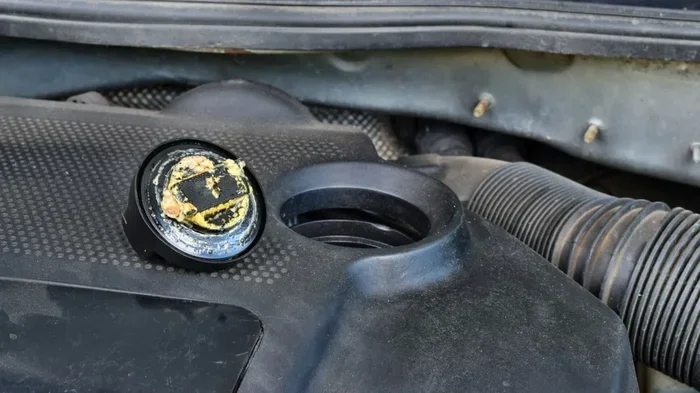
The first step is always looking at the oil. Milky oil immediately raises suspicion. The mechanic will check the oil fill cap for brownish foam residue. They will also inspect the oil pan and filter for any signs of coolant contamination.
Cooling System Pressure Test
This test pressurizes the cooling system to check for leaks. If the pressure drops without any visible external leaks, the problem is likely internal. A failed head gasket or cracked head can let combustion gases push into the cooling system.
Combustion Leak Test (Block Test)
Also called a chemical block test, this test checks for hydrocarbons in the coolant. The mechanic places a special fluid in the coolant reservoir and uses a detection device. If the fluid changes color, combustion gases are present in the cooling system. This confirms a gasket failure or crack.
Compression Test
A compression test measures how well each cylinder holds pressure. Low compression in one or more cylinders can indicate a gasket leak between the combustion chamber and the cooling or oil system.
Oil Analysis
Some shops offer oil analysis labs that check for coolant additives in the oil sample. This gives a precise measurement of how much coolant has contaminated the oil. It is a great diagnostic tool for early-stage leaks.
Repair Options and What They Cost
The repair cost depends entirely on what is causing the problem. Here is a breakdown of common fixes and what you can expect to pay.
| Repair | Estimated Cost Range | Difficulty Level |
|---|---|---|
| Head gasket replacement | $1,000 – $2,500 | Moderate to High |
| Cylinder head machining or replacement | $500 – $2,000 (for head only) | High |
| Oil cooler seal replacement | $300 – $800 | Low to Moderate |
| Intake manifold gasket replacement | $400 – $1,200 | Moderate |
| Engine block repair or replacement | $3,000 – $8,000+ | Very High |
| Full engine rebuild | $4,000 – $10,000+ | Very High |
These costs vary by vehicle model, location, and labor rates. Luxury and foreign vehicles almost always cost more to repair. A head gasket job on a four-cylinder economy car costs less than the same job on a V8 truck.
The most important thing to remember is this: do not delay repairs. Driving with mixed oil and water even for a few hundred miles can turn a $1,500 head gasket job into a $5,000 engine replacement.
Prevention Tips to Keep Oil and Water Separated
The best way to deal with oil and water mixing is to prevent it from happening in the first place. Here are some practical steps you can take.
1. Keep Up with Regular Maintenance
Change your oil on schedule. Fresh oil handles heat and contamination better than old oil. Use the oil weight and type recommended by your vehicle manufacturer. Check your owner’s manual for the service interval.
2. Monitor Your Coolant Level
Check your coolant reservoir regularly. If you notice the level dropping, investigate the cause. A slow internal leak is much easier to fix than a full-blown gasket failure.
3. Watch Your Temperature Gauge
Overheating is the enemy of gaskets and engine seals. If your temperature gauge climbs into the red zone, pull over and shut off the engine. Continuing to drive an overheating engine almost guarantees a blown head gasket.
4. Fix Overheating Problems Immediately
If your engine overheats, find out why. Common causes include a failing thermostat, a broken water pump, a clogged radiator, or a loose or broken fan belt. Addressing these issues quickly protects your head gasket and engine block.
5. Use Quality Coolant and Oil
Cheap or wrong coolant can cause corrosion inside the cooling system. Corrosion eats away at gaskets and seals over time. Use the coolant type recommended for your vehicle. The same goes for engine oil — quality oil with proper additives keeps seals flexible and healthy.
6. Address Small Leaks Before They Grow
Any external coolant or oil leak should be fixed promptly. Even a small seep can worsen over time. Worse, external leaks sometimes mask internal problems. If you notice any fluid puddles under your car, get them identified quickly.
Can You Still Drive With Mixed Oil and Water?
The short answer is no. Not for long anyway. A small amount of coolant in the oil might not destroy the engine instantly, but it will cause damage with every mile you drive.
If you suspect oil and water are mixing, have the car towed to a shop if possible. Towing costs a fraction of what an engine replacement costs. Driving even a few miles on contaminated oil can score cylinder walls and destroy bearings. Protect your engine by getting it off the road and diagnosed as soon as possible.
Final Thoughts
Oil and water mixing in your engine is a serious problem, but it does not have to mean the end of your car. The key is catching it early and addressing the root cause. Whether it is a blown head gasket, a cracked cylinder head, or a failed oil cooler seal, each problem has a solution.
Pay attention to the warning signs. Milky oil, white exhaust smoke, and disappearing coolant are all calls to action. Do not ignore them. Regular maintenance, proper coolant use, and prompt attention to overheating can prevent most causes of oil and water mixing.
If you have noticed any symptoms we discussed in this article, take your car to a trusted mechanic today. A quick diagnosis now can save you from a massive repair bill later. Your engine deserves clean oil and a properly sealed cooling system. Give it both, and it will reward you with years of reliable service.
Frequently Asked Questions
Can a small amount of water in engine oil cause damage?
Yes, even small amounts of water in your oil can cause damage over time. Water reduces the oil’s ability to lubricate metal surfaces. This leads to increased friction, wear on bearings, and potential scoring of cylinder walls. Even a small contamination issue should be addressed quickly before it worsens and causes more serious engine problems.
How do I know if my head gasket is blown?
The most common signs of a blown head gasket include milky oil, white exhaust smoke, coolant loss without external leaks, and overheating. A mechanic can confirm a head gasket failure with a combustion leak test or block test. If you notice any combination of these symptoms, have your vehicle inspected as soon as possible.
Is it safe to drive with milky oil on the dipstick?
No, it is not safe to keep driving with milky oil. Milky oil means coolant has entered the oil system, and this mixture cannot properly lubricate your engine. Continuing to drive can cause catastrophic engine damage including seized bearings and scored cylinder walls. Have your vehicle towed to a repair shop instead.
How much does it cost to fix oil and water mixing in the engine?
The cost depends entirely on the cause. A head gasket replacement typically costs between $1,000 and $2,500. Oil cooler seal repairs are cheaper, around $300 to $800. A cracked engine block or full engine replacement can cost $3,000 to $10,000 or more. Getting an early diagnosis keeps costs lower.
Can I just change the oil and fix the problem myself?
Changing the oil will remove the contaminated fluid, but it will not fix the underlying cause. The leak allowing oil and water to mix will still exist, and the new oil will become contaminated again. You need to identify and repair the source of the problem, whether that is a gasket, seal, or crack in the engine.
What happens if I ignore oil and water mixing for too long?
Ignoring this problem leads to progressive engine damage. The contaminated oil loses its lubricating ability, causing metal-on-metal contact between engine components. Bearings fail, cylinder walls get damaged, and in severe cases, the engine seizes completely. At that point, a full engine replacement becomes the only option.
=== CONCLUSION ===
Oil and water mixing in the engine is a problem that demands immediate attention. Whether the cause is a blown head gasket, a cracked cylinder head, a failed oil cooler, or any of the other issues we covered, the result is the same: your engine is losing the protection it needs to run properly.
Use the warning signs we discussed to catch problems early. Milky oil, white exhaust smoke, and unexplained coolant loss are your car’s way of telling you something is wrong. Take those signals seriously. Regular maintenance and prompt repairs are your best defense against expensive engine damage.
Share this article with a friend who might be dealing with a similar issue. And if your car is showing any of these symptoms, do not wait — get it checked out today. Your engine will thank you for it.