How Often Do You Change Engine Oil on a 2017 Toyota Corolla
Knowing how often do you change engine oil on a 2017 Toyota Corolla is essential for engine protection. The 2017 Corolla typically needs an oil change every 7,500 to 10,000 miles or at least once a year. Always use 0W-20 synthetic oil and follow your owner’s manual for the best results.
Key Takeaways
- Follow the Oil Life Monitor: The 2017 Toyota Corolla uses a smart system to track when your oil needs changing based on driving conditions.
- Stick to 0W-20 Oil: Always use the recommended viscosity to ensure proper engine lubrication and fuel efficiency.
- Change Oil at Least Yearly: Even if you drive low mileage, old oil degrades over time and must be replaced annually.
- Consider Driving Habits: Severe service conditions like short trips or towing require more frequent oil changes every 5,000 miles.
- DIY is Cost-Effective: Changing your own oil can save you significant money compared to dealer or shop rates.
- Do Not Ignore Warning Lights: Reset your oil life monitor after each service to stay on track with maintenance.
📑 Table of Contents
- Understanding the Oil Change Interval for Your 2017 Toyota Corolla
- Choosing the Right Oil Type for Your Corolla
- Step-by-Step Guide to Changing Your Oil
- Common Mistakes to Avoid During an Oil Change
- How Driving Conditions Affect Oil Change Frequency
- Estimating the Oil Change Cost and DIY Savings
- Conclusion
Understanding the Oil Change Interval for Your 2017 Toyota Corolla
When you own a 2017 Toyota Corolla, staying on top of maintenance is key. One of the most common questions drivers ask is how often do you change engine oil on a 2017 Toyota Corolla. The answer is not always a simple number. It depends on a few different factors that affect your specific driving habits.
Toyota designed the 2017 Corolla with a specific maintenance schedule in mind. This schedule helps protect your engine from wear and tear. Regular oil changes remove contaminants and keep the engine lubricated. Without fresh oil, metal parts grind against each other. This can lead to expensive repairs down the road.
The Role of the Oil Life Monitor
Modern cars like the 2017 Corolla come with a smart feature called the oil life monitor. This system does not just track mileage. It monitors your driving habits and engine conditions. It then tells you exactly when the oil needs changing.
The oil life monitor uses algorithms to measure stress on the oil. It looks at things like temperature, load, and driving time. When the system drops to zero, it is time for a service interval. Many drivers rely on this feature instead of a fixed mileage marker. However, it is important to understand what the monitor is actually measuring.
Mileage vs. Time Intervals
Even if you do not drive many miles, time matters. Toyota recommends changing the oil at least once a year. This is true even if the oil life monitor has not hit zero. Old oil breaks down over time, regardless of how much you drive. Moisture and fuel can contaminate the oil while the car sits.
For most drivers, the standard interval falls between 7,500 and 10,000 miles. If you drive 1,000 miles a month, you will hit that yearly time limit. However, if you drive a lot, you might hit the mileage limit first. Always check your owner’s manual to be sure. It is the best source for your specific 2017 toyota corolla oil capacity and service rules.
Why 0W-20 Viscosity Matters
The viscosity of your oil is crucial for engine protection. The 2017 Toyota Corolla requires 0W-20 motor oil. This specific grade flows easily at low temperatures.
Using the right viscosity ensures the oil reaches all parts of the engine quickly. When you start your car, the 0W-20 oil coats the components immediately. This reduces friction and wear during the most critical moments. Using a thicker oil, like 5W-30, can reduce fuel efficiency. It can also cause the oil life monitor to trigger earlier than expected. Always check the oil filter and oil pan requirements before you buy supplies.
Choosing the Right Oil Type for Your Corolla
Selecting the correct oil for your 2017 Corolla is more than just pouring it in. You need to choose between different formulations. The right choice impacts how well your engine runs and how long the oil lasts.
Synthetic vs. Conventional Oil
Toyota recommends using synthetic or synthetic blend oil for the 2017 model year. Conventional oil comes from crude oil and has impurities. Synthetic oil is man-made and much purer. It has additives that protect against sludge and high heat.
Full synthetic oil offers the best engine protection. It maintains its viscosity better under extreme temperatures. If you live in a very hot or very cold climate, synthetic is the way to go. It simply performs better than conventional options. The initial cost is higher, but the extended service interval makes it more affordable over time.
The Benefits of Full Synthetic Oil
Why should you spend extra on synthetic oil? The benefits are clear. First, it lasts longer. You can comfortably go up to 10,000 miles between changes with full synthetic. Second, it keeps your engine cleaner. It resists breakdown and deposits much better than old-style oils.
Third, it improves fuel economy. Because synthetic oil flows so smoothly, your engine does not work as hard. This can save you money at the gas pump over time. For a daily driver like the Corolla, these benefits make a big difference in the long run. Your maintenance schedule will also remain simpler when using high-quality synthetic oil.
Step-by-Step Guide to Changing Your Oil
Many car owners want to save money by doing their own oil changes. Changing the oil on a 2017 Toyota Corolla is a straightforward task. With the right tools and a little patience, you can do it in your driveway. Here is a complete guide to help you through the process.
Tools You Will Need
Before you start, gather everything you need. You do not want to stop halfway through the job. Here is a simple list of tools for your DIY oil change:
- Four quarts of 0W-20 synthetic oil
- A new oil filter designed for the 2017 Corolla
- A socket wrench and the correct size socket
- An oil drain pan
- A jack and jack stands or ramps
- Gloves and safety glasses
- A funnel for pouring the new oil
Draining the Old Oil
First, drive the car for a few minutes. Warm oil drains much faster than cold oil. Next, lift the front of the car safely using a jack. Secure it with jack stands so it does not fall on you.
Place the drain pan under the oil pan. Find the drain plug and use your socket wrench to loosen it. Turn it counterclockwise and carefully remove it. Let the old oil flow completely into the pan. This usually takes about five minutes. Once the flow stops, wipe the plug clean and reinstall it. Tighten it snugly, but do not overtighten or you can strip the threads.
Replacing the Oil Filter
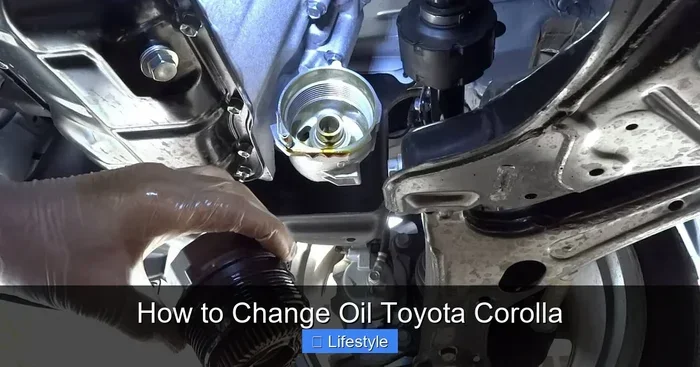
Now it is time to swap out the oil filter. The old filter holds dirty oil and contaminants. Use an oil filter wrench to loosen it. Turn it counterclockwise and pull it down carefully. Be ready for some residual oil to spill out.
Before installing the new filter, rub a little fresh oil on the rubber gasket. This creates a tight seal and prevents leaks. Screw the new filter on by hand. Tighten it until it is snug, then give it about three-quarters of a turn. Do not overtighten it. Finally, pour the new oil into the engine using a funnel. Check the dipstick to ensure you have the right level for your 2017 toyota corolla oil capacity.
Quick Tips for a Clean Oil Change
Keeping your workspace clean makes the job much easier. Here are a few quick tips to remember:
- Always have a rag handy to wipe up any spills immediately.
- Let the car cool down slightly so you do not burn yourself on hot engine parts.
- Dispose of the old oil and filter properly at a recycling center.
- Never reuse the old drain plug washer. Always install a new one to prevent leaks.
- Run the engine for one minute after adding new oil, then recheck the dipstick.
Common Mistakes to Avoid During an Oil Change
Even simple tasks can go wrong if you are not careful. Avoiding common mistakes saves you time and money. It also keeps your engine safe from damage.
Overlooking the Drain Plug
The drain plug is a small but vital part of the oil pan. A common mistake is forgetting to check if the plug is tight after draining. A loose drain plug will cause your new oil to leak out. This leaves your engine without lubrication, which is very dangerous.
Another issue is using the wrong washer. The drain plug usually needs a copper or aluminum washer. If the old washer is stuck or damaged, replace it. A fresh washer ensures a leak-free seal every time you change the oil. Taking an extra minute to check this small part can save you from a costly engine rebuild.
Ignoring the Oil Life Monitor
Some drivers ignore the dashboard warning lights. They assume the car will tell them when something is seriously wrong. However, the oil life monitor gives you a proactive warning. If you reset the monitor after an oil change, it tracks your next service interval accurately.
Forgetting to reset the system can lead to missed services. When the light comes on, do not ignore it. Pull over safely and schedule your maintenance. Ignoring this check engine light or oil warning can result in severe engine wear. Always refer to your owner’s manual for the reset procedure specific to your model year.
How Driving Conditions Affect Oil Change Frequency
Not all driving is created equal. The way you use your car changes how often you need an oil change. Toyota categorizes certain driving patterns as severe service conditions.
Severe Service Driving
Severe service driving shortens the life of your oil significantly. If you often drive in stop-and-go traffic, your engine works harder. Frequent short trips are also hard on the oil. The engine never gets hot enough to boil off the moisture and fuel contaminants.
Other severe conditions include towing a trailer or driving on dusty roads. If you live in an area with extreme heat or cold, your oil degrades faster. In these situations, you should shorten your oil change interval. Consider changing the oil every 5,000 miles instead of 7,500 or 10,000 miles. Checking your driving conditions regularly helps you maintain proper engine protection.
Short Trips and City Driving
City driving is very different from highway cruising. When you drive just a few miles to the store, the engine does not reach optimal operating temperature. This causes condensation to build up inside the oil pan.
Over time, this water mixes with the oil and creates sludge. Sludge clogs oil passages and reduces engine protection. If your daily routine involves lots of short city trips, stick to a shorter maintenance schedule. Changing your oil more frequently is a cheap insurance policy against engine damage. Keep an eye on your mileage and adjust your service interval accordingly.
Expert Insight: The Importance of Regular Oil Analysis
For drivers who want the absolute best care for their Corolla, consider an oil analysis test. This is a simple lab test that checks the condition of your old oil. It reveals metal particles, fuel dilution, and coolant leaks that you cannot see with the naked eye. While it is not required for everyday driving, it gives you deep insight into your engine’s health. It is a great tool for anyone who takes vehicle maintenance very seriously.
Estimating the Oil Change Cost and DIY Savings
Budgeting for car maintenance is smart. Knowing what to expect helps you plan your expenses. The cost of an oil change varies depending on where you go and what type of oil you use.
Dealer vs. Independent Shop vs. DIY
Taking your 2017 Corolla to a Toyota dealer is convenient. They use genuine Toyota parts and follow the factory maintenance schedule. However, dealer labor rates are often higher. An oil change at a dealer might cost between $60 and $100.
Independent shops and quick-lube businesses usually offer lower prices. You can often get a synthetic oil change for $40 to $60. As long as the shop uses the correct 0W-20 oil and a quality filter, there is no reason you cannot use an independent service center.
| Service Option | Average Cost | Pros | Cons |
|---|---|---|---|
| Toyota Dealer | $60 – $100 | Genuine parts, factory-trained techs | Higher labor rates |
| Independent Shop | $40 – $60 | Lower cost, experienced mechanics | Quality of parts may vary |
| DIY | $70 – $95 (supplies) | Cheapest long-term, full control | Requires time and tools |
Doing It Yourself
If you are handy, doing it yourself is the most cost-effective option. A quart of synthetic oil costs around $15 to $20. A quality oil filter runs about $10 to $15. You will need four quarts for a complete change.
This means your total supply cost is roughly $70 to $95. You can reuse this supply for several oil changes. Doing it yourself also gives you complete control over the quality of the parts used. You know exactly what goes into your engine, which provides peace of mind. Many Corolla owners find that a DIY oil change is a rewarding part of car ownership.
Conclusion
Taking care of your 2017 Toyota Corolla does not have to be complicated. Now you know exactly how often do you change engine oil on a 2017 Toyota Corolla. Remember to follow the oil life monitor, but also respect the yearly time limit.
Using the right 0W-20 synthetic oil and a quality filter makes all the difference. Whether you visit a dealer, an independent shop, or do it yourself, staying consistent is what matters most. Fresh oil equals a happy engine. Make oil changes a regular part of your routine, and your Corolla will reward you with reliable performance for many miles to come.
Frequently Asked Questions
Can I use conventional oil in my 2017 Toyota Corolla?
Toyota recommends synthetic or synthetic blend oil for the 2017 model year. Conventional oil does not provide the same level of engine protection or longevity. Using synthetic oil helps your Corolla reach its full maintenance interval safely.
What happens if I wait too long to change my oil?
Old oil breaks down and loses its ability to lubricate the engine. This leads to increased friction, heat, and the formation of harmful sludge. Waiting too long can cause premature engine wear and costly repairs.
How much does an oil change cost for a 2017 Corolla?
The cost typically ranges from $40 to $100 depending on where you go. Independent shops usually offer lower prices than Toyota dealers. Doing it yourself is the most affordable option if you have basic tools.
Do I need to reset the oil life monitor after an oil change?
Yes, you should always reset the system after adding new oil. This ensures the monitor accurately tracks your next service interval. The reset procedure is usually simple and found in the owner’s manual.
Is it okay to mix old and new oil?
It is best to fully drain the old oil before adding new oil. Mixing old and new oil dilutes the fresh additives and reduces overall engine protection. Always aim for a complete oil change with a new filter for the best results.
How do I know if my Corolla has an oil leak?
Look for dark puddles under your car after it has been parked. You might also notice a burning oil smell or see the oil pressure light flicker on the dashboard. Regularly checking your dipstick helps you catch low oil levels early.