How to Choose the Best Fuel Pressure Tester for Your Garage
A fuel pressure tester is one of the most important tools you can own for diagnosing engine problems. Whether you work on gasoline or diesel engines, the right fuel pressure tester helps you check fuel delivery, spot issues early, and keep vehicles running smoothly. In this guide, we break down everything you need to know to pick the perfect one.
Key Takeaways
- Know your vehicle type: Different engines need different fuel pressure tester models and specifications.
- Check compatibility first: Always match your fuel pressure tester to your vehicle’s fuel system before buying.
- Look for key features: Accuracy, ease of use, and durable build quality should be your top priorities.
- Avoid common mistakes: Skipping adapter checks and ignoring pressure range requirements are frequent buyer errors.
- Invest in quality: A reliable fuel pressure tester saves time, money, and prevents misdiagnosis.
- Regular testing matters: Using a fuel pressure tester routinely helps catch problems before they become costly repairs.
- Both analog and digital options work: Your choice depends on budget, precision needs, and personal preference.
[FEATURED_IMAGE_PLACEHOLDER]
Why Every Garage Needs a Fuel Pressure Tester
If you work on cars, trucks, or SUVs, a fuel pressure tester is a non-negotiable tool. It connects directly to your vehicle’s fuel system and measures how much pressure the fuel pump delivers. This simple test can reveal a lot about engine health.
Low fuel pressure often points to a weak fuel pump, a clogged fuel filter, or leaks in the fuel line. High pressure can signal a faulty fuel pressure regulator. Without testing, you might replace parts that don’t need replacing. That wastes time and money. A quality fuel pressure tester takes the guesswork out of diagnostics.
Whether you run a full-service garage or just work on your own vehicles, this tool pays for itself quickly. You catch problems faster, diagnose accurately, and build trust with customers or family members. Let’s dive into everything you need to know before buying one.
What Is a Fuel Pressure Tester and How Does It Work?
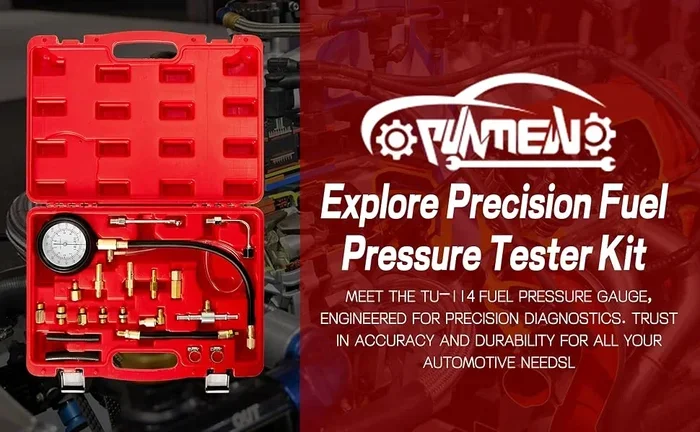
A fuel pressure tester is a diagnostic device that measures the pressure of fuel flowing through a vehicle’s fuel system. It typically includes a gauge, a set of adapters, and a hose that connects to the fuel rail or fuel line. Some models also come with a shut-off valve to control fuel flow during testing.
Basic Components of a Fuel Pressure Tester
Most fuel pressure tester kits include a few core parts:
- Pressure gauge: This is the main reading device. It can be analog (needle-based) or digital (screen-based).
- Adapters: These connect the tester to different vehicle fuel systems. Common types include quick-connect, threaded, and clamp-on adapters.
- Hose or tubing: This carries fuel from the vehicle to the gauge safely.
- Shut-off valve: This lets you stop fuel flow during setup or after testing.
How the Testing Process Works
The process is straightforward. You attach the appropriate adapter to the fuel rail or Schrader valve on the fuel line. Then you read the fuel pressure directly on the gauge. Comparing your reading to the manufacturer’s specification tells you if the system is working correctly.
For example, many gasoline engines need fuel pressure between 40 and 65 PSI. Diesel systems often run much higher, sometimes exceeding 5,000 PSI in modern common-rail setups. Your fuel pressure tester must handle the correct range for your vehicle type.
Types of Fuel Pressure Testers Available
Not all fuel pressure testers are the same. Choosing the right type depends on what vehicles you service and how precise you need your readings to be. Here’s a breakdown of the main categories.
Analog Fuel Pressure Testers
Analog models use a mechanical gauge with a needle. They are affordable, durable, and easy to use. Many experienced mechanics still prefer analog gauges because they provide instant visual feedback. You can quickly spot pressure drops without waiting for digital stabilization.
However, analog gauges may lack fine precision. Reading the needle can introduce small errors, especially at low pressures. They also don’t store data or graph pressure over time.
Digital Fuel Pressure Testers
Digital fuel pressure testers offer higher accuracy and more features. They display readings on an LCD screen and often allow you to switch between PSI, BAR, and KPA units. Many digital models can record data, graph pressure trends, and connect to software for deeper analysis.
The downside? Digital units cost more and require batteries or charging. They can also be more fragile if you work in rough garage conditions. Still, for precision work, digital models win.
Heavy-Duty Diesel Fuel Pressure Testers
If you work on diesel engines, especially modern common-rail systems, you need a specialized tester. These units handle extremely high pressures and come with diesel-specific adapters. Regular gasoline testers simply cannot handle these pressures safely.
Key Features to Look for in a Fuel Pressure Tester
When shopping for a fuel pressure tester, certain features separate a great tool from a mediocre one. Here is what to prioritize.
1. Pressure Range
Always check the measurable pressure range. A good tester covers both low and high pressures. For general automotive work, a range of 0 to 100 PSI covers most gasoline applications. If you work on diesels, look for models rated up to 10,000 PSI or more.
2. Accuracy and Resolution
Accuracy tells you how close the reading is to the true value. Look for a tester with at least +/- 2% accuracy. Resolution refers to the smallest increment the gauge can display. Higher resolution gives you more precise readings and better diagnostic insight.
3. Adapter Compatibility
A fuel pressure tester is only useful if it connects to your vehicle. Check that the kit includes adapters for the fuel systems you commonly encounter. Quick-connect fittings work well for modern vehicles, while threaded adapters suit older cars with carburetors.
4. Build Quality and Durability
Garage environments are tough. Your tester should withstand drops, fuel exposure, and temperature changes. Look for models with reinforced housing, stainless steel fittings, and fuel-resistant hoses. A durable fuel pressure tester lasts longer and performs better over time.
5. Ease of Use
The best testers are simple to set up and read. Clear dial markings, backlit displays, and color-coded adapters all help. If the tool feels complicated during the first use, it probably won’t get much love in your garage.
Common Mistakes When Using a Fuel Pressure Tester
Even experienced mechanics make mistakes with fuel system diagnostics. Here are pitfalls to avoid.
Skipping the Adapter Check
One of the biggest errors is using the wrong adapter. A poor fit causes leaks and inaccurate readings. Always double-check that your adapter matches the fuel rail or Schrader valve before connecting the fuel pressure tester.
Ignoring the Fuel Pressure Specification
Every vehicle has a manufacturer-recommended fuel pressure range. Testing without knowing this spec leads to misdiagnosis. Look up the spec in a repair manual or online database before you start. Then compare your reading directly to that number.
Forgetting to Relieve Fuel Pressure
Before disconnecting any fuel line, relieve the pressure first. Fuel systems store pressurized gasoline or diesel. Releasing this pressure suddenly can cause sprays, fires, or injury. Many fuel pressure tester kits include a bleed valve for this exact purpose. Use it every single time.
Using a Tester with the Wrong Pressure Range
Connecting a low-pressure gauge to a high-pressure system can damage the gauge or even cause it to burst. Always confirm the pressure range of your tester matches the vehicle’s system requirements. When in doubt, use a higher-rated tester rather than a lower-rated one.
Top Tips for Getting the Most Out of Your Fuel Pressure Tester
Here are some practical tips that help you work smarter, not harder.
Quick Tips
- Calibrate your gauge annually or after any heavy impact to maintain accuracy.
- Keep a log of fuel pressure readings for each vehicle you service. This builds a helpful reference database over time.
- Test fuel pressure with a warm engine for the most consistent results, unless the manufacturer specifies cold testing.
- Always use the shut-off valve when connecting or disconnecting the tester to prevent fuel spills.
- Store your fuel pressure tester in a protective case to extend its lifespan and keep adapters organized.
- Pair your tester with a fuel pressure gauge kit that includes multiple hose sizes for broader compatibility.
Expert Insights
Professional diagnostics techs recommend starting with a visual inspection before connecting any tools. Check for cracked fuel hoses, leaking injector connections, and a healthy fuel filter. A fuel pressure tester works best when combined with other checks rather than used in isolation. This holistic approach catches problems early and prevents unnecessary part swaps.
Another expert tip: test fuel pressure at idle and at rated RPM. Comparing the two readings reveals how the fuel delivery system responds under load. A healthy system shows a slight pressure increase at higher RPM. If pressure stays flat or drops, the fuel pump may be weakening or the fuel pressure regulator might be failing.
How to Choose the Right Fuel Pressure Tester for Your Garage
Selecting the perfect fuel pressure tester depends on a few key factors. Let’s walk through them.
Consider Your Vehicle Types
If you mostly service passenger cars, a standard gasoline-rated tester covers your needs. If you also work on trucks, SUVs, or performance vehicles with turbocharged engines, you may need a broader pressure range. Diesel specialists must invest in heavy-duty diesel units designed for extreme pressures.
Set a Realistic Budget
Entry-level analog testers cost around $20 to $50. Mid-range digital models range from $80 to $200. Professional-grade kits with wide pressure ranges and premium accessories can exceed $300. Set your budget based on how often you test fuel systems and what types of vehicles you handle.
Compare Analog vs. Digital
Here is a quick comparison to help you decide.
| Feature | Analog Tester | Digital Tester |
|---|---|---|
| Price Range | $20 – $80 | $80 – $300+ |
| Accuracy | Moderate | High |
| Durability | Very durable | Moderate |
| Data Logging | No | Yes (most models) |
| Ease of Reading | Good | Excellent |
| Battery Required | No | Yes |
Both types serve well in different scenarios. Analog testers shine in fast-paced environments where instant readings matter most. Digital testers excel in precision diagnostics and data-driven analysis. Many garages own both to cover all situations.
Check Brand Reputation and Warranty
Reputable brands often deliver better accuracy and customer support. Look for brands with strong warranties covering defects and damage. A solid warranty reflects the manufacturer’s confidence in their product. Spending a little more on a trusted name often saves money on replacements.
When you invest in a quality fuel pressure tester, you invest in reliable diagnostics for years to come. Take your time, compare options, and choose the one that fits your garage perfectly.
Conclusion
Choosing the right fuel pressure tester comes down to understanding your needs, your vehicles, and your budget. Whether you go analog or digital, make sure the tester covers the correct pressure range and includes the adapters you need. Avoid common mistakes like skipping adapter checks or ignoring manufacturer specs. Follow the tips shared here, and you will diagnose fuel system problems faster and more accurately than ever.
The best fuel pressure tester is the one that fits your workflow and helps you deliver reliable results every time. Take the time to pick the right one today, and your garage will thank you for it. Happy testing!
What is a fuel pressure tester used for?
A fuel pressure tester measures the pressure of fuel delivered by the fuel pump through the fuel system. It helps diagnose weak fuel pumps, clogged fuel filters, faulty fuel pressure regulators, and other fuel delivery issues. Using one saves time and prevents unnecessary part replacements.
Can I use a fuel pressure tester on a diesel engine?
Only if your tester is rated for diesel pressures. Standard gasoline testers handle lower pressures and are not safe for high-pressure diesel systems. You need a dedicated diesel fuel pressure tester designed for common-rail and high-pressure diesel fuel systems.
How accurate are analog fuel pressure gauges?
Most analog gauges offer moderate accuracy within +/- 3% to 5%. They are reliable for general diagnostics but may lack the precision of digital models. For quick checks and everyday garage work, analog gauges perform well and hold up against rough conditions.
Do I need adapters with my fuel pressure tester?
Yes, adapters are essential. They connect the tester to different vehicle fuel systems. A quality fuel pressure tester kit includes a variety of adapters for quick-connect, threaded, and Schrader-valve fittings. Without the right adapter, you cannot attach the tester properly or get accurate readings.
How often should I calibrate my fuel pressure tester?
You should calibrate your tester at least once a year or after any significant impact. Calibration ensures your readings remain accurate over time. If you notice inconsistent or questionable results, calibrate immediately. Many gauges can be calibrated using a known pressure source or by a professional tool service center.
What is the average lifespan of a fuel pressure tester?
A well-maintained fuel pressure tester can last 5 to 10 years or longer. Analog gauges tend to last longer due to simpler construction and fewer electronic parts. Digital testers may need battery replacements and more careful storage. Keeping your tester clean, storing it properly, and protecting it from extreme temperatures extends its life significantly.
This is a comprehensive guide about fuel pressure tester.
Key Takeaways
- Understanding fuel pressure tester: Provides essential knowledge
Frequently Asked Questions
What is fuel pressure tester?
fuel pressure tester is an important topic with many practical applications.