Where Is the Toyota 4 Runner Built and What You Need to Know
The Toyota 4Runner is built at the Tahara Assembly Plant in Japan. This iconic off-road SUV has been manufactured in Japan since its debut in 1984. Understanding where the 4Runner is built helps buyers appreciate its quality, reliability, and long history.
The Toyota 4Runner has earned a legendary reputation among SUVs. People love it for its toughness, reliability, and off-road capability. But one question keeps coming up: where is the 4Runner built?
The answer might surprise you. Every single 4Runner rolls off the same assembly line in Japan. The Tahara Assembly Plant in Aichi Prefecture has been building this truck since 1984. That is over four decades of consistent manufacturing in one location.
Knowing where your Toyota 4Runner comes from gives you insight into its quality, engineering, and long-term value. In this article, we will walk through the full story. We will cover the manufacturing plant, each generation of production, and what this means for you as a buyer or owner.
Whether you are shopping for a used 4Runner or just curious about this iconic truck, you are in the right place. Let us dive into the complete story of where the Toyota 4Runner is built.
Key Takeaways
- The 4Runner is built in Japan: The Tahara Assembly Plant in Aichi Prefecture handles all production.
- It has been made in Japan since 1984: Every generation has been assembled at the same facility.
- Toyota’s build quality is exceptional: The Tahara plant is known for its precision and high standards.
- No US assembly: Unlike some Toyota models, the 4Runner is never built in America.
- Japanese manufacturing means strong resale value: Buyers trust the 4Runner’s long-lasting construction.
- Each generation evolved at Tahara: From the compact 4Runner to the modern rugged SUV, all were built in Japan.
- Knowing where it’s built helps you buy smart: Manufacturing location impacts quality, reliability, and ownership experience.
📑 Table of Contents
- The Toyota 4Runner Manufacturing Story
- The Tahara Assembly Plant: Where the 4Runner Comes to Life
- 4Runner Generations and Their Production Timeline
- Why the 4Runner’s Build Quality Stands Out
- What This Means for Buyers
- Common Myths About 4Runner Manufacturing
- Quick Tips for 4Runner Buyers
- Key Takeaways
- Conclusion
The Toyota 4Runner Manufacturing Story
A Brief History of the 4Runner
The Toyota 4Runner started life as a compact pickup truck. It was originally part of the Toyota Hilux lineup in the early 1980s. Toyota wanted to create a vehicle that could handle both daily driving and tough terrain. The result was the first-generation 4Runner, which debuted in 1984.
From day one, Toyota chose to build the 4Runner in Japan. The Tahara plant was already famous for producing high-quality vehicles. Toyota selected this facility specifically because of its reputation for precision and craftsmanship.
Over the years, the 4Runner grew in size and capability. It went from a small pickup-based SUV to a full-size body-on-frame truck. But the manufacturing location never changed. Every 4Runner generation has been assembled at Tahara.
Why Toyota Chose Japan for Production
Toyota could have moved production to the United States or another country. Many automakers do this to save money. But Toyota made a different choice. They kept the 4Runner in Japan for several important reasons.
First, the Tahara plant has specialized equipment for building rugged SUVs. The assembly line is designed to handle body-on-frame construction. This type of build requires precision that not every plant can deliver.
Second, Toyota wants the 4Runner to maintain a specific standard. Japanese manufacturing is known for its attention to detail. The workers at Tahara follow strict quality control processes. This is why the 4Runner has such a strong reputation for reliability.
Third, keeping production in Japan helps Toyota control the build quality. They do not have to worry about supply chain differences across countries. Every 4Runner is built to the same exact standards.
The Tahara Assembly Plant: Where the 4Runner Comes to Life
Location and Facilities
The Tahara Assembly Plant sits in Tahara, Aichi Prefecture, Japan. It is a massive facility that covers over 1.5 million square meters. Toyota opened the plant in 1979, and it has been producing vehicles ever since.
The plant builds more than just the 4Runner. It also produces the Toyota Land Cruiser, Lexus LX, and Lexus GX. These are all premium SUVs that share similar build principles. The Tahara facility is considered one of the best in Toyota’s global network.
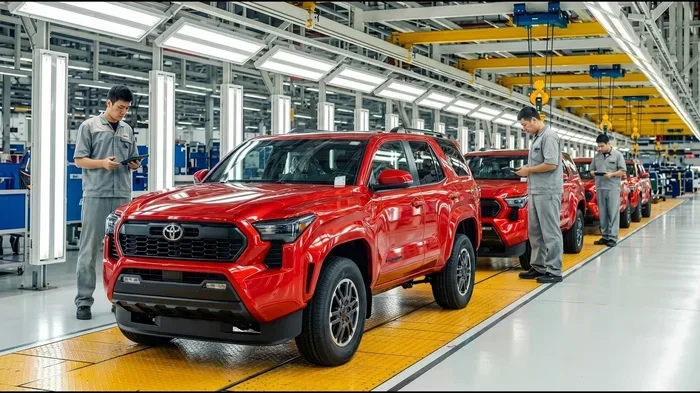
The plant uses advanced robotics alongside skilled human workers. Each vehicle goes through more than 3,000 quality checks during assembly. This level of attention is what makes the 4Runner so durable.
Quality Control at Tahara
Toyota’s quality control process at Tahara is second to none. Workers inspect every part before it goes into the vehicle. Robots weld the frame with extreme precision. The paint process involves multiple layers for long-lasting protection.
Each 4Runner undergoes a final inspection drive before leaving the plant. Workers check for any issues with the engine, transmission, and suspension. Only vehicles that pass every test are shipped to dealerships.
This rigorous process is a big reason why the 4Runner has such a strong reputation. When you buy a 4Runner, you are getting a vehicle that has been built with care and precision in Japan.
4Runner Generations and Their Production Timeline
First Generation (1984-1990)
The first-generation 4Runner was based on the Toyota Hilux pickup truck. It was a compact SUV with a removable top. Toyota built these at the Tahara plant starting in 1984. The original 4Runner had a 2.4-liter or 2.2-liter engine and a simple yet rugged design.
These early models set the tone for what the 4Runner would become. They were tough, reliable, and built to last. Even today, first-generation 4Runners are still on the road, proving the durability of Japanese manufacturing.
Second Generation (1990-1995)
The second generation brought a more refined design. Toyota added a rear hatch and improved the interior. The 4Runner grew slightly in size but retained its truck-based platform. Production continued at Tahara throughout this period.
This generation introduced the 3.0-liter V6 engine in some markets. It became a popular choice for buyers who wanted more power. The second-gen 4Runner remains a favorite among enthusiasts.
Third Generation (1996-2002)
The third generation marked a big leap in size and comfort. Toyota gave the 4Runner a more modern look with rounded headlights and a wider body. The interior became more spacious and feature-rich.
The 3.4-liter V6 engine became the standard. This engine was known for its reliability and smooth power delivery. The third-generation 4Runner is often considered the best model year range by many fans.
Fifth Generation (2009-Present)
The current generation 4Runner has been in production since 2009. It features a 4.0-liter V6 engine and a body-on-frame design. Toyota made some updates over the years, including a facelift in 2014 and another in 2024.
Despite being over 15 years old, the platform still feels modern. Toyota has kept the 4Runner largely unchanged because it works so well. The current 4Runner is still built at the Tahara plant in Japan.
Production Timeline Summary
- 1984-1990: First generation, compact pickup-based SUV
- 1990-1995: Second generation, added rear hatch and refinement
- 1996-2002: Third generation, bigger and more comfortable
- 2003-2009: Fourth generation, updated design and features
- 2009-Present: Fifth generation, current model still in production
Every single model year has been assembled at the Tahara plant. This consistency is rare in the auto industry and speaks to Toyota’s confidence in their Japanese facilities.
Why the 4Runner’s Build Quality Stands Out
Body-on-Frame Construction
The 4Runner uses a body-on-frame design. This means the body is mounted on a separate steel frame. This construction method is common in trucks and off-road SUVs. It provides excellent strength and durability.
Body-on-frame SUVs like the 4Runner can handle serious abuse. They are resistant to flex and bending. This makes them ideal for off-road adventures, towing, and heavy loads. The Tahara plant specializes in building vehicles with this type of construction.
Engine and Drivetrain Reliability
The current 4Runner uses a 4.0-liter V6 engine that produces 270 horsepower. This engine has been in production for many years and is known for its longevity. It is paired with a five-speed automatic transmission.
The 4Runner comes with part-time or full-time four-wheel drive depending on the trim. The transfer case and locking differentials give it excellent off-road capability. These components are all assembled at the Tahara plant with tight tolerances.
Longevity and Durability
One of the biggest reasons people buy a 4Runner is its longevity. Many owners report 200,000 to 300,000 miles with proper maintenance. The Toyota reliability reputation is well-earned, and the manufacturing location plays a big role in that.
Japanese factories like Tahara have lower defect rates than many global competitors. The quality of materials and assembly processes is consistently high. When you invest in a 4Runner, you are getting a vehicle built to last.
What This Means for Buyers
Should You Care Where the 4Runner Is Built?
The short answer is yes. Knowing where the 4Runner is built gives you valuable information. It tells you about the quality standards, the build process, and the long-term value of the vehicle.
Buyers who understand the manufacturing background often feel more confident in their purchase. They know the 4Runner was built with care in a world-class facility. This peace of mind is valuable when spending tens of thousands of dollars.
Resale Value and Popularity
The 4Runner is one of the best-selling SUVs in America. Its resale value is among the highest in the segment. This is partly because of its reputation for durability and partly because of its Japanese build quality.
Buyers trust vehicles that are known for being built well. The 4Runner’s popularity continues to grow, even as the automotive industry moves toward electric vehicles. People want a truck that will last for years, and the 4Runner delivers on that promise.
How the 4Runner Compares to Competitors
The 4Runner faces competition from the Jeep Wrangler, Ford Bronco, and Chevrolet Colorado ZR2. Each of these vehicles has its strengths. But the 4Runner stands out for its proven reliability and resale value.
Some competitors are built in the United States or Mexico. The 4Runner is different because it comes from Japan. This gives it a unique position in the market. Buyers who value Japanese manufacturing often choose the 4Runner over other options.
Common Myths About 4Runner Manufacturing
Myth: The 4Runner Is Built in the United States
Many people assume the 4Runner is built in America because it sells so well here. However, every 4Runner is built in Japan at the Tahara plant. Toyota does not have a US factory that produces the 4Runner.
This myth likely comes from the fact that many Toyotas are built in the US, like the Camry and Avalon. But the 4Runner is different. Its production has always remained in Japan.
Myth: Japanese-Built Vehicles Are Less Reliable Than US-Built Ones
This is simply not true. In fact, the opposite is often the case. Toyota’s Japanese plants are among the most advanced in the world. The Tahara facility uses cutting-edge technology and strict quality control.
Many studies show that Japanese-built vehicles have fewer defects than their US-built counterparts. The 4Runner’s strong reliability ratings back this up. When you buy a Toyota 4Runner, you are getting a vehicle built with some of the best manufacturing processes in the world.
Myth: The 4Runner Will Be Discontinued Soon
There have been rumors that the 4Runner will be replaced by an electric version. However, Toyota has not made any official announcement. The current 4Runner is still in production and selling well.
Toyota knows there is a strong demand for rugged, reliable SUVs. The 4Runner fills a unique niche that electric vehicles have not yet matched. As long as buyers want a tough, dependable truck, the 4Runner will likely continue.
Quick Tips for 4Runner Buyers
- Check the model year: Each generation has its own strengths. Research which years have the best reliability and features.
- Look for well-maintained examples: A Toyota 4Runner that was cared for will last even longer than average.
- Consider the trim level: TRD Off-Road and TRD Pro trims offer the best off-road capabilities.
- Get a pre-purchase inspection: Even reliable vehicles need a thorough check before buying used.
- Understand the resale market: 4Runners hold their value well, so buying used can be a smart move.
- Know the common issues: Some model years have known problems. Research before you buy.
Key Takeaways
- The 4Runner is built in Japan: The Tahara Assembly Plant in Aichi Prefecture handles all production.
- It has been made in Japan since 1984: Every generation has been assembled at the same facility.
- Toyota’s build quality is exceptional: The Tahara plant is known for its precision and high standards.
- No US assembly: Unlike some Toyota models, the 4Runner is never built in America.
- Japanese manufacturing means strong resale value: Buyers trust the 4Runner’s long-lasting construction.
- Each generation evolved at Tahara: From the compact 4Runner to the modern rugged SUV, all were built in Japan.
- Knowing where it’s built helps you buy smart: Manufacturing location impacts quality, reliability, and ownership experience.
Conclusion
The Toyota 4Runner is one of the most iconic SUVs on the road today. Its reputation for toughness, reliability, and off-road capability is well-deserved. And at the heart of that reputation is where the 4Runner is built.
Every 4Runner comes from the Tahara Assembly Plant in Japan. This facility has been producing the truck since 1984, across five generations and countless model years. The consistent manufacturing location is a testament to Toyota’s commitment to quality.
When you buy a 4Runner, you are getting more than just an SUV. You are getting a vehicle that was built with precision, care, and decades of engineering expertise. The Japanese manufacturing process ensures that every 4Runner meets the highest standards.
Whether you are a first-time buyer or a long-time 4Runner fan, understanding where your truck comes from adds to the ownership experience. It gives you confidence in the vehicle’s quality and appreciation for the craftsmanship that goes into every unit.
The 4Runner is not just a vehicle. It is a statement. It says you value durability, reliability, and proven performance. And that starts with knowing where the Toyota 4Runner is built and what makes it special.
So the next time someone asks you about the 4Runner, you can share more than just its specs. You can tell them the full story of how this incredible truck comes to life in Japan, one vehicle at a time.
Frequently Asked Questions
Is the Toyota 4Runner built in the United States?
No, the 4Runner is not built in the United States. Every 4Runner is assembled at the Tahara Assembly Plant in Aichi Prefecture, Japan. Toyota has always kept 4Runner production in Japan since the model debuted in 1984.
Which Toyota plant builds the 4Runner?
The Tahara Assembly Plant builds the 4Runner. This facility is located in Tahara, Aichi Prefecture, Japan. Tahara is known for producing premium Toyota and Lexus SUVs with exceptional quality standards.
Has the 4Runner always been built in Japan?
Yes, the 4Runner has always been built in Japan. From the first generation in 1984 to the current fifth generation, every 4Runner has been assembled at the Tahara plant. Toyota has never moved 4Runner production to another country.
Why does Toyota build the 4Runner in Japan instead of the US?
Toyota keeps the 4Runner in Japan because the Tahara plant has specialized equipment for body-on-frame SUV construction. The facility is known for its precision and quality control. Keeping production in Japan ensures consistent build quality across all model years.
Does the manufacturing location affect the 4Runner’s quality?
Yes, the manufacturing location plays a big role in the 4Runner’s quality. The Tahara plant uses advanced robotics and skilled workers to build each vehicle. Every 4Runner goes through more than 3,000 quality checks before leaving the facility.
Will the 4Runner ever be built outside of Japan?
There is no indication that Toyota plans to move 4Runner production out of Japan. The Tahara plant has the specialized capabilities needed for the 4Runner’s construction. Toyota has maintained Japan-only production for nearly 40 years, and that is unlikely to change.