Common Washing a Car Problems
Washing a car seems simple, but many drivers face frustrating problems like water spots, soap residue, and paint scratches. This guide covers the most common washing a car problems and gives you practical fixes you can use right away. Whether you wash at home or use an automatic wash, you will learn how to protect your car’s finish and keep it looking great.
Washing a car looks like a simple chore. You grab a bucket, some soap, and a sponge. Then you rinse, scrub, and dry. But anyone who has ever stepped back and looked at their vehicle after a wash knows the truth. Sometimes things go wrong. You end up with streaks, spots, or even tiny scratches that were not there before. These washing a car problems are more common than most people think, and they can ruin your car’s finish if you do not know how to handle them.
The good news is that most of these issues are easy to avoid. Once you understand what causes them, you can fix your washing routine and get better results every single time. This article breaks down the most common washing a car problems, explains why they happen, and gives you clear, actionable solutions. You do not need to be a detailing expert to get professional-looking results. You just need the right knowledge and a few simple tools.
Key Takeaways
- Water spots and soap residue are the top two complaints among car owners who wash their vehicles at home.
- Using the wrong soap or tools can cause swirl marks, scratches, and clear coat damage over time.
- The two-bucket method is one of the simplest and most effective ways to prevent paint scratches during washing.
- Hard water is a hidden enemy that causes stubborn mineral deposits and fading if not addressed properly.
- Drying techniques matter just as much as washing — using a clean microfiber towel prevents new problems from forming.
- Automatic car washes can cause damage if you choose the wrong type or skip protective steps beforehand.
- Regular maintenance washing with pH-balanced products keeps your car looking sharp and protects the paint long-term.
📑 Table of Contents
- Why Washing a Car Goes Wrong: Understanding the Basics
- Common Washing a Car Problems and Their Causes
- How to Prevent Water Spots and Soap Residue
- Best Practices for Hand Washing Your Car
- Automatic Car Wash vs. Hand Washing: Which Causes More Problems?
- How to Fix Common Washing Mistakes
- Key Habits That Keep Your Car Looking Great
- Conclusion
Why Washing a Car Goes Wrong: Understanding the Basics
Before we dive into specific problems, let us talk about why washing a car goes wrong in the first place. Most people assume that more soap and more scrubbing equal a cleaner car. That is actually one of the biggest mistakes you can make. Car paint is sensitive. The clear coat on top of your paint job protects the color underneath, but it can be damaged easily by harsh chemicals, abrasive materials, and improper techniques.
When you understand how washing a car problems start, you can prevent them. The main culprits are usually poor water quality, wrong cleaning products, dirty tools, and bad drying habits. Each of these factors plays a role in ruining your car’s appearance over time. Let us look at the most frequent issues drivers face.
The Role of Water Quality
Water might seem harmless, but it is one of the biggest causes of washing a car problems. Hard water contains minerals like calcium and magnesium. When these minerals dry on your car’s surface, they leave behind white spots that are very hard to remove. Over time, hard water deposits can eat into the clear coat and cause permanent damage. If you live in an area with hard water, this is something you need to address in your washing routine.
Common Washing a Car Problems and Their Causes
There are several washing a car problems that almost every car owner encounters at some point. Let us go through each one and talk about what causes them.
Water Spots and Hard Water Stains
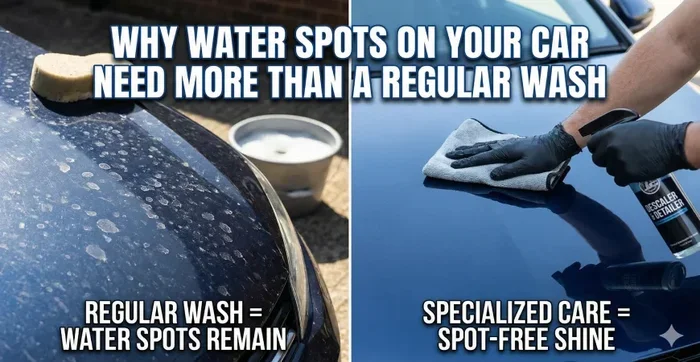
Water spots are probably the most annoying washing a car problem. You wash your car, drive away feeling great, and then a few hours later you see dots all over the paint. These spots form when water evaporates and leaves mineral deposits behind. The longer they sit, the harder they are to remove.
Here are the main reasons water spots happen:
- Hard water supply in your home or hose
- Letting water air dry instead of drying the car manually
- Washing in direct sunlight which causes water to evaporate too quickly
- Not using a rinse aid or drying aid after washing
Soap Residue and Film Buildup
Another very common problem is soap residue. You rinse your car and it looks clean, but after it dries you notice a cloudy film. This happens when soap is not fully rinsed off. Using too much soap is a big cause. So is not rinsing thoroughly enough. Some cheap car wash soaps are also harder to rinse clean, which makes this problem worse.
Soap buildup can dull your paint and make it look dirty even right after you wash it. It attracts dust and grime faster too. So getting rid of soap residue is important for both immediate results and long-term paint health.
Swirl Marks and Fine Scratches
Swirl marks are tiny circular scratches in the paint. They are usually caused by using dirty washing mitts, sponges, or towels. When these tools pick up dirt and grit from your car’s surface and then move across the paint, they create micro scratches. Over time, swirl marks build up and make your car look dull and faded.
This is one of the most preventable washing a car problems. All it takes is using clean, soft tools and following a proper washing technique like the two-bucket method.
Paint Fading and Oxidation
Over time, exposure to the elements can cause your car’s paint to fade and oxidize. Washing a car the wrong way speeds up this process. Using harsh detergents, abrasive brushes, or skipping wax protection all contribute to premature paint damage. Oxidation makes the paint look chalky and lifeless. While you cannot fully reverse severe oxidation, proper washing and regular waxing can prevent it from getting worse.
How to Prevent Water Spots and Soap Residue
Prevention is always easier than fixing a problem. When it comes to washing a car problems like water spots and soap residue, a few simple changes to your routine can make a huge difference.
Use Filtered or Soft Water
If your home has hard water, consider using a water filter on your hose. You can also use distilled water for the final rinse. This removes minerals before they ever touch your car’s surface. It is a small change that prevents a big problem.
Rinse Thoroughly and Often
Take extra time when rinsing. Make sure every inch of soap is washed away before you move on to drying. Use a gentle stream of water from a hose or a foam cannon attachment. Rinse from top to bottom so that soap runs off naturally and does not pool in any one area.
Dry Your Car Properly
Never let your car air dry. Use a clean, plush microfiber drying towel and gently pat the surface dry. Start from the top and work your way down. This prevents water spots from forming and gives you a streak-free finish. A quick detail spray after drying also adds a layer of protection.
Quick Tip: Keep a second microfiber towel just for drying. Never use the same towel for washing and drying. This prevents cross-contamination and reduces the risk of scratches.
Best Practices for Hand Washing Your Car
Hand washing is the safest way to clean your car when done correctly. But many people make mistakes that lead to washing a car problems. Here is how to do it right.
The Two-Bucket Method
The two-bucket method is the gold standard of hand washing. You fill one bucket with soapy water and another with clean rinse water. After you wash a section of the car, you rinse your mitt in the clean water bucket before dipping it back into the soapy one. This keeps dirt and grit out of your wash solution and prevents you from dragging contaminants across your paint.
Here is how to set it up:
- Fill two buckets — one with soapy water and one with plain rinse water.
- Use grit guards at the bottom of each bucket to trap dirt.
- Wash one panel at a time from top to bottom.
- Rinse your mitt in the clean bucket after each panel.
- Dry immediately with a clean microfiber towel.
Choose the Right Products
Not all car wash soaps are created equal. Using dish soap or household cleaners might seem like a good idea, but these products are too harsh for car paint. They strip away wax and sealant protection, leaving your car vulnerable. Always use a pH-balanced car wash soap that is designed for automotive use.
Look for soaps that are labeled as gentle or paint-safe. Brands that offer sudsing formulas help lift dirt away without requiring heavy scrubbing. A foam cannon or foam gun attached to your pressure washer or hose is also a great investment. It applies an even layer of foam that loosens dirt before you even touch the paint with a mitt.
Use the Right Tools
Your washing tools matter just as much as your soap. Here are the best tools to use:
- Microfiber wash mitts — soft, gentle, and trap dirt in their fibers
- Soft-bristle brushes — for wheels and tight areas
- Plush microfiber drying towels — at least two per wash session
- Grit guards — to keep dirt at the bottom of your buckets
- Hose with adjustable nozzle — for a gentle, controlled rinse
Avoid using old towels, sponges with rough textures, or anything that has been used on other surfaces like household floors or dishes. Each surface carries different types of dirt and grit that can scratch your car’s paint.
Automatic Car Wash vs. Hand Washing: Which Causes More Problems?
This is a debate that car owners have had for years. Both automatic car washes and hand washing have pros and cons. Let us compare them side by side.
| Factor | Automatic Car Wash | Hand Washing |
|---|---|---|
| Convenience | Very fast and easy | Takes more time and effort |
| Paint Safety | Can cause swirl marks and scratches | Safe when done correctly |
| Water Spots | Common if not dried properly | Easily preventable |
| Cost | Low per wash (around $10-$25) | Minimal (soap and towels) |
| Control | Limited — you cannot choose pressure or technique | Full control over every step |
| Chemical Quality | Often harsh industrial chemicals | You choose gentle, pH-balanced products |
Touchless automatic car washes are generally safer than brush-style washes. Brush washes drag dirty bristles across your paint and cause swirl marks. Touchless washes use high-pressure water and chemicals, which are less likely to scratch but can still leave soap residue if the rinse cycle is too short. If you use an automatic car wash, always choose the touchless option and dry your car thoroughly afterward.
How to Fix Common Washing Mistakes
Even with the best routine, washing a car problems can still happen. Here is how to fix the most common mistakes.
Removing Water Spots
If water spots have already formed, you have a few options. For light spots, a quick detail spray and a microfiber towel may do the job. For stubborn mineral deposits, use a dedicated water spot remover or a mild iron remover spray. Apply it gently, let it sit for a few minutes, and then rinse thoroughly. Never scrub water spots aggressively, as this can grind the minerals into the paint.
Fixing Soap Residue
Soap residue is easy to fix. Simply re-rinse your car with clean water. Use a gentle stream and make sure you cover every surface. If the film persists, wash the car again with a smaller amount of soap and more rinse water. A quick detail spray after drying can also restore shine and remove any remaining haze.
Treating Swirl Marks
Light swirl marks can be reduced with a quality polish or swirl remover. Apply a small amount to a foam applicator pad and work it into the affected area using light, overlapping strokes. Follow up with a layer of wax or sealant to protect the paint. Deep swirl marks may require professional detailing, so prevention is always the better approach.
Restoring Faded Paint
For paint that has faded due to oxidation, a compound polish can help restore some of the lost shine. Apply the compound with a machine polisher or by hand using a microfiber applicator. After polishing, apply a coat of wax or ceramic coating to lock in the protection and enhance the finish. Regular washing with proper products will help maintain the results.
Key Habits That Keep Your Car Looking Great
Preventing washing a car problems comes down to building good habits. Here are a few simple routines that make a big difference over time:
- Wash your car regularly — every one to two weeks depending on your environment and driving conditions.
- Wash in the shade — never in direct sunlight, as this causes water and soap to dry too quickly.
- Use clean tools — always start with freshly washed mitts, towels, and buckets.
- Apply wax or sealant — this creates a protective barrier that makes future washes easier and safer.
- Dry completely after every wash — never leave your car wet, even for a short time.
- Address problems early — the longer water spots or residue sit, the harder they are to remove.
When you make these habits part of your routine, washing a car problems become rare instead of routine. Your car will look better for longer, and the paint will stay protected against the elements.
Conclusion
Washing a car should be a satisfying task that leaves your vehicle looking its best. Unfortunately, many drivers deal with washing a car problems like water spots, soap residue, swirl marks, and paint damage. The good news is that most of these issues are completely preventable. With the right products, the right tools, and the right technique, you can wash your car safely and get professional results at home.
Remember to use soft water, pH-balanced soap, clean microfiber tools, and the two-bucket method. Dry your car thoroughly and address any issues as soon as they appear. These simple steps protect your car’s finish and keep it looking great for years to come. Take the time to fix your washing routine today, and your car will thank you every time you step behind the wheel.
Frequently Asked Questions
What are the most common washing a car problems?
The most frequent issues include water spots from hard water, soap residue and film buildup, swirl marks and fine scratches from dirty tools, paint fading from harsh chemicals, and streaks caused by improper drying. All of these washing a car problems are preventable with the right technique and products.
How do I prevent water spots when washing my car?
Use filtered or distilled water for the final rinse, dry your car immediately with a clean microfiber towel, and avoid washing in direct sunlight. Applying a quick detail spray after drying also helps repel water and prevent mineral deposits from forming on the surface.
Is hand washing better than an automatic car wash?
Hand washing is generally safer for your car’s paint when done correctly using the two-bucket method and soft tools. Automatic car washes, especially brush-style ones, can cause swirl marks and scratches. If you use an automatic wash, choose the touchless option and dry your car thoroughly afterward to avoid washing a car problems.
What soap should I use to avoid washing a car problems?
Always use a pH-balanced car wash soap designed for automotive use. Avoid dish soap, household cleaners, or any harsh detergents that strip wax and sealant. Quality car wash soaps lift dirt gently without damaging the paint or leaving behind residue.
How often should I wash my car to avoid problems?
Washing every one to two weeks is ideal for most drivers. Cars exposed to road salt, bird droppings, tree sap, or heavy pollution may need more frequent washing. Regular washing prevents contaminants from bonding with the paint and causing long-term damage like oxidation and clear coat erosion.
Can swirl marks from washing be removed?
Yes, light swirl marks can be reduced with a quality polish or swirl remover. Apply it gently with a foam applicator pad using light pressure. After polishing, apply wax or a ceramic coating to protect the paint. For deep swirl marks, professional detailing may be necessary, so prevention through proper washing techniques is always the best approach.