How to Change a Flat Tire and Get Back on the Road
Knowing how to change a flat tire is one of the most important skills every driver should have. This guide walks you through the entire process, from pulling over safely to driving on your spare. You will learn the tools you need, common mistakes to avoid, and tips to prevent flat tires in the future.
Key Takeaways
- Pull over safely: Find a flat, stable surface away from traffic before you start any work.
- Gather the right tools: You need a jack, lug wrench, spare tire, and basic safety gear.
- Follow each step carefully: Loosen lug nuts before lifting the car, and tighten them in a star pattern after.
- Avoid common mistakes: Do not get under a car supported only by a jack, and do not drive fast on a spare.
- Prevent flats: Check tire pressure regularly and inspect your tires for wear and damage.
- Know when to call for help: If you feel unsafe or unsure, roadside assistance is always a smart choice.
📑 Table of Contents
What to Do When You Get a Flat Tire
You are driving along, and suddenly your car starts pulling to one side. You hear a flapping sound or feel the steering get heavy. These are classic signs of a flat tire. It can feel scary, but staying calm is the first and most important step.
Learning how to change a flat tire gives you confidence and independence. You will not have to wait long on the side of the road for help. Most people can finish the job in about 15 to 30 minutes once they know the steps.
The key is preparation. Before a flat ever happens, you should know where your tools are in your car. This article will guide you through everything you need to know about flat tire repair and getting back on the road safely.
Whether you are a new driver or just need a refresher, this guide covers it all. We will walk through each step in simple, easy-to-follow language. Let us get started.
Gather Your Tools and Safety Gear
Before you do anything, make sure you have the right tire changing tools in your vehicle. Most cars come with a basic emergency kit. But it is smart to check and restock these items regularly.
Essential Items for Your Emergency Kit
Here is a list of what you need to change a flat tire properly:
- Car jack: This lifts the vehicle off the ground. Most cars come with a scissor jack or hydraulic jack.
- Lug wrench: This tool loosens and tightens the wheel lug nuts.
- Spare tire: Check that your spare is inflated and ready to use.
- Hazard lights: Turn these on to warn other drivers.
- Reflective triangles or flares: Place these behind your car for extra visibility.
- Gloves: Protect your hands from dirt and sharp edges.
- Flashlight: Useful if the flat happens at night.
- Wheel wedges: These block the tires from rolling while you work.
Keep all of these items in your trunk or undercarriage storage. If any of them are missing or damaged, replace them right away. A well-stocked emergency roadside kit can make a huge difference in an emergency.
Step-by-Step: How to Change a Flat Tire
Now that you have your tools ready, let us walk through the actual tire changing steps. Follow each step carefully and do not rush.
Step 1: Pull Over Safely
When you notice a flat, slow down gradually. Do not slam on the brakes. Look for a wide, flat shoulder, parking lot, or driveway. Avoid soft ground or hills. Turn on your hazard lights immediately.
Apply the parking brake. This keeps the car from rolling while you work. If you have wheel wedges, place them behind the tires opposite the flat. For example, if the front left tire is flat, put wedges behind the rear right tire.
Step 2: Prepare the Vehicle
Get your tools and spare tire out of the trunk. Take the hubcap off the flat tire if it has one. Most hubcaps pop off with the flat end of your lug wrench. Set the hubcap aside.
Use the lug wrench to loosen the lug nuts. Turn them counterclockwise. You do not need to remove them completely yet. Just break the resistance. If the nuts are very tight, you can stand on the wrench arm for extra leverage.
Step 3: Lift the Vehicle
Place the jack under the vehicle frame near the flat tire. Most cars have a reinforced area marked with a small arrow or notch. Check your owner manual if you are not sure where to place the jack.
Crank the jack until the flat tire is about six inches off the ground. Never put any part of your body under the car while it is supported only by a jack. This is one of the most important roadside safety rules.
Step 4: Remove the Flat Tire
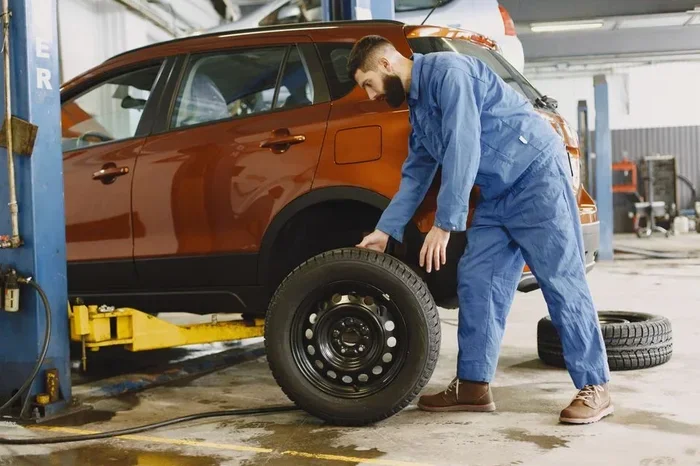
Now fully unscrew the lug nuts. Keep them in a safe place, like your pocket or a cup. Pull the flat tire straight toward you to remove it. Set it on its side so it does not roll away.
You now have the flat tire off and the bare wheel exposed. This is the moment where many people feel a sense of relief. You are almost done with how to change a flat tire.
Step 5: Mount the Spare Tire
Lift the spare tire onto the hub. Align the holes in the spare with the bolts on the wheel. Push gently until the bolts show through the holes.
Hand-tighten the lug nuts first. Turn them clockwise as tight as you can by hand. This keeps the tire in place while you lower the car.
Step 6: Lower the Vehicle and Final Tightening
Use the jack to lower the vehicle until the spare tire touches the ground but the car is not fully resting on it. Now use the lug wrench to tighten the nuts firmly.
Tighten them in a star pattern. This means you tighten one nut, then the one across from it, and so on. This ensures even pressure. Fully lower the car and remove the jack.
Give the lug nuts one final tighten with the wrench. Replace the hubcap if it fits your spare. Put all your tools and the flat tire back in the trunk.
Common Mistakes to Avoid When Changing a Tire
Even when you know how to change a flat tire, mistakes can happen. Here are the most common ones and how to avoid them.
- Skipping the parking brake: This is dangerous. The car can roll, especially on a slope.
- Placing the jack on soft ground: The jack can sink or slip. Use a flat, hard surface every time.
- Not tightening lug nuts enough: Loose lug nuts can cause the wheel to come off while driving. Always double-check.
- Driving too fast on a spare: Most temporary spares are rated for only 50 miles per hour. Drive slowly and carefully.
- Ignoring the flat tire: A spare is not a permanent fix. Get your flat tire repaired or replaced as soon as possible.
- Over-tightening lug nuts with an impact tool: This can damage the wheel studs. Use hand tightening with the star pattern.
Avoiding these mistakes keeps you safe and prevents damage to your vehicle. Vehicle maintenance includes knowing these basics.
Tips for Preventing Flat Tires
The best way to deal with a flat tire is to prevent one from happening in the first place. Here are some simple habits that help a lot.
Check your tire pressure regularly. Under-inflated tires are more likely to blow out. Use a tire pressure gauge once a month. The recommended pressure is listed on a sticker inside your driver door or in the owner manual.
Inspect your tires for wear. Look for cracks, bulges, or objects like nails stuck in the tread. A tire pressure check takes only a few minutes but can save you from a roadside emergency.
Rotate your tires on schedule. This helps them wear evenly and last longer. Most manufacturers recommend rotating tires every 5,000 to 7,500 miles.
Keep your spare tire in good shape. Check the spare pressure at least twice a year. A spare that is also flat will not help you when you need it most.
Drive carefully around hazards. Avoid potholes, sharp debris, and curbs when you can. These are common causes of punctures and blowouts.
These simple driving safety tips go a long way in keeping you rolling smoothly.
When to Call for Roadside Assistance
There are times when you should not try to change a tire yourself. Knowing when to call for roadside assistance is just as important as knowing how to change a tire.
Call for help if you are on a busy highway with no safe place to pull over. If you feel unsafe or uncomfortable, that is reason enough. You should also call for help if your jack is broken, the lug nuts are stuck, or the spare tire is flat too.
Many insurance plans and car manufacturers include roadside assistance. Keep the phone number in your glove box or saved in your phone. There is no shame in asking for help. The goal is to get home or to a repair shop safely.
If you are in an area with no cell service, stay in your car with the doors locked and hazard lights on. Wait for a passing driver or patrol officer to stop and help.
Final Thoughts on Changing a Flat Tire
Knowing how to change a flat tire is a life skill that every driver should have. It saves time, money, and stress when the unexpected happens on the road. With the right tools, a little practice, and the steps in this guide, you can handle a flat tire with confidence.
Remember to stay safe first. Pull over in a stable spot, use your hazard lights, and never get under a car supported only by a jack. Take your time with each step, and do not skip the star-pattern tightening method for your lug nuts.
Prevention is your best friend. Regular tire pressure checks, visual inspections, and proper maintenance can reduce the chance of a flat significantly. But when a flat does happen, you now know exactly what to do.
Keep your emergency kit stocked and your spare tire ready. Share this guide with a friend or family member who might need it. The more people who know how to change a flat tire, the safer and more prepared our roads become for everyone.
Next time you see a flat tire, take a deep breath. You have got this. Grab your tools, follow the steps, and get back on the road.
Frequently Asked Questions
How long does it take to change a flat tire?
For most people, changing a flat tire takes about 15 to 30 minutes. If it is your first time, it might take a little longer. With practice, you will get faster and more confident each time.
Can I drive on a spare tire for a long time?
No. Temporary spares, also called “donuts,” are designed for short-term use only. Drive no faster than 50 miles per hour and limit your distance to about 50 to 70 miles. Get your regular tire repaired or replaced as soon as possible.
What should I do if the lug nuts are too tight to loosen?
Try using a longer wrench arm for more leverage. You can also gently tap the wrench with a rubber mallet to break the resistance. Never use excessive force or risky methods that could injure yourself.
How often should I check my spare tire pressure?
Check your spare tire pressure at least twice a year. It is also a good idea to check it before any long road trip. A spare that has lost air will not be useful in an emergency.
Is it safe to change a tire on the side of a highway?
It can be risky. If possible, drive to the next exit or a safe parking area. If you must stop on the highway, pull as far onto the shoulder as you can, turn on your hazard lights, and set out reflective triangles or flares.
What is the difference between a full-size spare and a temporary spare?
A full-size spare is the same size as your regular tires and can be used indefinitely. A temporary spare, or “donut,” is smaller and lighter. It is meant only for short-term use until you can get a proper tire repair or replacement.