Where Is the Manufacturing Date on Your Car Battery
Knowing where to find the manufacturing date on your car battery is one of the simplest yet most overlooked steps in car maintenance. The date code is usually printed on a sticker or stamped directly on the battery case, and it tells you exactly when your battery was made. Reading this date helps you track battery age, manage warranty claims, and avoid unexpected breakdowns. Whether you have a standard flooded battery or an AGM model, the process is quick and easy once you know what to look for.
Have you ever stood in front of your car battery and wondered, “where is date on car battery”? It is a simple question, but the answer can save you a lot of money and hassle. Your car battery has a manufacturing date printed or stamped on it, and knowing how to find and read that date is a valuable skill for any car owner.
Many people only think about their battery when the car won’t start. By then, it might be too late to make a smart purchase decision or file a warranty claim. Learning how to locate and interpret the battery date code puts you ahead of the game. It helps you know exactly how old your battery is, whether it is still under warranty, and when you should plan for a replacement.
This guide walks you through everything you need to know. From finding the date sticker to decoding the letters and numbers, we cover it all. You will also learn why battery age matters, how to extend your battery’s life, and when it is time to buy a new one. Let us get started.
Key Takeaways
- Battery date codes are found on a sticker or stamped label near the top or side of the battery case.
- The date code uses a letter-number system where the letter stands for the month and the number for the year.
- A battery older than three to five years may need replacement even if it still starts your car.
- Knowing your battery age helps with warranty claims and prevents surprise failures.
- Regular maintenance and proper storage can significantly extend battery life.
- Different brands use slightly different date code formats, so check your manufacturer’s guide.
- Checking the battery date takes less than a minute and requires no special tools.
📑 Table of Contents
Why Knowing Your Battery Manufacturing Date Matters
The manufacturing date on your car battery tells you exactly when it was produced. This information matters more than most people realize. A fresh battery performs better, holds a charge longer, and is less likely to leave you stranded on a cold morning.
Warranty Protection
Most car batteries come with a warranty that ranges from one to five years. If your battery dies prematurely, the manufacturing date proves when you purchased or received the battery. Without this date, you may lose your right to a free replacement or refund. Always check the date before you buy a new battery to make sure you are getting a fresh product, not one that has been sitting on a shelf for months.
Performance and Reliability
Car batteries degrade over time, even when they are not in use. The chemical reactions inside the battery slowly reduce its ability to hold a full charge. A battery that is three years old may still start your car, but it might struggle in cold weather or when you have multiple electronics running. Tracking the battery production date helps you stay ahead of these performance drops.
Resale Value
If you are selling your car, a battery with a recent manufacturing date adds value. Buyers look for well-maintained vehicles, and a fresh battery is a strong selling point. Knowing the date also shows you have taken good care of the car.
Where to Find the Manufacturing Date on Your Battery
Finding the date on your car battery is easier than you might think. Most manufacturers place the date label in a visible spot so you can check it without removing the battery. Here are the most common places to look.
On the Sticker Label
The most common way manufacturers show the battery date is through a sticker label. This sticker is usually found on the top of the battery case or on the side facing up when the battery is installed in the engine bay. Look for a white or silver sticker with a series of letters and numbers. This is your battery date code.
If the top of the battery is covered by a plastic cover or a battery mat, you may need to remove it to see the sticker. The label should be clearly visible and not hidden under grime or corrosion. If it is hard to read, gently wipe it clean with a dry cloth.
Stamped Directly on the Battery Case
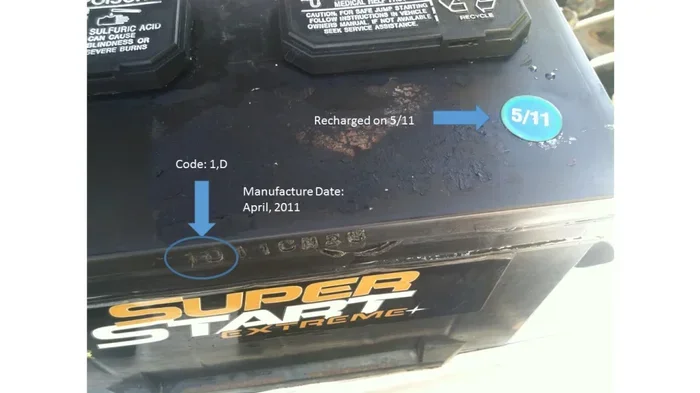
Some battery brands stamp the date directly into the plastic case. This is common with brands like DieHard, AC Delco, and Optima. The stamp is usually near the positive terminal or on the flat side of the battery. These stamps can be faint, so you may need good lighting or a flashlight to read them clearly.
On the Battery Terminal Cover
In a few cases, the date code is printed on the plastic cover over the battery terminals. Remove the cover carefully and check the inside surface. This is less common but still worth checking if you cannot find the date elsewhere.
Quick Tips for Locating the Date
- Always disconnect the negative terminal first before touching the battery if you need to move anything around it.
- Use a flashlight to inspect dark areas under the battery or inside the engine bay.
- Take a photo of the date code with your phone so you can read it more easily later.
- Check the battery brand website if the code format confuses you. Most brands have a date code decoder on their support page.
How to Decode the Battery Date Code
Once you find the date code, the next step is understanding what it means. Different battery brands use slightly different systems, but most follow a simple letter-number format. Here is how to read the most common types.
The Letter-Number System
The most widely used format is a letter followed by a number. The letter represents the month, and the number represents the year. For example:
- A = January, B = February, C = March and so on through the alphabet.
- The number stands for the last digit of the year. So “A23” means January 2023.
Here is a full month guide to make it easy:
- A = January
- B = February
- C = March
- D = April
- E = May
- F = June
- G = July
- H = August
- I = September (often skipped to avoid confusion with the number 1)
- J = October
- K = November
- L = December
Examples of Common Date Codes
Let us look at a few real-world examples. If you see the code “C21” on your battery, that means it was manufactured in March 2021. A code “K24” means November 2024. Some batteries use a two-digit year code, like “M25” for March 2025.
A few brands use a slightly different system. For instance, some batteries use the number first and then the letter. Always check the manufacturer’s guide if the format seems reversed. The key is to find both the month and year indicators in the code and read them in the correct order.
What If the Date Code Is Missing?
Sometimes the sticker falls off or the stamp wears away, especially on older batteries. In this case, you can estimate the age by checking the battery group size and the brand’s production timeline. You can also ask the seller or the previous owner. If you bought the battery new, check your receipt or the store’s records. A missing date code does not mean the battery is bad, but it does make it harder to track age accurately.
How Old Is Too Old for a Car Battery?
Most car batteries last between three and five years, depending on driving habits, climate, and battery type. But age alone is not the only factor. Here is a simple guide to help you decide if your battery is still good or if it is time for a replacement.
Battery Age and Performance
A battery that is less than two years old is considered fresh and should perform reliably. Between two and three years, the battery is still in good shape but may start showing minor signs of wear. From three to five years, the battery enters the warning zone. After five years, most experts recommend replacing it proactively, even if it still works.
Signs Your Battery May Be Aging
- Slow engine crank when you turn the key.
- Dashboard warning lights flickering or staying on.
- Battery swelling or bloating on the case.
- Corrosion buildup around the terminals that keeps coming back.
- Needing jump starts more than once or twice a year.
- Dim headlights when the engine is off.
Cold Weather and Battery Age
Cold weather is especially hard on older batteries. The chemical reactions inside the battery slow down in low temperatures, reducing the available cranking power. A battery that works fine in summer may fail in winter if it is already three years or older. Checking your battery date before winter is one of the smartest things you can do for your car.
Tips to Extend Your Car Battery Life
You cannot stop a battery from aging, but you can slow down the process. Simple habits can add months or even years to your battery’s lifespan. Here are practical tips that really work.
Keep the Battery Clean
Dirt and moisture cause corrosion on the battery terminals. Use a baking soda and water solution to clean the terminals gently. A clean connection means better charging and longer battery life. Wipe down the top of the battery regularly to prevent grime buildup.
Drive Your Car Regularly
Batteries charge while you drive. If your car sits unused for long periods, the battery slowly loses its charge and can become deeply discharged. Try to drive your car at least once a week for 20 to 30 minutes to keep the battery healthy.
Avoid Short Trips
Short trips do not give the alternator enough time to fully recharge the battery. If you mostly drive short distances, consider using a battery maintainer or trickle charger. This keeps the battery at full charge without overloading it.
Turn Off Electronics When Starting
Headlights, air conditioning, and the radio draw power from the battery. Turning them off before starting the engine reduces the strain on the battery during the most demanding moment. Once the engine is running, you can turn them back on safely.
Check the Charging System
A faulty alternator can overcharge or undercharge your battery, dramatically shortening its life. Have your charging system checked during every oil change or at least once a year. A simple voltage test at any auto parts store can tell you if the alternator is working properly.
When to Replace Your Car Battery
Even with the best care, every battery eventually needs replacing. Knowing when to make the switch saves you from being stranded and prevents damage to your car’s electrical system.
Time-Based Replacement
If your battery is more than four years old, start planning for a replacement. Most manufacturers recommend replacing the battery at the five-year mark, regardless of how it performs. Proactive replacement is always cheaper than emergency replacement.
Performance-Based Replacement
If you notice any of the warning signs mentioned earlier, have the battery tested right away. Many auto parts stores offer free battery testing. A load test tells you the actual condition of the battery, not just its age. If the test shows the battery is weak, do not wait for it to fail completely.
Choosing the Right Replacement Battery
When it is time to buy a new battery, pay attention to the group size, cold cranking amps (CCA), and reserve capacity. Match these specifications to your car’s manual. Also, check the manufacturing date on the new battery before you buy it. You want a battery that was made within the last six months. A battery that has been sitting on a shelf for a year may not last as long as expected.
Expert Insight
According to most automotive experts, the ideal battery replacement window is between years three and five. Waiting too long increases the risk of a sudden failure, especially in extreme weather. Replacing your battery on a schedule is one of the easiest and most cost-effective maintenance tasks you can do for your vehicle.
Key Takeaways
- Battery manufacturing dates are found on a sticker or stamped label near the top or side of the battery case.
- The date code uses a letter for the month and a number for the year, making it easy to decode once you know the system.
- A battery older than three to five years may need replacement even if it still starts your car.
- Knowing your battery age helps with warranty claims and prevents surprise failures.
- Regular maintenance, clean terminals, and regular driving can significantly extend battery life.
- Always check the date on a new battery before purchase to ensure you get a fresh unit.
- Cold weather accelerates battery failure, so checking the date before winter is especially important.
Conclusion
Finding the manufacturing date on your car battery is a quick and simple task that every driver should know how to do. The date is almost always printed on a sticker or stamped on the battery case, and learning to read the code takes just a few minutes. Once you know how old your battery is, you can make smarter decisions about maintenance, warranty claims, and replacement timing.
Do not wait until your car fails to start. Make it a habit to check your battery date at least once a year. Pair this check with other routine maintenance tasks like testing the alternator and cleaning the terminals. These small actions add up to a more reliable car and fewer unexpected trips to the mechanic.
Your car battery is the heart of your vehicle’s electrical system. Treat it well, keep track of its age, and it will keep you moving safely. Now that you know exactly where to look and how to read the date, you have one more tool in your car care toolkit. Use it wisely.
Frequently Asked Questions
How do I find the date code on my car battery?
Look for a sticker label on the top or side of the battery case. The date code is usually a letter followed by a number, where the letter represents the month and the number represents the year. If the sticker is hard to read, try cleaning it gently with a dry cloth.
What does the battery date code letter mean?
The letter stands for the month the battery was manufactured. A is January, B is February, C is March, and so on through L for December. Some brands skip the letter I to avoid confusion with the number 1.
Can I still use my battery if the date code is missing?
Yes, a missing date code does not mean the battery is bad. However, it makes it harder to track the battery age. You can estimate the age by checking the battery brand, model, and any purchase records you may have.
How often should I check my car battery date?
It is a good idea to check the battery date at least once a year, ideally before winter. You can also check it every time you pop the hood for other maintenance tasks. It only takes a few seconds.
Does the battery manufacturing date affect the warranty?
Yes, absolutely. Most battery warranties are based on the manufacturing date, not the purchase date. If your battery fails within the warranty period, the date code proves when it was made and whether it is still covered.
What is a good battery age when buying a replacement?
Always choose a battery that was manufactured within the last six months. A battery sitting on a shelf for over a year may have reduced charge capacity. Check the date code on the new battery before you pay for it.