What Is the Legal Window Tint for Cars on Georgia
Georgia law sets specific limits on how dark you can tint your car windows. The legal window tint for cars on Georgia depends on your vehicle type, window location, and whether you qualify for a medical exemption. This guide covers VLT percentages, penalties, and everything you need to stay compliant with Georgia tint regulations.
If you drive a car in Georgia, you have probably wondered about the rules around window tint. The legal window tint for cars on Georgia is not as simple as one number. Different windows have different limits. Different vehicle types follow different rules. And if you have a medical condition, there are exemptions that can help.
Understanding Georgia window tint law is important. A tint ticket can cost you money and time. Worse, illegal tint can fail your vehicle inspection. This guide breaks down everything you need to know about car window tint percentage rules in Georgia. We will cover sedan rules, SUV rules, windshield limits, medical exemptions, and penalties. By the end, you will know exactly how dark you can go and how to stay compliant.
Key Takeaways
- VLT Limits Vary by Vehicle: Sedans and SUVs have different tint darkness rules for each window.
- Windshield Tint Is Restricted: Only a non-reflective strip on the top of the windshield is allowed.
- Medical Exemptions Exist: You can get a darker tint with a doctor’s prescription in Georgia.
- Penalties Are Real: Illegal tint can lead to fines up to $1,000 and additional ticket costs.
- Choose Certified Film: Always use certified tint film to ensure compliance with Georgia tint regulations.
- Reflective Tint Is Limited: Georgia law restricts reflective or metallic-looking tint on most windows.
📑 Table of Contents
Understanding the Legal Window Tint for Cars on Georgia
Georgia has clear rules about how dark your window tint can be. These rules are based on something called VLT, which stands for Visible Light Transmission. VLT measures how much light passes through your window film. The lower the VLT number, the darker the tint. For example, a 5% VLT film lets in very little light, while a 70% VLT film is almost clear.
The tint darkness Georgia law sets specific VLT limits for each window on your car. These limits change depending on whether you drive a sedan, SUV, or van. The state also has rules about reflective tint and tint on the windshield. Let us break all of this down so it is easy to understand.
What Does VLT Mean?
Visible Light Transmission, or VLT, is the percentage of light that passes through your window film and glass. A higher VLT means more light gets in, which means a lighter tint. A lower VLT means less light gets in, which means a darker tint. When you hear someone talk about tint darkness level, they are referring to the VLT percentage.
Here is a simple way to think about it. If a film has a 50% VLT, it blocks half the light and lets the other half through. If it has a 35% VLT, it blocks 65% of the light. The Georgia tint law sets minimum VLT percentages for each window. You must meet or exceed those minimums to stay legal.
Legal Tint Limits for Different Vehicle Types
The legal tint limits in Georgia depend on what kind of vehicle you drive. Sedans, SUVs, and vans all have different rules. Below, we break down the car tint compliance requirements for each vehicle type. This will help you know exactly what is allowed and what is not.
Sedan Window Tint Rules
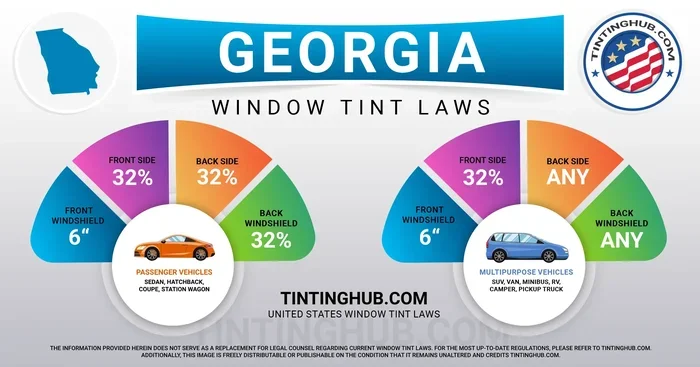
If you drive a sedan in Georgia, here are the sedan tint rules you need to follow:
- Windshield: You may apply a non-reflective tint strip to the top 6 inches of the windshield.
- Front Side Windows: Must allow more than 32% of light in (32% VLT or higher).
- Rear Side Windows: Must allow more than 32% of light in (32% VLT or higher).
- Rear Window: Must allow more than 32% of light in (32% VLT or higher).
For sedans, all side windows and the rear window must have the same VLT level. You cannot mix different tint darkness levels on a sedan. The front side windows and rear side windows must both be above 32% VLT.
SUV and Van Tint Rules
SUVs and vans follow slightly different rules than sedans. Here are the SUV tint rules for Georgia:
- Windshield: You may apply a non-reflective tint strip to the top 6 inches of the windshield.
- Front Side Windows: Must allow more than 32% of light in (32% VLT or higher).
- Rear Side Windows: Can be any darkness level (any VLT).
- Rear Window: Can be any darkness level (any VLT).
The big difference for SUVs and vans is the rear side windows and rear window. These can be tinted as dark as you want. However, if the rear windows are very dark, Georgia law requires you to have dual side mirrors. This helps you see behind the vehicle safely.
Comparison Table: Sedan vs. SUV Tint Limits
| Window | Sedan VLT Limit | SUV/Van VLT Limit |
|---|---|---|
| Windshield | Non-reflective strip on top 6 inches | Non-reflective strip on top 6 inches |
| Front Side Windows | 32% VLT or higher | 32% VLT or higher |
| Rear Side Windows | 32% VLT or higher | Any VLT allowed |
| Rear Window | 32% VLT or higher | Any VLT allowed |
As you can see from the table, SUVs and vans have more flexibility with rear window tint. Sedans must keep all windows above 32% VLT. This is an important difference to keep in mind when choosing your window tint film.
Windshield and Mirror Tint Rules
Georgia has specific rules for the windshield. You cannot tint the entire windshield dark. The only tint allowed on the windshield is a non-reflective strip on the top 6 inches. This strip must not extend below the AS-1 line, which is typically marked on the windshield by the manufacturer.
The windshield tint strip rule is designed to keep your view of the road clear. It also ensures that police officers can see through your windshield during traffic stops. If your tint extends too far down on the windshield, you could get a tint ticket Georgia style citation.
When it comes to mirrors, if your rear windows are heavily tinted, Georgia law requires dual side mirrors. This ensures you have enough visibility to drive safely. Always check your mirror placement if you tint your rear windows dark.
Medical Exemptions for Window Tint
Not everyone can tolerate standard levels of sunlight. If you have a medical condition that makes you sensitive to light, Georgia allows a medical exemption window tint. This exemption lets you use darker tint than the standard legal limits.
To qualify, you need a signed statement from a licensed physician. The statement must explain your condition and why darker tint is medically necessary. You then submit this to the Georgia Department of Public Safety. If approved, you will receive a window tint exemption permit.
Expert Insight: Common conditions that qualify include lupus, psoriasis, eczema, and severe sun allergies. The exemption allows VLT levels lower than 32% on front side windows. However, the exemption must be renewed periodically. Always keep your exemption certificate in the vehicle at all times.
Without a valid exemption certificate, you are subject to the standard tint limits. Police officers can and do check for these permits during traffic stops. Having a legitimate medical exemption protects you from fines and penalties.
Penalties for Illegal Tint in Georgia
Getting caught with illegal window tint penalty consequences is not fun. Georgia takes tint violations seriously. Here is what you can expect if you are stopped for illegal tint:
- Fine: You can be fined up to $1,000 for a first offense.
- Ticket Costs: Court fees and processing costs can add up quickly.
- Forced Removal: Officers can order you to remove the illegal tint.
- Failed Inspection: Your vehicle may fail its annual safety inspection.
- Repeat Offenses: Multiple violations can lead to higher fines and legal trouble.
The cost of a tint ticket Georgia violation can add up fast. Beyond the fine, you also have to pay for removing and replacing the illegal film. That can easily cost several hundred dollars. It is much cheaper to follow the rules from the start.
Common Mistakes: Many people buy tint online without checking the VLT percentage. They assume all dark films are the same. Others forget about the reflective tint rule. Georgia law restricts reflective or metallic-looking tint on front side windows and rear side windows. Always check the VLT rating before you buy any film.
Tips for Choosing Compliant Window Tint
Choosing the right tint can feel overwhelming with so many options available. Here are some practical tips to help you stay compliant with Georgia tint regulations while still getting the look and benefits you want.
Quick Tips for Compliant Tinting
- Ask for the VLT percentage before you buy any tint film.
- Choose certified film that meets Georgia standards.
- Get a written receipt that states the VLT level of the film installed.
- Keep your receipt in the vehicle at all times.
- Ask your installer if they are familiar with Georgia tint laws.
- Consider a lighter tint if you are unsure about the exact limits.
- Get a written warranty from the tint installer or film manufacturer.
Common Mistakes to Avoid
- Buying tint without checking VLT: Not all films labeled “35%” actually measure that way. Always verify with a VLT meter.
- Ignoring the windshield rule: Tinting below the top 6 inches of the windshield is illegal.
- Forgetting about reflective tint: Metallic or reflective finishes are restricted on side windows.
- Skipping the medical exemption process: If you qualify, do not skip the permit application.
- Tinting after purchase without research: Laws can change. Always verify current tint law Georgia rules before installation.
Expert Insight: A good rule of thumb is to choose a film with a VLT of 35% or higher for all side windows on a sedan. For SUVs, you have more freedom with rear windows, but staying around 35% for the front side windows keeps you safely within the law. Always work with a reputable installer who knows the current regulations.
When you are shopping for tint, ask the installer to show you the VLT rating on the film packaging. Reputable shops keep this information on file. They can also provide you with a certificate of compliance after installation. This document can be very helpful if you ever get stopped by police.
Conclusion
The legal window tint for cars on Georgia is clear once you understand the basics. Sedans must keep all side windows and the rear window above 32% VLT. SUVs and vans have more flexibility with rear windows. The windshield can only have a non-reflective strip on the top 6 inches. Medical exemptions are available for those with qualifying conditions.
Penalties for illegal tint can be costly, so compliance is worth the effort. Always choose certified film, verify the VLT percentage, and keep your paperwork in the vehicle. Following these simple steps keeps you legal, safe, and comfortable on the road. The legal window tint for cars on Georgia does not have to be confusing. With the right information, you can make a smart choice that looks great and keeps you on the right side of the law.
Frequently Asked Questions
What is the darkest legal tint in Georgia?
For sedans, the darkest legal tint is 32% VLT on all side windows and the rear window. For SUVs and vans, the rear side windows and rear window can be any darkness level. The front side windows must still be above 32% VLT for all vehicle types.
Can I get pulled over for tint in Georgia?
Yes, you can be pulled over if your window tint does not meet Georgia’s VLT requirements. Officers can use a VLT meter to measure the darkness of your tint. If it is below the legal limit, you will receive a citation and fine.
How much is a tint ticket in Georgia?
A tint ticket in Georgia can cost up to $1,000 for a first offense. Court fees and additional costs can increase the total amount. Repeat offenses may result in higher fines and mandatory tint removal.
Do I need a medical exemption for dark tint?
If you want tint darker than the legal limit and you have a qualifying medical condition, yes, you need a medical exemption. A licensed physician must provide a signed statement. You must submit this to the Georgia Department of Public Safety for approval.
Is reflective tint legal in Georgia?
Reflective or metallic tint is restricted on front side windows and rear side windows in Georgia. The windshield can only have a non-reflective strip on the top 6 inches. Always check with your installer about the reflectivity of the film you choose.
Can I tint my rear windows any darkness on an SUV?
Yes, SUVs and vans can tint rear side windows and the rear window to any darkness level. However, if the rear windows are heavily tinted, Georgia law requires dual side mirrors for safe visibility behind the vehicle.