How Many Volts to Start a Car and What You Should Know
A healthy 12-volt car battery needs at least 12.6 volts at rest and should stay above 10.0 volts during engine cranking to start reliably. Cold weather, battery age, and corroded terminals all affect the voltage your car needs. Testing your battery monthly and following simple maintenance tips can prevent starting problems before they happen.
Key Takeaways
- A healthy battery needs at least 12.6 volts at rest to reliably start your car and power all electrical systems.
- Voltage should stay above 10.0 volts during cranking to ensure the starter motor can turn the engine over smoothly.
- Cold weather significantly reduces battery performance, making it harder to maintain the voltage needed for starting.
- Testing your battery monthly with a multimeter helps you catch low voltage problems before they leave you stranded.
- Replacing your battery every 3 to 5 years is the best preventive measure against unexpected starting failures.
- Clean battery terminals and limited parasitic draw keep your electrical system operating at peak efficiency.
- A portable jump starter is a smart investment for any driver who wants a backup plan for low-voltage situations.
📑 Table of Contents
- How Many Volts to Start a Car
- Understanding Your Car Battery Voltage
- What Affects the Voltage Needed to Start a Car
- Signs Your Battery Voltage Is Too Low
- How to Test Your Car Battery Voltage
- Common Mistakes That Drain Your Battery
- Quick Tips to Keep Your Battery Healthy
- What to Do When Your Car Won’t Start
- Expert Insights on Battery Voltage and Starting
- Conclusion
How Many Volts to Start a Car
Most people don’t think about the voltage needed to start a car until something goes wrong. The truth is, your car battery needs a specific voltage level to turn over the engine and get you on the road. Understanding this basic concept can save you from unexpected breakdowns and costly repairs.
So, how many volts to start a car? The short answer is that a healthy 12-volt battery should read at least 12.6 volts when the engine is off. When you turn the key, the voltage may briefly drop to 10.0 volts or higher. If it falls below that, your starter motor struggles, and your engine might not crank at all.
This guide covers everything you need to know about how many volts to start a car, from healthy battery levels to warning signs of a failing battery. We’ll also look at practical tips to keep your battery in top shape all year round.
Whether you’re dealing with a slow crank on a cold morning or just want to be prepared, this article has you covered. Let’s dive into the details and make sure your car starts every time you need it to.
Understanding Your Car Battery Voltage
Before we get into the specifics of starting voltage, it helps to understand how your car battery works. Most modern vehicles run on a 12-volt system. This is the standard across the industry, but the actual voltage changes depending on whether your engine is running or off.
What Is a Fully Charged Battery Voltage?
A fully charged car battery should read 12.6 to 12.8 volts with the engine off. This is called the resting voltage. At this level, your battery has enough power to turn the starter motor and fire up the engine without any issues.
If your battery reads 12.4 volts, it’s about 75% charged. At 12.2 volts, it’s around 50% charged. Anything below 12.0 volts means your battery is significantly discharged and may struggle to start the car. Many drivers don’t realize their battery health is declining until the voltage drops too low to crank the engine.
What Happens When You Turn the Key?
When you turn the ignition, the starter motor draws a large amount of current from the battery. This causes a temporary voltage drop. During cranking, the voltage can fall to between 10.0 and 10.5 volts and still be considered healthy.
If the voltage drops below 10.0 volts during cranking, that’s a red flag. It means your battery doesn’t have enough power to turn the engine over properly. The engine cranking will be slow and labored, and in some cases, the car won’t start at all. This is especially true in cold weather when the oil is thicker and the engine harder to turn.
What Affects the Voltage Needed to Start a Car
Several factors influence how many volts your car needs to start. These variables can make the difference between a smooth start and a frustrating morning with a dead battery.
Cold Weather and Temperature
Cold weather is one of the biggest enemies of car batteries. In freezing temperatures, the chemical reactions inside the battery slow down. This means the battery can’t deliver its full power output, and the cold cranking amps (CCA) rating becomes critical.
At 0°F (-18°C), a battery loses about 35% of its strength. At 32°F (0°C), it loses about 20%. This is why winter mornings are the most common time for starting problems. If you live in a cold climate, keeping an eye on your battery voltage is especially important. A fully charged battery handles cold weather much better than a partially charged one.
Battery Age and Condition
Car batteries typically last between three and five years. As a battery ages, its capacity to hold a charge decreases. An old battery might read 12.6 volts but still lack the cranking power needed to start the engine.
The internal plates inside the battery wear down over time. This increases internal resistance, which means the battery can’t deliver current as efficiently. Even if the voltage looks fine on a static test, the battery might fail under the load of starting the car. Battery age is one of the most overlooked factors in starting failures.
Engine Size and Type
Larger engines need more power to turn over. A small four-cylinder engine will require less voltage and amperage than a big V8. Diesel engines are another story entirely, as they use glow plugs and higher compression to ignite fuel.
Also, turbocharged engines and engines with direct fuel injection can be harder to start because they operate under higher pressure. These engines may need a slightly higher and more sustained voltage from the battery to crank successfully. The ignition system in modern cars is designed to work with a specific voltage range, and going below that range affects performance.
Electrical Load and Parasitic Draw
Modern cars are packed with electronics. From infotainment systems to heated seats, all these components draw power. When you try to start the car, the battery has to supply power to the ignition system, fuel injectors, and engine control module all at once.
A parasitic draw occurs when electronics continue to pull power from the battery after the engine is off. Over time, this can drain the battery below the voltage needed to start the car. Common culprits include interior lights left on, faulty relays, and aftermarket accessories. A healthy alternator recharges the battery while you drive, but a parasitic draw can undo that progress overnight.
Signs Your Battery Voltage Is Too Low
Your car usually gives you warning signs before a battery completely dies. Recognizing these signs early can help you avoid being stranded.
- Slow engine crank: The engine turns over slowly when you turn the key. This is one of the most common signs of low battery voltage.
- Dim headlights: If your headlights are noticeably dimmer than usual, especially when idling, your battery may be weak.
- Dashboard warning light: Most modern cars have a battery or charging system warning light on the dashboard. Don’t ignore it.
- Clicking sound but no start: When you turn the key and hear a rapid clicking, the starter motor is trying to engage but lacks sufficient voltage.
- Battery case swelling: A swollen or bloated battery case is a sign of internal damage and should be addressed immediately.
- Electrical issues: Power windows moving slowly or the radio resetting when you start the car can indicate low battery voltage.
How to Test Your Car Battery Voltage
Testing your battery voltage is simple and doesn’t require a trip to the mechanic. With the right tool, you can check your battery health in minutes.
What You Need
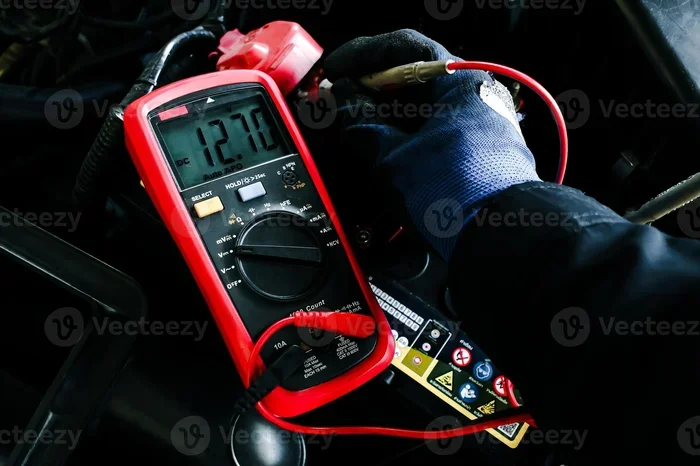
All you need is a digital multimeter. These are inexpensive and available at most auto parts stores. Set the multimeter to DC voltage (usually the 20V range) before testing. Make sure the engine is off and all accessories are turned off before you take the reading.
Testing Steps
- Make sure the engine is off and all accessories are turned off.
- Connect the red multimeter lead to the positive battery terminal.
- Connect the black lead to the negative battery terminal.
- Read the voltage on the multimeter display.
- Record the reading and compare it to the healthy ranges below.
Healthy Voltage Ranges
| Condition | Voltage Reading | Status |
|---|---|---|
| Fully charged, engine off | 12.6 – 12.8V | Healthy |
| 75% charged, engine off | 12.4V | Acceptable |
| 50% charged, engine off | 12.2V | Needs charging |
| Under load (cranking) | 10.0V or above | Healthy |
| Under load (cranking) | Below 10.0V | Weak or failing |
| Engine running | 13.7 – 14.7V | Alternator charging properly |
After testing, if your battery reads below 12.4 volts with the engine off, consider using a battery charger to bring it back to full charge. If the voltage drops below 10.0 volts during cranking, it’s time to think about a replacement. Regular testing is the foundation of good battery maintenance and can extend the life of your electrical system.
Common Mistakes That Drain Your Battery
Many drivers unknowingly shorten the life of their car battery through simple daily habits. Avoiding these mistakes can extend your battery life significantly and keep your car battery voltage at healthy levels.
Leaving Lights and Accessories On
This is the most common cause of a dead battery. Forgetting to turn off your headlights or leaving the interior light on overnight can drain your battery below the voltage needed to start the car the next morning. It’s a simple habit to build, but it saves a lot of trouble.
Short Trips
Short drives don’t give the alternator enough time to fully recharge the battery. If you only drive for 10 or 15 minutes at a time, your battery may never reach a full charge. Over weeks and months, this leads to a low battery voltage condition. Try to take at least one longer drive per week to keep the battery topped off.
Ignoring Corroded Battery Terminals
Corroded or dirty battery terminals create resistance in the electrical circuit. This resistance reduces the flow of current from the battery to the starter motor. Even a fully charged battery can fail to start the car if the terminals are corroded. You can clean terminals with a mixture of baking soda and water and a wire brush. Keeping the battery terminals clean and tight ensures a strong connection and reliable voltage delivery.
Using Electronics With the Engine Off
Playing the radio, charging your phone, or using the power inverter with the engine off puts extra strain on the battery. While these activities alone won’t kill a healthy battery, they can push an already weak battery below the starting voltage threshold. If your battery is more than three years old, be especially careful about using electronics when the engine is off.
Quick Tips to Keep Your Battery Healthy
- Check voltage monthly: Use a multimeter to test your battery at least once a month, especially before winter.
- Drive longer distances: Take your car on a 30-minute drive at least once a week to allow the alternator to recharge the battery fully.
- Keep terminals clean: Inspect battery terminals regularly and clean off any corrosion with a wire brush and baking soda solution.
- Use a battery maintainer: If your car sits for long periods, a trickle charger or battery maintainer will keep the voltage at healthy levels.
- Turn off accessories before shutdown: Make it a habit to shut off headlights, radio, and other electronics before turning off the engine.
- Replace on schedule: Don’t wait for your battery to die. Replace it every three to five years as a preventive measure.
What to Do When Your Car Won’t Start
If you’ve checked the voltage and your battery is weak, don’t panic. There are several steps you can take to get back on the road safely.
Try a Jump Start
A jump start uses another vehicle’s battery or a portable jump starter to provide the extra voltage needed to crank your engine. Connect the cables in the correct order: positive to positive, negative to a ground point on the dead car, then start the working vehicle first. Let the good battery charge the dead one for a few minutes before trying to start the car.
Use a Portable Jump Starter
Portable jump starters are compact devices you can keep in your trunk. They provide enough voltage to start a car without needing another vehicle. These are especially useful for emergencies and are a great addition to any roadside emergency kit. They’re small, rechargeable, and can be a lifesaver on a cold morning.
When to Replace the Battery
If jump starting doesn’t work, or if your battery keeps dying, it’s time for a replacement. A new 12-volt battery will restore proper starting voltage and give you reliable performance. Make sure to choose a battery with the right CCA rating for your climate and vehicle. Ask your mechanic or auto parts store staff for guidance if you’re unsure.
Expert Insights on Battery Voltage and Starting
“Many drivers wait until their car won’t start to check the battery. A simple voltage test takes two minutes and can prevent hours of frustration.” — Automotive Technician, certified ASE master technician.
Regular maintenance and awareness of your battery’s voltage levels go a long way in avoiding unexpected breakdowns. The 12-volt system in your car is designed to work reliably, but it needs your attention to stay in good shape.
Pay attention to the voltage drop during cranking and the resting voltage when the engine is off. These two numbers tell you almost everything you need to know about your battery’s health and its ability to start the car. Don’t wait for a problem to check your battery health. A few minutes of testing each month can keep you driving with confidence.
Conclusion
Knowing how many volts to start a car is one of the most useful pieces of knowledge any driver can have. A healthy 12-volt battery should read 12.6 volts or higher at rest and maintain at least 10.0 volts during engine cranking. These numbers are your baseline for a reliable start every time.
By understanding what affects battery voltage, recognizing the warning signs of a weak battery, and following simple maintenance tips, you can keep your car starting strong all year long. Don’t wait for a cold morning or a road trip to find out your battery is weak. Test it regularly, replace it on schedule, and keep those terminals clean.
Take a few minutes today to check your battery voltage. It’s a small action that can save you from a big headache tomorrow. Your car depends on that 12-volt system to get you where you need to go, and a little attention goes a long way in keeping it running at its best. Stay proactive, stay informed, and make sure your battery always has the voltage to start a car when you turn the key.
Frequently Asked Questions
Can a car start with less than 12 volts?
Yes, a car can start with slightly less than 12 volts, but it depends on conditions. During cranking, the voltage can drop to around 10.0 volts and still work. However, if the voltage falls below 10.0 volts while cranking, the starter motor may not have enough power to turn the engine over. Cold weather and old batteries make low-voltage starting even more difficult.
What voltage is too low to start a car?
Any reading below 12.0 volts with the engine off is considered too low for reliable starting. If the voltage drops below 10.0 volts during cranking, the battery is too weak to start the engine. In these cases, you should charge the battery or consider a replacement to avoid being stranded.
How many volts does a car battery need to be fully charged?
A fully charged car battery should read between 12.6 and 12.8 volts with the engine off. When the engine is running, the alternator should push the voltage to between 13.7 and 14.7 volts. These numbers indicate that the battery is receiving a proper charge and has enough power for starting.
Does cold weather affect how many volts are needed to start a car?
Yes, cold weather has a significant impact on battery performance. At freezing temperatures, a battery can lose up to 35% of its cranking power. This means the voltage needed to start the car effectively increases in cold conditions. Using a battery with a high cold cranking amps (CCA) rating helps counteract this effect.
How often should I test my car battery voltage?
You should test your battery voltage at least once a month and especially before winter. A quick test with a digital multimeter takes only a couple of minutes. Regular testing helps you catch voltage problems early and replace the battery before it leaves you stranded.
Will a jump start damage my car’s electrical system?
No, a proper jump start will not damage your electrical system as long as you follow the correct cable connection order. Always connect positive to positive first, then negative to a ground point on the dead car. Never connect the negative cable directly to the dead battery terminal, as this can cause sparks near the battery and potentially damage sensitive electronics in the ignition system.