How to Add Oil to Your Car Like a 2018 Car Mechanic
Adding oil to your car is one of the simplest yet most important maintenance tasks you can do. This guide walks you through the exact steps a 2018 car mechanic would use, so you can keep your engine running smooth and strong. You will learn what oil to use, how to check your level, and how to pour it safely without making a mess.
Key Takeaways
- Check your oil regularly: Making it a habit saves your engine from wear and damage over time.
- Use the right oil type: Not all motor oil is the same. Match the viscosity and grade to your vehicle.
- Follow step-by-step pouring: Adding oil the wrong way can cause leaks or overfilling problems.
- Avoid common mistakes: Overfilling, using the wrong oil, and skipping the dipstick check are top errors.
- Know when to change vs. add: Adding oil is not the same as a full oil change. Understand the difference.
- Keep your engine healthy long-term: Proper oil maintenance extends engine life and improves performance.
📑 Table of Contents
Why Adding Oil to Your Car Matters So Much
Your car engine has hundreds of moving parts. These parts spin, slide, and grind against each other every time you turn the key. Without proper engine oil, all that metal-on-metal contact creates heat and friction. That friction wears down your engine fast.
How to add oil to car the right way keeps everything lubricated. Fresh oil also carries heat away from critical engine parts. It prevents overheating and reduces wear on pistons, crankshafts, and camshafts. Think of oil as the lifeblood of your engine.
Many car owners ignore their oil until something goes wrong. By then, the damage might already be done. A simple oil refill every few thousand miles can prevent expensive repairs. Learning this basic car maintenance skill puts you in control of your vehicle’s health.
Whether you drive a sedan, truck, or SUV, the process is the same. The steps a professional car mechanic follows in 2018 are easy enough for anyone to learn. You do not need fancy tools or years of experience. Just a few minutes and the right supplies.
What Happens When You Skip Oil Changes
Old or low oil breaks down over time. It loses its ability to lubricate properly. Sludge builds up inside the engine passages. This sludge restricts oil flow and starves vital components.
Here is what can go wrong if you neglect your motor oil:
- Increased engine wear: Metal parts grind without proper lubrication.
- Overheating: Oil helps cool the engine. Low oil means more heat.
- Reduced fuel efficiency: A poorly lubricated engine works harder and uses more gas.
- Engine seizure: In worst cases, the engine locks up completely.
- Costly repairs: Rebuilding or replacing an engine costs thousands of dollars.
Adding oil regularly is your first line of defense. It is cheap, fast, and incredibly effective. A 2018 car mechanic would tell you that prevention always beats repair.
What You Need Before You Start
Before you pop the hood, gather everything you need. Having the right tools and supplies ready saves time and prevents frustration. A 2018 car mechanic would never start a job without preparation.
Essential Supplies for Adding Oil
Here is your checklist of items you need:
- The correct engine oil: Check your owner manual for the right type and amount.
- A funnel: This prevents spills and directs oil straight into the reservoir.
- A clean rag or paper towel: You will use this to wipe the dipstick and clean up drips.
- Your vehicle owner manual: This tells you your specific oil capacity and grade.
- A level surface: Park on flat ground for an accurate oil reading.
- Gloves (optional): Keeps your hands clean and protects your skin.
Most auto parts stores carry all of these items. You can also find them at any grocery store or gas station. A quick tip from any experienced car mechanic: buy a small funnel that fits your oil fill hole snugly. A loose funnel causes spills and mess.
Understanding Oil Types
Not all oil is created equal. The two main types are conventional oil and synthetic oil. Conventional oil is refined from crude petroleum. It works well for standard driving conditions and older engines.
Synthetic oil is man-made and engineered for superior performance. It handles extreme temperatures better and lasts longer. Many modern vehicles from 2018 and newer recommend synthetic blends. Check your owner manual to see what your car needs.
You will also see numbers on oil bottles like 5W-30 or 10W-40. These numbers represent oil viscosity, which is basically how thick or thin the oil is at different temperatures. The W stands for winter. A lower number before the W means the oil flows better in cold weather.
| Oil Type | Best For | Lifespan |
|---|---|---|
| Conventional | Older vehicles, normal driving | 3,000-5,000 miles |
| Synthetic | High-performance, extreme temps | 7,500-15,000 miles |
| Synthetic Blend | Moderate driving, mixed conditions | 5,000-7,500 miles |
| High-Mileage | Vehicles over 75,000 miles | 5,000-7,500 miles |
Using the wrong oil viscosity can hurt your engine. Always match the oil to your vehicle specifications. When in doubt, ask a car mechanic or check the manual.
Step-by-Step Guide to Adding Oil to Your Car
Now let us get into the actual process. This is exactly how a 2018 car mechanic would guide you through how to add oil to car safely and correctly. Follow these steps in order for the best results.
Step 1: Park on a Level Surface and Turn Off the Engine
Find a flat, level parking spot. This ensures your oil dipstick reading is accurate. Turn off the engine and let it cool for at least 5 to 10 minutes. Hot oil can splash and burn you. Wait until the engine is warm but not scalding.
A quick tip: many car mechanics prefer checking oil when the engine is slightly warm. This lets the oil flow better and gives a more accurate level reading. Just do not check it right after a long highway drive.
Step 2: Locate the Oil Fill Cap and Dipstick
Open your hood and secure it with the prop rod. Look for the oil fill cap on top of the engine. It usually has an oil can symbol on it. The dipstick is typically located near the front of the engine block.
Pull the dipstick out and wipe it clean with your rag. Then push it back in fully. Pull it out again and look at the oil level. You will see markings on the dipstick showing the minimum and maximum levels.
If the oil level is below the minimum mark, you need to add oil. If it is between the marks, you are good. If it is above the maximum, do not add more. Overfilling can cause serious engine problems.
Step 3: Remove the Oil Fill Cap and Prepare Your Funnel
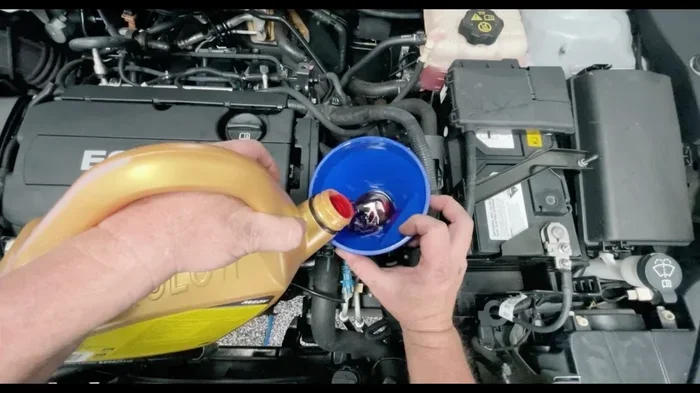
Twist off the oil fill cap and set it somewhere safe. Insert your funnel into the opening. Make sure it sits snugly so oil does not drip down the side of the engine.
Common mistake: many people skip the funnel and pour oil directly in. This almost always leads to spills. Oil dripping onto hot engine parts can create smoke or even small fires. Always use a funnel.
Step 4: Pour the Oil Slowly and Carefully
Hold the oil bottle with both hands. Pour slowly into the funnel. Add small amounts at a time — about one quarter of the bottle at first.
Wait a few seconds between pours. This lets the oil settle into the oil reservoir. After each pour, you can check the level again with the dipstick. This prevents overfilling.
Keep pouring until the oil reaches the full mark on the dipstick. You do not need to fill it to the absolute top. The sweet spot is right at or just below the full line.
Step 5: Replace the Cap and Check for Leaks
Remove the funnel and replace the oil fill cap. Twist it clockwise until it clicks or seats firmly. Wipe any oil drips from around the cap and engine area.
Start your engine and let it run for 30 to 60 seconds. This circulates the fresh oil through the engine. Then turn it off and wait a minute. Check underneath the car for any leaks.
Look at the dipstick one more time to confirm the level is correct. If it is low, add a small amount more. If it is perfect, you are all done.
Step 6: Dispose of Used Oil Properly
If you are also changing your oil filter, save the old oil. Never pour it down a drain or onto the ground. Most auto parts stores accept used motor oil for recycling. Some gas stations have collection bins too.
Proper disposal protects the environment and keeps our waterways clean. A responsible car mechanic always recycles used oil.
Choosing the Right Oil for Your Vehicle
Choosing the correct engine oil is one of the most important decisions you make. The wrong oil can reduce engine performance and shorten its lifespan. Here is how to make the right choice.
Check Your Owner Manual First
Your vehicle owner manual is your best resource. It lists the exact oil type, viscosity grade, and oil capacity for your engine. Every car made in 2018 and before has this information in the manual.
If you have lost your manual, you can usually find a digital copy online. Search for your vehicle make, model, and year plus “owner manual PDF.” Many manufacturers offer free downloads.
Understand Oil Viscosity Ratings
The numbers on an oil bottle tell you about its thickness. For example, 5W-30 oil flows like a 5-weight oil in cold weather and a 30-weight oil when hot. This dual-grade design gives your engine protection in all seasons.
In cold climates, lower winter numbers like 0W or 5W work best. In hot climates, higher numbers like 10W or 15W may be more appropriate. Your owner manual already accounts for this, so trust its recommendation.
Synthetic vs. Conventional Oil
Synthetic oil costs more but offers better protection. It resists breakdown at high temperatures and flows smoothly in cold weather. Many newer vehicles from 2018 require or recommend synthetic oil.
Conventional oil is more affordable and works fine for older vehicles with simpler engines. If your car has high mileage, consider a high-mileage oil formula. These contain additives that help seal gaps in older engines.
A car mechanic from 2018 would tell you that the best oil is the one that matches your vehicle specifications. Do not let brand names or price tags influence your decision more than what the manual says.
Common Mistakes When Adding Oil to Your Car
Even simple tasks like adding oil can go wrong if you are not careful. Here are the most common mistakes people make and how to avoid them.
Overfilling the Engine
Adding too much oil is just as bad as adding too little. Excess oil creates pressure inside the engine. This can cause oil leaks, blown seals, and even damage to the crankshaft. Always check the dipstick after every small pour.
If you accidentally overfill, do not drive the car. Have a car mechanic drain the excess oil or carefully siphon it out. A few extra ounces can usually be drained safely, but a full overfill needs professional attention.
Using the Wrong Oil Type
Pouring in the wrong oil viscosity or type is a common error. Never assume that any oil will work. Using 10W-40 when your car needs 5W-30 can lead to poor lubrication and increased engine wear.
Always double-check the oil type before you pour. Keep a record of what oil you use and when you added it. This helps you track your oil change interval and stay on top of maintenance.
Forgetting to Check the Oil Level
Some people pour oil and immediately close the hood without checking. This is a mistake. Always verify the level with the dipstick before driving. A quick tip: wait 2 to 3 minutes after pouring to let the oil settle into the reservoir.
Ignoring Oil Leaks After Refilling
After adding oil, always look under the car for fresh drips or puddles. A loose oil fill cap or a damaged gasket can cause leaks. Catching leaks early prevents bigger problems down the road.
Not Recording Your Oil Changes
Keep a log of every oil addition and change. Write down the date, mileage, oil type, and amount added. This record helps you know when your next oil change is due and gives you valuable information if you ever need to visit a mechanic.
How Often Should You Add Oil to Your Car
Knowing how often to add oil keeps your engine in top shape. The answer depends on several factors including your vehicle, driving habits, and the type of oil you use.
General Guidelines for Oil Addition
Most cars need an oil change every 5,000 to 7,500 miles if using conventional oil. Synthetic oil can go 7,500 to 15,000 miles between changes. But these are full oil change intervals, not just top-ups.
You should check your oil level at least once a month. Most vehicles use about one quart of oil every 1,000 to 3,000 miles. If you notice your level dropping quickly, have a mechanic inspect for leaks.
Signs Your Car Needs Oil
Watch for these warning signs that your engine needs more oil:
- The oil pressure warning light on your dashboard turns on.
- You hear knocking or ticking sounds from the engine.
- The oil on your dipstick appears dark brown or black.
- You see blue or gray exhaust smoke from the tailpipe.
- The oil level drops below the minimum mark on the dipstick.
If you notice any of these signs, check your oil level right away. Adding oil promptly can prevent serious engine damage. A 2018 car mechanic would stress that early action saves money and extends engine life.
Oil Change vs. Oil Addition
Adding oil and changing oil are two different things. Adding oil means pouring new oil into the existing oil in your engine. Changing oil means draining the old oil completely, replacing the oil filter, and refilling with fresh oil.
You should add oil between full oil changes to keep the level correct. But a full oil change removes old, contaminated oil and replaces it with clean oil. Both are essential parts of engine care.
A car mechanic recommends doing a full oil change every 5,000 to 7,500 miles and checking the oil level monthly in between. This routine keeps your engine running strong for years.
Final Tips from a 2018 Car Mechanic
Here are some expert insights that a 2018 car mechanic would share with you. These tips come from years of hands-on experience and can save you time, money, and headaches.
Never let your oil level get too low. Running on low oil even briefly can cause permanent engine damage. Make checking your oil part of your regular routine, just like checking your tire pressure.
Keep a supply of the right oil on hand. Store a bottle of the correct motor oil in your garage or trunk. This way, you are always prepared for a quick top-up between oil changes.
Pay attention to your oil color. Fresh oil is amber or golden. Dark black or brown oil means it is time for a change. Milky or frothy oil could indicate a coolant leak, which is a serious problem that needs immediate attention.
Use quality oil filters. When you do a full oil change, always install a new, high-quality oil filter. The filter removes contaminants and keeps your oil clean longer. Cheap filters can fall apart and clog your engine passages.
When in doubt, ask a professional. There is no shame in consulting a car mechanic. A quick inspection or oil top-up at a shop costs very little and gives you peace of mind. A good mechanic will always appreciate a car owner who takes maintenance seriously.
Learning how to add oil to your car is one of the most valuable skills you can develop as a vehicle owner. It takes just a few minutes and costs very little. But the payoff is enormous — a healthier engine, better performance, and fewer repair bills over the life of your car.
Follow the steps in this guide, use the right oil, and make it a regular habit. Your car will thank you with reliable performance for many miles to come. Treat your engine well, and it will keep you moving safely on the road for years.
Frequently Asked Questions
How much oil does a typical car need when adding?
Most cars require between 4 and 6 quarts of oil for a full refill, but the exact amount depends on your engine size. Always check your owner manual for the specific oil capacity of your vehicle. Adding too little leaves your engine unprotected, while adding too much can cause pressure problems.
Can I add oil while the engine is hot?
You can add oil to a warm engine, but it is safer to wait 5 to 10 minutes after turning it off. This lets the oil settle back into the oil reservoir and gives you a more accurate dipstick reading. Always be careful around hot engine parts to avoid burns.
What happens if I overfill my engine with oil?
Overfilling causes excess pressure inside the engine, which can lead to oil leaks, damaged seals, and even crankshaft damage. If you overfill, have the excess oil drained by a car mechanic as soon as possible. Even a small overfill can create foamy oil that lubricates poorly.
How do I know which oil viscosity my car needs?
Your vehicle owner manual lists the recommended oil viscosity and type for your engine. Look for numbers like 5W-30 or 0W-20 on the oil bottle to match the specification. Using the wrong viscosity can reduce engine performance and increase wear over time.
Is adding oil the same as changing oil?
No, adding oil simply tops up the existing oil level. A full oil change drains the old oil completely, replaces the filter, and fills the engine with fresh oil. You should do both regularly to keep your engine in great shape.
How often should I check my oil level?
A 2018 car mechanic recommends checking your oil level at least once a month. You should also check it before any long road trip. Regular checks help you catch low oil early and prevent engine damage before it starts.
=== CONCLUSION ===
How to add oil to your car like a 2018 car mechanic is a skill that every driver should have. It is simple, fast, and incredibly effective at protecting your engine. By following the steps in this guide, you can keep your vehicle running smoothly and avoid costly repairs down the road.
Remember to use the right motor oil, check your oil level regularly, and never skip your oil change interval. These small habits add up to big benefits for your engine’s health and longevity. Take care of your car today, and it will take care of you tomorrow.