How to Make an Auto Disoenso and See Amazing Results
Creating an auto diseno is easier than you think. This guide walks you through every step of designing a car, from sketching ideas to using professional tools. You will learn the key design principles, software options, and practical tips that help you build a stunning auto diseno with real impact. Whether you are a beginner or a seasoned creator, this guide gives you the roadmap to design a car that looks incredible and stands out from the crowd.
Have you ever dreamed of designing your own car? Making an auto diseno is a fun and rewarding process that anyone can learn. Whether you want to create a sleek sports car or a rugged SUV, the journey starts with a single sketch. This guide will show you exactly how to go from a blank page to a complete auto diseno that turns heads.
The world of automotive design is exciting and full of possibilities. Car designers spend years mastering their craft, but you can start creating impressive designs today. With the right approach, basic tools, and a bit of patience, your auto diseno can look professional and polished. Let us dive into the process step by step.
Key Takeaways
- Start with research: Study real cars and gather inspiration before you begin your auto diseno.
- Choose the right tools: Sketching by hand or using CAD software both work great for creating an auto diseno.
- Focus on proportions: Getting the basic shapes right makes or breaks any car design.
- Add details gradually: Build up from simple lines to complex details step by step.
- Use references wisely: Always reference real vehicles and design trends for a believable auto diseno.
- Practice regularly: The more you design, the better your auto diseno skills will become.
- Share and get feedback: Other designers can spot things you might miss in your auto diseno.
📑 Table of Contents
What Is an Auto Diseno and Why Does It Matter?
An auto diseno is simply the design of a vehicle. It covers everything from the shape of the body to the details of the interior. Automotive design is a field that blends art and engineering. When you create an auto diseno, you are imagining how a car will look, feel, and function on the road.
Good car design is not just about looks. It also affects how a vehicle performs. The shape of a car influences its aerodynamics, fuel efficiency, and even safety. This is why every great auto diseno starts with a solid understanding of basic design principles. You do not need to be an engineer to create something beautiful, but knowing a few key ideas will take your work to the next level.
The History of Auto Design
Car design has come a long way since the first automobiles. Early vehicles looked like horse carriages with engines. Over time, designers started experimenting with streamlined shapes and bold colors. Today, modern automotive design uses advanced software and materials to push the boundaries of what a car can look like.
Studying the history of car design gives you valuable context. When you understand where design trends came from, you can create an auto diseno that feels both fresh and timeless. Look at classic cars from the 1950s, the muscle cars of the 1970s, and the sleek electric vehicles of today. Each era has its own style, and you can pull inspiration from all of them.
Tools You Need to Create an Auto Diseno
You do not need expensive equipment to start making an auto diseno. The right tools depend on your skill level and goals. Here are the most common options that designers use.
Pencil and Paper
Sometimes the simplest tools work best. A pencil, some paper, and an eraser are all you need to start sketching your auto diseno. Many professional car designers still begin every project with hand-drawn sketches. This approach helps you brainstorm quickly and freely.
Start with basic shapes. Draw boxes and curves to represent the car body. Do not worry about perfection at this stage. The goal is to explore ideas fast. Once you have a few rough sketches, pick the best one and refine it. Add details like wheel arches, headlights, and door lines.
Digital Design Software
If you want to take your auto diseno to a more professional level, digital tools are the way to go. CAD software (Computer-Aided Design) lets you create precise, detailed car designs on a computer. Some popular options include:
- SketchUp: Great for beginners. It is easy to learn and perfect for basic car modeling.
- Blender: A free, powerful 3D modeling tool that many indie designers use for vehicle design.
- Alias AliasStudio: A professional-grade tool used by top automotive design studios worldwide.
- SolidWorks: Excellent for creating detailed technical drawings of car parts and assemblies.
- Photoshop: Ideal for rendering and adding color, texture, and lighting to your auto diseno.
You do not need to master all of these tools at once. Pick one that fits your budget and skill level, and start experimenting. Many of these programs offer free trials or free versions, so you can test them before committing.
Other Helpful Tools
Beyond software and pencils, a few other tools can boost your auto diseno workflow:
- Graphic tablet: Lets you draw digitally with precision and pressure sensitivity.
- Reference images: Collect photos of cars you admire for design inspiration.
- Ruler and French curves: Help you draw smooth, accurate lines on paper.
- Color swatches: Useful when planning the paint and finish of your auto diseno.
Step-by-Step Process to Make an Auto Diseno
Now that you have your tools ready, let us walk through the actual process of creating an auto diseno. Follow these steps in order, and you will build a design that looks professional and polished.
Step 1: Gather Inspiration
Before you draw anything, spend time looking at existing car designs. Browse car magazines, visit auto shows online, or scroll through design galleries on platforms like Behance and Pinterest. The more car design inspiration you collect, the richer your auto diseno will be.
Create a mood board with images that catch your eye. Notice what you like about each car. Is it the curve of the hood? The angle of the windshield? The way the light hits the body panels? These observations will guide your vehicle design process and help you make intentional design choices.
Step 2: Define the Concept
Every great auto diseno starts with a clear concept. Ask yourself a few questions before you begin sketching:
- What type of vehicle am I designing? A sedan, truck, sports car, or something else?
- Who is this car for? Daily commuters, off-road adventurers, or luxury buyers?
- What style direction do I want? Futuristic, classic, aggressive, or minimalist?
- What is the main goal of this design? Speed, comfort, efficiency, or style?
Write down your answers. These notes will serve as your design brief and keep you focused as you work on your auto diseno.
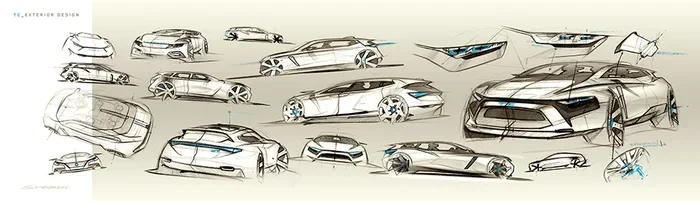
Step 3: Sketch the Basic Shape
Now it is time to put pencil to paper (or stylus to tablet). Start with the overall silhouette of the car. Draw the basic proportions: the length of the hood, the size of the cabin, and the shape of the trunk.
Keep your lines light and loose at this stage. Do not press too hard or get stuck on details. The goal is to capture the general form. Try multiple variations. Sketch five or six different silhouettes and see which one feels the strongest. This is where the magic of automotive styling begins to take shape.
Step 4: Refine the Proportions
Proportions are the backbone of any auto diseno. A car that looks too long, too short, or too tall will feel off, even if the details are perfect. Spend extra time getting the proportions right.
Use reference lines to check your work. Draw a center line down the middle of the car. Make sure both sides are balanced. Check the relationship between the wheel size, the body height, and the window proportions. Small adjustments at this stage can make a huge difference in the final result of your auto diseno.
Step 5: Add Details
Once the basic shape feels right, start adding details. This is where your auto diseno comes to life. Focus on these key areas:
- Front end: Design the grille, headlights, and bumper. The front of a car is its face.
- Sides: Add door lines, window frames, and character lines that run along the body.
- Rear: Sketch the taillights, trunk line, and exhaust tips.
- Wheels: Draw the wheels and tires. They anchor the entire design.
- Interior (optional): If you want a full auto diseno, sketch the dashboard, seats, and steering wheel.
Add details gradually. Do not try to include everything at once. Build up layer by layer, and step back frequently to check the overall look.
Step 6: Render and Color
Rendering is the process of adding color, shading, and texture to your auto diseno. If you are working digitally, this is where software like Photoshop or Blender shines. If you are working by hand, use colored pencils or markers.
Start with a base color. Then add highlights and shadows to create depth. Pay attention to how light reflects off the car body. Real cars have subtle gradients and reflections that make them look sleek and three-dimensional. Practice this step, and your auto diseno will instantly look more professional.
Key Design Principles for a Great Auto Diseno
Understanding a few core design principles will elevate your auto diseno from good to great. These ideas are used by professional automotive designers around the world.
Balance and Symmetry
Most cars look best when the design feels balanced. The front should complement the rear, and the left side should mirror the right side. This does not mean everything must be perfectly symmetrical. A slight asymmetry can add character and dynamism to your auto diseno.
Flow and Lines
The lines of a car guide the eye. A well-designed vehicle has flowing lines that move from front to back. Avoid harsh breaks or sudden changes in direction. Smooth, continuous lines create a sense of motion even when the car is standing still. This is one of the most important principles in automotive design.
Surface Quality
Think about how the surfaces of your auto diseno would feel to the touch. Are the panels smooth and tight? Do the curves flow naturally? Surface quality is what separates a basic sketch from a convincing car design. Pay attention to how light interacts with different surfaces, and your design will look more realistic.
Proportion and Scale
Getting the scale right is critical. The wheels should look properly sized compared to the body. The windows should be in proportion to the doors. Use grid paper or digital guides to maintain accurate scale in your auto diseno. When proportions are off, the whole design suffers.
Common Mistakes to Avoid When Making an Auto Diseno
Even experienced designers make mistakes. Knowing what to avoid will save you time and frustration as you work on your auto diseno.
Skipping the Research Phase
Jumping straight into sketching without gathering design inspiration is a common mistake. Research gives you a foundation to build on. Without it, your auto diseno may lack direction or originality.
Overcomplicating the Design
More details do not always mean a better design. Some of the most iconic cars in history have clean, simple lines. Focus on getting the core shape right before adding complex details. A simple auto diseno often looks more elegant than a cluttered one.
Ignoring Ergonomics
Even if you are designing a purely aesthetic auto diseno, consider how people will use the vehicle. Will the driver have good visibility? Do the doors open easily? These practical considerations add realism and value to your design.
Not Seeking Feedback
Designing in isolation can lead to blind spots. Share your auto diseno with other people, especially other designers or car enthusiasts. Fresh eyes can spot issues you might have missed and offer new ideas to improve your work.
Expert Tips to Make Your Auto Diseno Stand Out
Want to take your auto diseno to the next level? Here are some expert tips that professional designers swear by.
Use Real-World References
Study real cars closely. Notice how the body panels meet, how the wheels are positioned, and how the windows wrap around the sides. Using real vehicle references makes your auto diseno more believable and grounded.
Focus on the Front Three-Quarter View
This is the most popular and impactful angle for showcasing a car design. Most automotive designers present their auto diseno from this angle because it shows both the front and the side of the vehicle. Practice drawing this view until it feels natural.
Experiment with Different Styles
Do not limit yourself to one type of car. Try designing a concept car one day and a practical family vehicle the next. Experimenting with different styles broadens your skills and helps you discover your unique design voice.
Learn Basic Aerodynamics
Understanding how air flows around a vehicle will make your auto diseno more realistic. Cars with good aerodynamics often have smooth underbodies, tapered rear ends, and carefully designed front splits. Even a basic understanding of vehicle aerodynamics can improve your designs significantly.
Build a Portfolio
As you create more auto diseno projects, save them all. Over time, you will build a portfolio that showcases your growth and style. A strong portfolio is essential if you ever want to pursue automotive design as a career.
Conclusion
Creating an auto diseno is a journey that combines creativity, technical skill, and patience. You do not need years of experience to start. With the right tools, a clear process, and a willingness to learn, you can design a car that looks amazing and feels authentic. Follow the steps in this guide, avoid common pitfalls, and keep practicing. Your auto diseno skills will grow with every sketch you make.
The most important thing is to start today. Pick up a pencil, open a design program, or gather some reference images. Every great car designer began with a single auto diseno. Yours could be the next one that inspires others. So grab your tools, trust the process, and let your creativity flow. The road ahead is full of exciting possibilities for anyone willing to design their dream car.
Frequently Asked Questions
What is an auto diseno and why should I learn it?
An auto diseno is the process of designing a vehicle, from its overall shape to the smallest details. Learning this skill lets you express your creativity, explore automotive design, and even pursue a career in the field. Whether you want a hobby or a profession, starting with an auto diseno opens up a world of possibilities.
Do I need expensive software to create an auto diseno?
No, you do not. Many designers start with just a pencil and paper. Free tools like Blender and SketchUp are excellent for creating a digital auto diseno without spending a dime. You can always upgrade to professional software as your skills grow.
How long does it take to make a good auto diseno?
The timeline varies depending on your experience and the complexity of the design. A beginner might spend several hours on a single auto diseno, while an experienced designer can complete one in an hour or two. The key is to practice regularly and focus on gradual improvement rather than perfection.
Can I make an auto diseno if I have no drawing experience?
Absolutely. Many successful car designers started with no formal art training. The most important skills are observation and patience. Study real cars, practice basic shapes, and follow a structured process. Over time, your auto diseno skills will develop naturally.
What are the best reference images for an auto diseno?
Look for high-quality photos of cars from multiple angles, especially the front three-quarter view. Collect images of both classic and modern vehicles for a wide range of design inspiration. Pay attention to how light, shadow, and color work together in professional car photography.
How can I share my auto diseno with others?
You can share your auto diseno on platforms like Instagram, Behance, or dedicated car design forums. Online communities are full of supportive designers who can offer feedback and encouragement. Sharing your work helps you grow and connect with other automotive design enthusiasts.
=== META TITLE ===
How to Make an Auto Diseno | Complete Step-by-Step Guide
=== URL SLUG ===
how-to-make-an-auto-diseno
=== SEO TITLE ===
How to Make an Auto Diseno and See Amazing Results