How to Tow with a Car Dolly
Towing with a car dolly is one of the smartest ways to bring your vehicle along on a road trip or RV adventure. A car dolly lifts your car’s front wheels off the ground, reducing wear and tear and keeping you safe on the highway. This guide walks you through everything from choosing the right dolly to loading your vehicle and driving with confidence. You will learn step-by-step instructions, expert tips, and common pitfalls to avoid. By the end, you will feel ready to tow like a pro.
There is something incredibly freeing about hitting the open road with your car in tow. Whether you are heading out on an RV adventure or relocating across the country, knowing how to tow with a car dolly makes all the difference. A car dolly is a small, lightweight trailer that carries your vehicle’s front wheels off the ground. This simple setup protects your drivetrain and keeps your car safe during transport.
But towing with a car dolly is not just about hitching up and driving off. There are important steps you need to follow to do it right. From selecting the proper dolly to mastering your driving technique, every detail counts. In this guide, we will walk you through the entire process. You will learn how to load your vehicle, secure it properly, and drive confidently with a dolly in tow.
Key Takeaways
- Choose the right dolly: Match your dolly to your vehicle type and towing capacity for safe transport.
- Loading matters: Properly securing your car on the dolly prevents damage and keeps you safe on the road.
- Drive slowly and steadily: Maintaining a safe speed and following distance is critical when towing with a car dolly.
- Check regulations: Different states and countries have specific towing laws you need to follow.
- Maintain your equipment: Regular inspections of the dolly, hitch, and safety chains keep everything running smoothly.
- Avoid common mistakes: Things like exceeding weight limits or skipping safety checks can lead to serious problems.
📑 Table of Contents
- What Is a Car Dolly and Why Use One?
- Choosing the Right Car Dolly for Your Needs
- How to Safely Load Your Vehicle onto a Car Dolly
- Driving Safety Tips When Towing with a Car Dolly
- Common Mistakes to Avoid When Towing with a Car Dolly
- Maintaining Your Car Dolly for Long-Term Use
- Expert Insights on Car Dolly Towing
- Final Thoughts on Towing with a Car Dolly
What Is a Car Dolly and Why Use One?
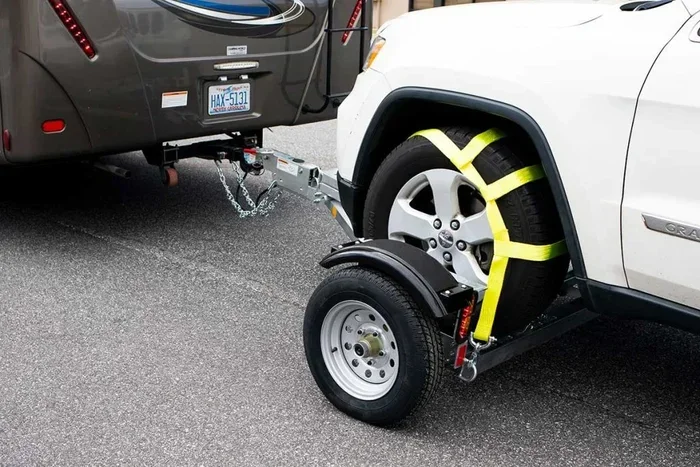
A car dolly is a towable trailer that carries the front wheels of your vehicle. It connects to your tow vehicle through a hitch receiver. The rear wheels of your car stay on the ground and roll freely. This design is perfect for front wheel drive and all wheel drive vehicles when towed with the front wheels up.
Using a car dolly has several clear advantages. First, it reduces wear on your car’s transmission and drivetrain. Second, it improves fuel efficiency compared to hauling a full trailer. Third, it is much easier to maneuver than a full car carrier. For RV travel and road trips, a dolly is often the go-to choice for bringing a second vehicle along.
Car Dolly vs. Tow Bar vs. Flat Towing
People often confuse car dollies with tow bars and flat towing setups. A tow bar connects all four wheels to the road, which works for flat towing certain vehicles. A full car carrier lifts all four wheels off the ground. Each method has its place. But a car dolly strikes the best balance between simplicity, safety, and cost for most drivers.
Choosing the Right Car Dolly for Your Needs
Not all car dollies are the same. Choosing the right one starts with understanding your vehicle and your towing needs. The wrong dolly can lead to damage, poor handling, or even accidents. Take your time and pick wisely.
Check Your Towing Capacity
Every vehicle has a towing capacity listed in its owner manual. This number tells you the maximum weight your vehicle can safely tow. A typical car dolly weighs between 100 and 400 pounds. Add your car’s weight, and make sure you stay within your tow vehicle’s limits. Going over this limit is one of the most common and dangerous towing mistakes.
Consider Your Vehicle Type
Different vehicles have different towing requirements. Front wheel drive cars tow well with the front wheels on the dolly. Rear wheel drive vehicles may need a driveshaft disconnected. All wheel drive cars require extra care, and some manufacturers recommend all four wheels be off the ground. Always check your vehicle’s owner manual before towing.
Look for Key Features
When shopping for a car dolly, look for these essential features:
- Built-in braking system: A dolly with its own brakes adds a critical layer of safety.
- Adjustable ramps: These make loading and unloading your vehicle much easier.
- Safety chains: These keep the dolly connected to your tow vehicle if the hitch fails.
- Tilt or folding design: This makes storage and transport of the dolly itself much simpler.
- LED lights: Proper lighting ensures other drivers can see your setup on the road.
How to Safely Load Your Vehicle onto a Car Dolly
Loading your car onto a dolly is one of the most important steps in the entire process. Do it wrong, and you risk damage to your vehicle or a dangerous situation on the road. Follow these steps carefully every single time.
Step-by-Step Loading Process
- Position the dolly: Park the dolly on a flat, level surface behind your tow vehicle. Make sure the parking brake is engaged on the dolly.
- Attach the dolly to your tow vehicle: Connect the hitch ball to the dolly coupler. Secure it tightly and lock the coupler pin in place.
- Connect safety chains: Cross the chains under the dolly tongue and attach them to your tow vehicle. This provides a backup connection if the hitch fails.
- Plug in the wiring: Connect the electrical cable so the dolly’s brake lights and turn signals work with your tow vehicle.
- Drive your car onto the dolly: Slowly drive your vehicle up the ramps. Center it on the dolly as much as possible. Stop when the front wheels rest securely on the dolly platform.
- Secure your vehicle: Use ratchet straps to bind the steering wheel, tires, and any other secure points on your car. Double-check every strap.
- Release the parking brake: This allows the dolly to roll freely. But make sure your car is fully secured first.
Quick Loading Tips
- Always load on a flat surface to prevent the dolly from tipping.
- Have a spotter guide you while driving onto the ramps.
- Never exceed the dolly’s rated vehicle weight capacity.
- Check that your car’s center of gravity is balanced on the dolly.
Driving Safety Tips When Towing with a Car Dolly
Once your car is loaded and secured, it is time to hit the road. But driving with a car dolly requires different skills than driving alone. The added weight and length change how your vehicle handles. Keep these safety tips in mind at all times.
Speed and Distance
Drive at or below the speed limit when towing. Most experts recommend keeping your speed between 45 and 55 miles per hour. This gives you more control and reduces strain on your tow vehicle. Also, increase your following distance. A car dolly adds length to your setup, which means you need more room to stop safely.
Turning and Maneuvering
Take turns wider than you normally would. The dolly extends behind your tow vehicle, and tight turns can cause the dolly to swing or clip curbs. When backing up, have a spotter guide you. Backing up with a dolly takes practice, so find an empty parking lot before your trip.
Braking and Hill Climbing
Brake early and gently. Sudden braking can cause the dolly to push into the back of your tow vehicle. When climbing hills, use a lower gear to maintain control. On steep downhills, let your engine do the braking and avoid riding your brakes for long periods.
Pre-Trip Inspection Checklist
Before every trip, go through this quick checklist:
- Is the hitch coupler locked and secure?
- Are the safety chains properly attached?
- Is the electrical connection working for lights and brakes?
- Are all ratchet straps tight and undamaged?
- Are the dolly tires properly inflated?
- Is your tow vehicle’s towing capacity within safe limits?
Common Mistakes to Avoid When Towing with a Car Dolly
Even experienced drivers make mistakes when towing. Learning what to avoid can save you time, money, and serious headaches. Here are the most common errors people make with car dolly towing.
Skipping the Owner Manual
Your vehicle’s owner manual contains specific towing instructions from the manufacturer. Ignoring these guidelines can void your warranty or, worse, cause mechanical damage. Always read the section on towing before you hit the road.
Overloading the Dolly
Every dolly has a weight limit. Exceeding this limit puts stress on the hitch, the tires, and the braking system. It also makes your tow vehicle harder to control. Know the weight of your car and choose a dolly that can handle it with room to spare.
Neglecting Safety Chains
Some drivers skip the safety chains because they feel the hitch is enough. This is a dangerous assumption. Safety chains are your last line of defense if something goes wrong. Always attach them and cross them under the tongue for maximum security.
Forgetting to Check the Brakes
If your dolly has a braking system, make sure it is working before every trip. A dolly without functional brakes is a serious hazard, especially on steep grades or in emergency situations.
Ignoring Towing Regulations
Towing laws vary by state and country. Some states require specific safety equipment, have speed restrictions for towing, or require special mirrors. Research the regulations for every area you plan to travel through before your trip.
Maintaining Your Car Dolly for Long-Term Use
A well-maintained car dolly lasts longer and performs better. Regular maintenance keeps your setup safe and reliable trip after trip. Here is what you should do to care for your dolly.
After every trip, inspect the dolly for any signs of wear or damage. Check the tires for proper inflation and look for cracks or flat spots. Lubricate the hitch mechanism and any moving parts to prevent rust. Inspect the ratchet straps for fraying or weakening. Replace any worn parts immediately rather than waiting for a failure on the road.
Store your dolly in a dry, covered area when not in use. Exposure to rain and sun degrades the materials over time. If you store it outside, use a weatherproof cover and check for rust regularly. A little maintenance goes a long way in ensuring your car transport setup stays safe for years to come.
Expert Insights on Car Dolly Towing
We spoke with experienced RVers and professional towing experts to gather their best advice for towing with a car dolly. Here is what the pros had to say.
Always practice before your trip. Set up your dolly in a safe, open area and practice loading, unloading, and driving. This builds confidence and helps you identify any issues before you are on a busy highway. One expert recommends doing at least two practice runs before any long-distance journey.
Invest in quality equipment. A cheaper dolly might save you money upfront, but it can cost you more in repairs and safety risks down the road. Look for reputable brands with solid warranties and positive reviews from other RV travel enthusiasts.
Do not rush the process. Loading, securing, and inspecting your setup takes time. Rushing leads to missed steps and potential accidents. Build a routine and follow it every single trip.
Final Thoughts on Towing with a Car Dolly
How to tow with a car dolly is a skill that opens up new possibilities for your travels. Whether you are exploring national parks in your RV or relocating across the state, a car dolly lets you bring your car along safely and efficiently. The key is preparation, attention to detail, and respect for the process.
Start by choosing the right dolly for your vehicle. Follow the loading and securing steps carefully. Drive with caution and always perform pre-trip inspections. Avoid the common mistakes that trip up even experienced towers. With the right knowledge and a little practice, you will tow with confidence and enjoy every mile of the journey.
Remember, safety always comes first. Take your time, double-check everything, and never hesitate to ask for help if you are unsure about something. Happy towing and safe travels!
Frequently Asked Questions
Can I tow an all wheel drive car with a car dolly?
It depends on your vehicle. Some all wheel drive cars can be towed with a dolly if you disconnect the transfer case or use a specific dolly setup. Always consult your vehicle’s owner manual and the dolly manufacturer’s guidelines before towing an AWD vehicle.
Do I need a special hitch to tow with a car dolly?
Most car dollies use a standard Class II or Class III hitch receiver. Make sure your tow vehicle has the correct hitch class and that it is properly rated for the combined weight of the dolly and your vehicle.
How fast can I drive when towing with a car dolly?
Most experts recommend keeping your speed between 45 and 55 miles per hour. Driving too fast can cause instability, and the dolly’s brakes and tires may not perform well at higher speeds. Always check your dolly manufacturer’s recommended speed limit.
Do I need special insurance to tow a car dolly?
Insurance requirements vary by state and provider. Some auto insurance policies cover towing equipment, while others require additional coverage. Contact your insurance provider before your trip to confirm you are fully protected.
Can I tow a rear wheel drive car with a car dolly?
Yes, but you may need to disconnect the driveshaft to prevent transmission damage. Rear wheel drive cars have their driven wheels at the rear, so the front wheels can safely ride on the dolly. Check your owner manual for specific instructions.
What is the best car dolly for a small SUV?
Look for a dolly with a weight capacity that exceeds your SUV’s curb weight. Popular options include the Demco Smoker and the Roadmaster RM-4790. Choose a dolly with adjustable ramps, a built-in braking system, and positive reviews from other SUV owners.
=== CONCLUSION ===
Towing with a car dolly is a practical, affordable, and safe way to bring your vehicle along on any journey. By choosing the right equipment, loading your car properly, and following safe driving practices, you set yourself up for a smooth and stress-free trip. Remember to inspect your setup before every journey, respect weight limits, and stay aware of local towing regulations. With the tips and insights from this guide, you are well-equipped to tow with confidence. Safe travels and enjoy the open road!