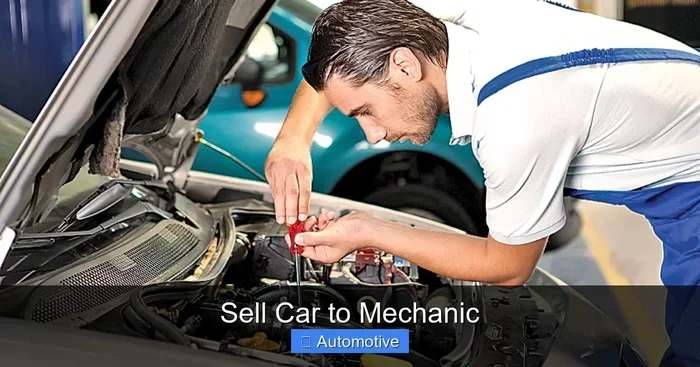
I Sold My Car to My Mechanic and This Is What Happened
I sold my car to my mechanic and the experience was smoother than I expected. I learned how trust, preparation, and honest communication made the car selling process easy and stress-free. This guide shares every step, tip, and lesson so you can sell your vehicle with confidence too.
I sold my car to my mechanic last year, and honestly, it was one of the best decisions I made. I had been putting off the car selling process for months. Every time I tried to list it online, I felt overwhelmed by the hassle of photos, inquiries, and strangers showing up at my door.
Then I had a simple thought — why not just sell it to the person who already knows the vehicle inside and out? My mechanic had been working on my car for years. He knew every issue, every repair, and every quirk. So I asked him if he was interested in buying it. He said yes. What followed was a surprisingly smooth private party sale that taught me a lot about trust, pricing, and paperwork.
If you are wondering whether selling a used car to your mechanic is a good idea, you are in the right place. I will walk you through my entire experience, step by step. You will learn how I prepared the car, how we negotiated the price, what paperwork was involved, and what I would do differently next time.
This article is packed with practical advice, real examples, and honest insights. Whether you are a first-time seller or have sold cars before, you will find useful tips here. Let us dive in.
Key Takeaways
- Selling to your mechanic can save time and reduce hassle compared to a private party sale.
- Preparation matters — gather maintenance records and get a pre-sale inspection before negotiating.
- Know your car’s value through online tools and comparable sales to avoid lowball offers.
- Always use a bill of sale and complete the ownership transfer properly to protect yourself.
- Trust and communication are the biggest advantages when selling to someone who already works on your car.
- Consider the downsides too, such as potentially lower offers and emotional attachment to your mechanic.
📑 Table of Contents
Why I Chose to Sell My Car to My Mechanic
Selling a car can feel like a full-time job. You have to list it, answer questions, schedule viewings, and deal with lowball offers. I was tired of all that. My mechanic shop was the last place I expected to sell my car, but it turned out to be the most logical choice.
The Trust Factor
When you sell to a stranger, you never really know what to expect. But my mechanic had been maintaining my car for over five years. He had access to all the car maintenance records and knew the vehicle’s true mechanical condition. That built a level of trust that is hard to find in online listings.
I did not have to worry about hiding problems or answering tough questions. He already knew the history. That alone made the car transaction feel much less risky for both of us.
Convenience and Speed
Another big reason was convenience. A private party sale usually takes weeks or even months. I had to manage inquiries, schedule test drives, and deal with tire-kickers. Selling to my mechanic cut all of that out.
We discussed the deal over a coffee one afternoon. By the end of the week, the paperwork was done and the money was in my account. The entire car selling process took less than ten days. That is something I never experienced with online listings.
How I Prepared My Car for the Sale
Even though my mechanic was the buyer, I did not just hand over the keys. I put in some effort to prepare the vehicle. This helped me get a better offer and made the whole process more professional.
Gathering Maintenance Records
I pulled together every service record I had. Oil changes, brake jobs, tire rotations — everything was documented. My mechanic already had most of these records in his system, but having a complete folder showed me took vehicle care seriously.
These records also helped during the vehicle appraisal. They proved that the car had been well-maintained, which supported a higher asking price.
Getting a Pre-Sale Inspection
Before I even brought up the sale, I asked my mechanic for a full pre-sale inspection. I wanted to know exactly what condition the car was in. The inspection revealed a few minor issues that I fixed beforehand.
Fixing those small problems made a big difference. The car looked and ran better, which gave me more confidence during negotiations. It also showed my mechanic that I was serious about making the deal fair for both sides.
Cleaning and Detailing
Do not underestimate the power of a clean car. I spent a weekend washing, vacuuming, and detailing the interior. The exterior got a wax too. It cost me about fifty dollars in cleaning supplies, but the car looked ten years younger.
First impressions matter a lot in any selling car privately situation. A clean car signals that it has been cared for. My mechanic noticed right away and mentioned it during our price discussion.
The Negotiation and Pricing Process
Pricing a used car can be tricky. You do not want to ask too much and scare off buyers. But you also do not want to sell yourself short. I used a few strategies to arrive at a fair price.
Understanding My Car’s Market Value
I started by checking online trade-in value tools like Kelley Blue Book and Edmunds. These sites give you a solid estimate based on the make, model, year, mileage, and condition.
I also looked at similar cars for sale in my area. This gave me a real-world sense of what buyers were paying. I used this data as my starting point for negotiations.
How My Mechanic Valued the Vehicle
My mechanic used a different approach. He focused on the mechanical condition and the remaining useful life of the car. He considered the cost of any upcoming repairs and factored that into his offer.
We compared his assessment with the market data I had gathered. This gave us a common ground to work from. The final price reflected both the car resale value and the honest condition of the vehicle.
Here is a quick comparison of how the two valuation methods stacked up:
- Online market value: Based on comparable listings and trade-in tools. Gave a broad range of fair prices.
- Mechanical assessment: Based on the car’s actual condition and upcoming repair needs. More precise but subjective.
- Final agreed price: A blend of both methods that felt fair to both of us.
Tips for Negotiating with Your Mechanic
Negotiating with someone who already knows your car can feel awkward. You do not want to seem greedy, but you also do not want to leave money on the table. Here is what worked for me:
- Be honest about the car’s condition and any known issues.
- Share your research on market value and comparable sales.
- Listen to your mechanic’s assessment without getting defensive.
- Aim for a price that feels fair to both sides.
- Do not rush the process — take your time to agree on a number you are both happy with.
The Paperwork and Legal Steps
One thing I took very seriously was the paperwork. Even though my mechanic was a trusted friend, I wanted to make sure everything was done correctly. A proper car sale agreement protects both the buyer and the seller.
Writing a Bill of Sale
We created a simple bill of sale that included the following details:
- The full names and addresses of both the buyer and seller.
- The car’s make, model, year, and vehicle identification number (VIN).
- The agreed-upon sale price.
- The date of the sale.
- Signatures from both parties.
This document served as proof of the car ownership transfer and protected me from any future liability. I kept a copy for my records and gave one to my mechanic.
Transferring Ownership
After the bill of sale, we completed the official ownership transfer at our local DMV. I filled out the back of the title and submitted it along with the required fees.
I also made sure to cancel my insurance on the car the same day. This is an important step that many people forget. Once the title is signed over, you are no longer the legal owner. Continuing to pay insurance on a car you no longer own is a waste of money.
Handling the Payment
For the payment, my mechanic wrote me a cashier’s check. I waited for it to clear before handing over the keys and title. I would always recommend this approach. Cashier’s checks are safer than personal checks, and they clear faster.
If you are selling a car for a large amount, consider meeting at a bank. Both parties can verify the funds before the transaction is complete. This adds an extra layer of security to the car sale agreement.
What I Learned from This Experience
Selling my car to my mechanic was a learning experience. There were things that went well and a few things I would handle differently next time. Here is what I took away from it.
The Good
The biggest positive was the ease of the process. I did not have to deal with strangers, endless phone calls, or the stress of waiting for a buyer. My mechanic handled everything professionally. The trust between us made the entire experience feel natural and comfortable.
I also appreciated that the mechanic trust factor eliminated a lot of uncertainty. He did not try to lowball me or take advantage of the situation. We arrived at a fair price that reflected the car’s true value.
The Challenges
Of course, there were some downsides too. One challenge was the emotional aspect. My car had been with me for years. Watching my mechanic drive it away felt a bit strange at first.
Another challenge was the potential for a lower offer. Because my mechanic already knew about some issues, he factored those into his price. While the offer was fair, it was not as high as I might have gotten from a buyer who did not know the car’s history. This is something to keep in mind when considering a selling car privately approach to your mechanic.
Key Lessons
Here are the most important lessons I learned:
- Always do your homework on the car’s value before negotiating.
- Get everything in writing, even when selling to someone you trust.
- Do not let the emotional attachment prevent you from making a smart financial decision.
- Communication is key — be open about the car’s condition and your expectations.
- Consider all your options before committing to a sale.
Should You Sell Your Car to Your Mechanic?
Now that you have read about my experience, you might be wondering if this is the right choice for you. The answer depends on your situation. Let me break down the pros and cons.
Pros of Selling to Your Mechanic
- Speed: The process is much faster than a traditional private sale.
- Trust: You already have a relationship with the buyer.
- Less hassle: No need to manage listings, showings, and tire-kickers.
- Honest assessment: Your mechanic knows the car’s true condition.
- Simpler paperwork: The car ownership transfer is straightforward when both parties are cooperative.
Cons of Selling to Your Mechanic
- Potentially lower offers: Mechanics factor in repair costs when valuing a car.
- Emotional complexity: Selling to someone you know can feel awkward.
- Conflict of interest: If the relationship sours, it could complicate the transaction.
- Limited negotiation: You may not have as much leverage as you would with a stranger.
Quick Tips Before You Decide
Before you approach your mechanic about buying your car, keep these tips in mind:
- Get an independent vehicle inspection first.
- Research the car resale value online.
- Be upfront about why you are selling.
- Ask your mechanic for their honest assessment of the car’s worth.
- Have a written agreement ready before you start discussions.
Selling a car is a big decision. Take your time, do your research, and choose the option that feels right for you.
Final Thoughts on Selling My Car to My Mechanic
Selling my car to my mechanic turned out to be one of the smoothest car selling tips I ever followed. The trust, convenience, and simplicity of the process made it a standout experience. I walked away with fair money, proper paperwork, and zero stress.
If you are stuck in the same situation I was — overwhelmed by the idea of selling your car — consider talking to your mechanic. You might be surprised at how well it works. Just make sure you prepare properly, know your car’s value, and handle the paperwork with care.
The car selling process does not have to be painful. With the right approach and the right buyer, it can actually be quite easy. I hope my experience helps you make a confident decision. Good luck with your sale, and remember — preparation is everything.
Frequently Asked Questions
Is it safe to sell my car to my mechanic?
Yes, it is generally safe, especially if you have a long-standing relationship with your mechanic. The key is to use a proper bill of sale and complete the ownership transfer at your local DMV. These steps protect both you and the buyer.
Will my mechanic offer a fair price for my car?
Most mechanics will offer a fair price based on the car’s condition and market value. However, they may factor in potential repair costs. To ensure you get a fair deal, research your car’s value online and compare it with your mechanic’s offer before accepting.
What paperwork do I need when selling my car to a mechanic?
You will need a bill of sale, the car’s title, and any maintenance records you have. The bill of sale should include the buyer’s and seller’s names, the VIN, the sale price, and the date. Both parties should sign the document.
Can I sell my car to my mechanic if I still owe money on it?
If you still have a loan on the car, you will need to pay off the remaining balance before transferring the title. Contact your lender to understand the payoff process. Once the lien is released, you can proceed with the sale to your mechanic.
How long does it take to sell a car to a mechanic?
The process is usually much faster than a private sale. In my experience, it took less than two weeks from the initial conversation to the final payment and paperwork. The speed depends on how quickly you both agree on the price and complete the documentation.
What should I do if my mechanic finds problems during the inspection?
If problems are found, you have a few options. You can fix them before the sale, adjust the price to account for repairs, or be upfront about the issues. Transparency builds trust and leads to a smoother transaction for both parties.
=== CONCLUSION ===
I sold my car to my mechanic and the experience exceeded my expectations. The process was fast, honest, and surprisingly simple. By preparing the car properly, understanding its value, and handling the paperwork correctly, I avoided the common headaches that come with selling a vehicle.
If you are considering this route, I encourage you to go for it. Just make sure you do your homework, communicate openly, and protect yourself with proper documentation. Selling a car does not have to be a headache. With the right approach, it can be one of the easiest decisions you make all year.