Light Medium Dark Car Window Tint Percentages Explained
Light medium dark car window tint percentages refer to the amount of visible light that passes through your vehicle’s windows. Understanding these percentages helps you choose the right shade for comfort, style, and legal compliance. This guide covers everything from VLT levels to state laws and tint film types so you can make a confident choice.
Light medium dark car window tint percentages are the numbers that tell you exactly how much light gets through your car’s windows. If you have ever stood in a parking lot and wondered why some cars look nearly clear while others look like mirrors, the answer comes down to these percentages. Choosing the right tint percentage affects your comfort, your style, and even your legal standing on the road.
Whether you want to beat the summer heat, add a sleek look to your ride, or protect your interior from sun damage, understanding tint percentages is the first step. This guide breaks down light medium dark car window tint percentages in simple terms so you can make a confident choice. We will cover what each shade level means, how to pick the right one, and what the law says about tint darkness.
By the end of this article, you will know exactly what percentage works best for your car, your lifestyle, and your budget. No guesswork. No confusion. Just clear, practical advice you can use right away.
Now let us dive into the world of window tinting and find out what those numbers really mean.
Key Takeaways
- VLT Is Key: Visible Light Transmission percentage determines how dark your tint looks and how much light enters your car.
- Three Main Shades: Light, medium, and dark tints each serve different purposes and suit different needs.
- Legal Limits Matter: Every state has its own tint laws. Breaking them can lead to fines and forced removal.
- Heat and UV Protection: Even light tints block significant solar heat and harmful UV rays.
- Choose Based on Need: Your climate, driving habits, and personal style should guide your tint choice.
- Professional Installation Wins: A pro ensures bubble-free application and long-lasting results.
📑 Table of Contents
What Are Car Window Tint Percentages?
Understanding VLT and Tint Darkness
The term VLT stands for Visible Light Transmission. It is the percentage of visible light that passes through your car window film and into the cabin. A higher VLT means more light gets through, making the tint lighter. A lower VLT means less light passes through, creating a darker shade.
Think of it like sunglasses for your car. A VLT of 70% lets in most of the light, while a VLT of 5% barely lets any light through at all. Light medium dark car window tint percentages fall somewhere in between, and each range offers its own set of benefits.
Most new cars come with a factory tint on the rear and windshield. This factory tint usually has a VLT between 70% and 80%. It is barely noticeable but still provides a small amount of UV protection. When people talk about tint darkness, they are usually referring to aftermarket tint film that is added after the car leaves the dealership.
How Tint Percentages Work
Tint percentages are measured using a tint meter. This device shines a light through the window and calculates how much passes the other side. The result gives you the VLT number. Every car window film has a rated VLT, and this number stays with the film for its entire lifespan.
Here is a simple way to think about it:
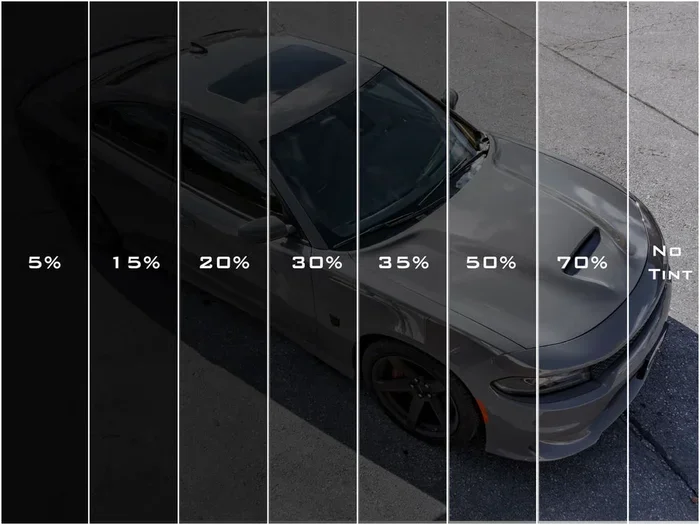
- 90% VLT – Almost clear. You barely notice any tint at all.
- 70% VLT – Light tint. Slight shading that reduces glare.
- 50% VLT – Medium tint. Cuts heat noticeably and adds style.
- 35% VLT – Medium-dark tint. Great balance of privacy and visibility.
- 20% VLT – Dark tint. High privacy and a bold look.
- 5% VLT – Very dark. Nearly opaque, often called limousine tint.
These numbers give you a tint percentage chart to reference when shopping for film. Keep in mind that the actual look can vary depending on the type of film used, the color of the film, and the time of day.
Quick Tip: Always ask your tint shop for the exact VLT rating before installation. The number on the box may differ from what you see on the window.
Understanding Light Tint Percentages
What Counts as Light Tint?
Light tint generally refers to films with a VLT of 70% or higher. These tints are subtle and barely change the appearance of your windows. They are the most popular choice for people who want the benefits of window film without a dramatic change in look.
Light tint is often called a “sheer” or “privacy” tint because it adds a slight shading without darkening the windows significantly. Many drivers choose this option because it looks clean and factory-like. It also maintains excellent outward visibility, which is important for safe driving.
Benefits of Light Tint
Light tint percentages offer several practical advantages that make them worth considering:
- UV Protection: Even a light tint film blocks up to 99% of harmful UV rays. This protects your skin and prevents your dashboard and seats from fading.
- Glare Reduction: Driving in direct sunlight becomes much more comfortable with a light tint. It cuts the harsh glare without making your view too dark.
- Heat Rejection: While not as powerful as darker tints, light tint still reduces solar heat and keeps your cabin cooler.
- Legal Compliance: Light tints are almost always legal across all states, making them a safe and worry-free choice.
- Resale Value: A subtle tint does not limit the appeal of your car to future buyers.
One common type of light tint film is the dyed film. It is affordable and provides basic UV and glare protection. However, dyed films tend to fade over time and offer less heat rejection compared to advanced options like ceramic or carbon films.
Quick Tip: If you live in a hot climate, consider a light ceramic tint. It offers excellent heat rejection while staying nearly clear and preserving your factory look.
Medium Tint Percentages: The Sweet Spot
Why Medium Tint Is So Popular
Medium tint falls in the 50% to 35% VLT range. This is the most popular choice among car owners for good reason. It strikes the perfect balance between style, comfort, and practicality. When people talk about light medium dark car window tint percentages, medium tint is often what they have in mind.
A medium tint gives your car a polished, finished look without going too dark. It provides meaningful heat reduction and privacy while still allowing you to see through the windows easily during the day. This makes it ideal for daily drivers, family cars, and commuters.
Comparison of Tint Levels
| Tint Level | VLT Range | Best For | Heat Rejection | Legal in Most States |
|---|---|---|---|---|
| Light | 70% – 50% | Glare reduction, UV protection | Moderate | Yes |
| Medium | 50% – 35% | Balance of style and comfort | Good | Usually |
| Dark | 35% – 5% | Maximum privacy and heat rejection | Excellent | Restrictions apply |
Within the medium range, 50% VLT is a great starting point for those who want a hint of tint. Moving down to 35% VLT gives you a noticeably darker look with better privacy. Many owners choose 35% for all windows except the front windshield, which often must remain lighter by law.
Expert Insight: Tint professionals often recommend 35% VLT for the front side windows and 20% for the rear windows. This combination gives a stylish, even look while staying within most legal limits.
When it comes to tint film types, medium tints work well with dyed, carbon, and ceramic films. Carbon film is a favorite for medium tint because it does not fade, has a matte finish that looks sleek, and provides solid heat rejection without interfering with electronic signals.
Dark Tint Percentages Explained
When Dark Tint Makes Sense
Dark tint generally refers to films with a VLT below 35%. These tints create a bold, dramatic appearance and offer the highest level of privacy and heat rejection. People who choose dark tint often do so for one or more of these reasons:
- Privacy: Dark tint makes it very difficult for others to see inside your car. This is valuable for families, valuables, and personal security.
- Heat Reduction: Dark tints block a significant amount of solar energy. They can lower your cabin temperature by 30 to 40 degrees Fahrenheit on a hot day.
- Style: A dark tint gives any car a sleek, customized look that stands out on the road.
- Glare Elimination: Dark tints virtually eliminate glare from the sun and headlights at night, making driving more comfortable.
Dark Tint Pros and Cons
Like any choice, dark tint comes with trade-offs. Here is a balanced look at what you gain and what you give up:
- Pros: Maximum privacy, excellent heat rejection, bold aesthetic, strong UV protection, reduced glare.
- Cons: Reduced night visibility, potential legal issues, may limit visibility in tunnels and garages, harder for law enforcement to see inside your vehicle.
It is important to be honest with yourself about your driving habits. If you do a lot of night driving or frequently drive in areas with poor lighting, a very dark tint might cause safety concerns. Light medium dark car window tint percentages give you the flexibility to find a shade that balances style with safety.
Another consideration is the type of dark film you choose. Dyed tint is the most affordable option but it can bubble and fade over time. Metalized tint is more durable and offers better heat rejection, but it can interfere with cell phone and GPS signals. Carbon tint avoids signal interference and does not fade, making it a popular choice for dark tints. Ceramic tint is the premium option. It offers the best heat rejection, blocks the most UV rays, and does not interfere with electronics, but it comes at a higher price point.
Common Mistake: Many people assume darker tint always means better heat rejection. In reality, ceramic and carbon films can outperform dark dyed films at higher VLT levels. The technology matters more than the darkness.
How to Choose the Right Tint Percentage for Your Car
Consider Your Climate
Where you live plays a big role in choosing the right tint darkness. If you live in a hot, sunny climate like Arizona or Texas, you will benefit most from a medium or dark tint that blocks significant solar heat. A ceramic tint in the 35% to 20% range will keep your car noticeably cooler and protect your interior from sun damage.
On the other hand, if you live in a cooler or cloudier climate, a light tint might be all you need. You still get UV protection and glare reduction without sacrificing too much natural light. The key is to match your tint choice to your local weather patterns and how much sun your car gets on a typical day.
Think About Your Driving Habits
Your daily driving routine matters just as much as your climate. Do you commute long hours on the highway? Do you drive mostly during the day or at night? These questions help you narrow down the right shade.
If you drive mostly during the day on open roads, a medium tint gives you great comfort without compromising safety. If you drive at night frequently, a light or light medium tint is a smarter choice because it preserves your ability to see clearly in low-light conditions.
Also consider where you park. If you park outdoors in direct sunlight, a darker tint will protect your interior and keep your car cooler when you return. If you park in a garage or covered area, a lighter tint is perfectly fine.
Quick Tip: Ask yourself three questions before choosing: How hot does my car get? How much night driving do I do? What look am I going for? Your answers will guide you to the right percentage.
Match the Tint to Your Car’s Purpose
The purpose of your car also influences your tint choice. A family SUV might benefit from a medium tint on all windows for privacy and comfort. A sports car might look better with a darker tint that enhances its sleek profile. A daily commuter might prefer a light tint that stays legal everywhere and keeps the car looking stock.
Think about what matters most to you. Is it comfort? Style? Legal safety? Privacy? Your priorities will help you land on the perfect tint percentage for your specific situation.
Legal Tint Limits You Need to Know
State-by-State Variations
Every state in the U.S. has its own tint laws, and they vary significantly. Some states allow very dark tints on all windows, while others restrict front side windows to a minimum VLT of 70%. Understanding your local legal tint limit is essential before you invest in any window film.
Here are some general patterns you will find across states:
- Front side windows: Most states require a minimum VLT of 50% to 70% for the driver and passenger front windows.
- Rear side windows: These are often allowed to be much darker, sometimes down to 5% VLT.
- Rear windshield: Many states allow dark tint on the rear windshield, often with the condition that you have side mirrors.
- Front windshield: Nearly all states only allow tint on the top few inches of the windshield, known as the sunstrip.
These state tint laws exist for safety reasons. Law enforcement officers need to see inside your vehicle during traffic stops. Dark tints on front windows can create a safety hazard for both drivers and officers. Always check your specific state’s regulations before getting your windows tinted.
Common Tint Law Violations
The most common mistakes people make with tint laws include:
- Installing too-dark film: Choosing a tint percentage that is below the legal limit for your state.
- Tinting the front windshield: Placing film on the windshield above the allowed sunstrip area.
- Missing a sticker: Many states require a legal tint sticker on the driver’s window to prove compliance.
- Using expired or non-certified film: Some states require the film to carry a certification label from the manufacturer.
Getting caught with illegal tint can result in fines, forced removal of the film, and even points on your license. It is simply not worth the risk. Always work with a reputable tint shop that knows the local laws and will guide you to a compliant choice.
Expert Insight: When in doubt, go lighter. A 50% VLT tint on all windows is legal in most states and still provides excellent comfort and style. You can always go darker later, but you cannot easily go lighter without replacing the film entirely.
Conclusion
Choosing the right light medium dark car window tint percentages comes down to understanding what each shade level offers and matching it to your needs. Light tint gives you subtle UV protection and glare reduction with full legal safety. Medium tint strikes the ideal balance between comfort, style, and visibility. Dark tint delivers maximum privacy and heat rejection for those who want a bold, customized look.
No matter which percentage you choose, the quality of the film and the skill of the installation matter just as much as the shade itself. Invest in a reputable car window film, work with an experienced installer, and always stay within your state’s legal limits. Your windows are an investment in your comfort, your car’s interior, and your overall driving experience.
Take the time to research your options, ask questions, and make an informed choice. The right tint percentage will serve you well for years to come, keeping you cooler, safer, and more comfortable every time you hit the road.
Frequently Asked Questions
What is the best tint percentage for a daily driver?
For most daily drivers, a 35% VLT tint on the front side windows and a 20% VLT on the rear windows is the sweet spot. It offers great comfort, good privacy, and stays within legal limits in most states. If you do a lot of night driving, consider 50% VLT on the front windows instead.
Can I tint my front windshield?
In most states, you can only tint the top few inches of the front windshield, known as the sunstrip. Full windshield tinting is illegal in nearly all U.S. states. Check your local state tint laws for the exact allowed width of the sunstrip in your area.
Does tint percentage affect heat rejection?
Yes, darker tints generally reject more heat, but the film type matters just as much. A ceramic film at 50% VLT can reject more heat than a dyed film at 20% VLT. The technology and quality of the car window film play a major role in how much heat is blocked.
How long does window tint last?
A high-quality window tinting installation can last 10 to 15 years or more. Dyed films tend to fade after 3 to 5 years, while ceramic and carbon films maintain their appearance and performance for much longer. Proper care, like avoiding power washes on fresh tint, helps extend the lifespan.
Is aftermarket tint safe for electronic devices?
It depends on the film type. Metalized tints can interfere with cell phone signals, GPS, and Bluetooth. Carbon and ceramic films do not cause signal interference. Always ask your tint shop about signal-friendly options if you rely heavily on electronic devices in your car.
What is the difference between factory tint and aftermarket tint?
Factory tint comes from the car manufacturer and is usually a light shade with a VLT of 70% to 80%. Aftermarket tint is applied after purchase and comes in a wide range of VLT levels. Aftermarket tint offers more control over shade, heat rejection, and UV protection compared to factory tint.