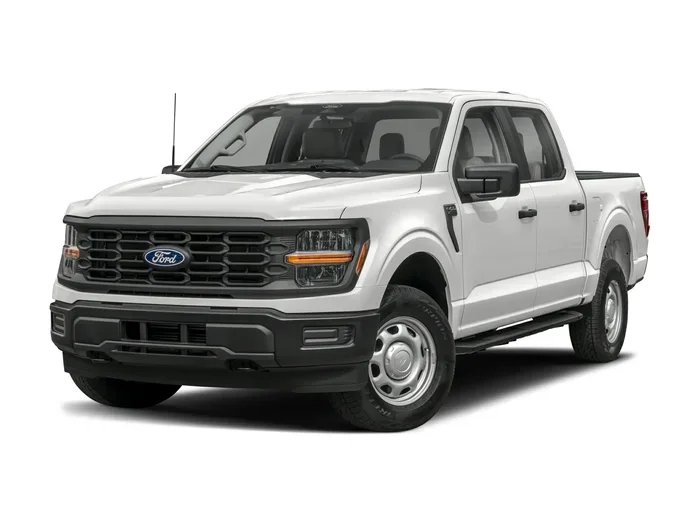
Does a Ford F 150 Quad Cab Truck Qualify for 179 Deduction
A Ford F-150 Quad Cab truck can qualify for a Section 179 deduction if it meets IRS weight and business use requirements. Understanding the rules around vehicle classification, GVWR thresholds, and business use percentage is essential for claiming this valuable tax write-off and maximizing your tax savings.
If you own or are thinking about buying a Ford F-150 Quad Cab truck, you might be wondering whether this popular pickup qualifies for a Section 179 deduction. The short answer is yes, under the right conditions. But the details matter a lot when it comes to maximizing your tax savings and staying compliant with IRS rules.
The Section 179 deduction is a powerful tax write-off that lets business owners deduct the full purchase price of qualifying equipment and vehicles in the year they are placed in service. For many small business owners, this means significant immediate tax savings instead of spreading deductions over several years through vehicle depreciation. However, not every vehicle qualifies, and the IRS has specific rules you need to understand before filing.
In this guide, we will walk you through everything you need to know about whether your Ford F-150 Quad Cab qualifies for the 179 deduction. We will cover vehicle classification, weight requirements, business use rules, and practical tips to help you claim your business expense deduction with confidence.
Key Takeaways
- The Ford F-150 Quad Cab can qualify: As a light-duty truck, it may meet the Section 179 requirements depending on its GVWR and business use.
- GVWR matters: The vehicle must generally have a gross vehicle weight rating over 6,000 pounds to unlock the full deduction potential.
- Business use is critical: You must use the truck more than 50% for business purposes to claim the deduction.
- 2024 limits apply: The Section 179 deduction limit is $1,220,000 with a phase-out threshold of $3,050,000.
- Documentation is key: Keep detailed records of business mileage, receipts, and vehicle usage logs to support your claim.
- Consult a tax professional: Every business situation is unique, so working with a CPA ensures you claim every dollar you deserve.
📑 Table of Contents
What Is a Section 179 Deduction?
The Section 179 deduction is a federal tax provision that allows businesses to deduct the full cost of qualifying assets in the year of purchase. Instead of depreciating the asset over several years, you can write off the entire amount on your tax deduction return immediately. This provision is designed to encourage businesses to invest in equipment and vehicles that help them grow.
How Does the 179 Deduction Work?
When you purchase a qualifying vehicle like a Ford F-150 Quad Cab for business use, you can elect to take the Section 179 deduction instead of using the standard vehicle depreciation schedule. This means you deduct the full purchase price (up to the annual limit) in the first year. The result is a larger immediate tax savings that can free up cash flow for your business.
For the 2024 tax year, the Section 179 deduction limit is $1,220,000. The IRS also sets a phase-out threshold of $3,050,000. If your total qualifying purchases exceed this threshold, your deduction amount is reduced dollar for dollar.
Why Does It Matter for Truck Owners?
For small business owners who use trucks for work, the Section 179 deduction can be a game-changer. A Ford F-150 Quad Cab is a common choice for contractors, landscapers, and tradespeople. Being able to deduct the full purchase price in year one can significantly reduce your taxable income and lower your overall tax bill.
Ford F-150 Quad Cab: Vehicle Classification
Understanding how the IRS classifies your Ford F-150 Quad Cab is the first step in determining eligibility. The vehicle classification directly impacts which tax deduction rules apply to your purchase.
Is the F-150 a Truck or a Passenger Vehicle?
The Ford F-150 is classified as a pickup truck, not a passenger vehicle. This distinction is important because the IRS treats trucks differently from cars and SUVs when it comes to business vehicle deduction rules. Trucks are generally subject to fewer restrictions, which is good news for F-150 owners.
The Quad Cab configuration refers to the body style with four full-size doors and a rear seating area. It is essentially the same as what Ford now calls the SuperCrew cab in newer models. The cab style does not change the fundamental truck classification, but it does affect the vehicle’s weight and dimensions.
Light-Duty Truck vs. Heavy-Duty Truck
The Ford F-150 is considered a light-duty truck. This classification matters because the IRS has different rules for light-duty trucks compared to heavier vehicles. A light-duty truck typically has a GVWR (Gross Vehicle Weight Rating) between 4,000 and 6,000 pounds. However, certain F-150 configurations can exceed this range depending on the engine, payload package, and axle ratio.
Here are the key IRS vehicle categories that affect tax write-off eligibility:
- Passenger vehicles: Cars, SUVs, and vans with a GVWR under 6,000 pounds. These face stricter deduction limits.
- Trucks and vans: Vehicles classified as trucks with a GVWR over 6,000 pounds. These have more favorable deduction rules.
- Heavy SUVs and trucks: Vehicles with a GVWR over 6,000 pounds that are not passenger vehicles. These qualify for the full Section 179 deduction.
Does the F-150 Quad Cab Meet the GVWR Requirement?
The truck GVWR is one of the most important factors in determining whether your Ford F-150 Quad Cab qualifies for the full Section 179 deduction. The IRS generally requires a GVWR over 6,000 pounds for vehicles to qualify for the maximum deduction under the business vehicle deduction rules.
Understanding Gross Vehicle Weight Rating
The GVWR is the maximum total weight of the vehicle including passengers, cargo, fuel, and the vehicle itself. You can find this number on the door jamb sticker of your Ford F-150 Quad Cab or in the owner’s manual. It is also listed on the vehicle title and registration documents.
For the Ford F-150 Quad Cab, the GVWR varies depending on the specific configuration. Base models typically have a GVWR around 5,000 to 6,000 pounds. However, higher trim levels, heavier payload packages, and certain engine configurations can push the GVWR above 6,000 pounds.
Which F-150 Quad Cab Configurations Qualify?
Not all Ford F-150 Quad Cab trucks are created equal when it comes to IRS rules and Section 179 eligibility. Here is a closer look at what to check:
- Standard configurations: Base and mid-range F-150 Quad Cab trucks often have a GVWR around 5,300 to 5,900 pounds. These may not qualify for the full deduction.
- Heavy-duty payload packages: F-150 models with the Heavy-Duty Payload Package or higher axle ratios can have a GVWR exceeding 6,000 pounds, making them eligible.
- Lariat and higher trims: Higher trim levels often come with heavier-duty components that increase the GVWR above the 6,000-pound threshold.
- SuperCrew equivalents: In newer model years, the Quad Cab was renamed SuperCrew. The same GVWR rules apply to both body styles.
Pro Tip: Always check the door jamb sticker or the vehicle certification label to confirm the exact GVWR of your specific Ford F-150 Quad Cab configuration. Do not guess, as the IRS requires documented proof.
How to Claim the 179 Deduction for Your F-150
If your Ford F-150 Quad Cab meets the GVWR and classification requirements, the next step is to properly claim the Section 179 deduction on your tax return. Here is a step-by-step guide to help you through the process.
Step 1: Confirm Business Use Percentage
The IRS requires that the vehicle be used for business purposes more than 50% of the time. If you use your Ford F-150 Quad Cab for both personal and business purposes, you must calculate your business use percentage. Keep a detailed mileage log that records every trip, including the date, destination, purpose, and miles driven.
Step 2: Gather Your Documentation
Before you file, make sure you have the following documents ready:
- Vehicle purchase invoice showing the total cost
- Title and registration in the business name
- Door jamb sticker or vehicle certification label showing the GVWR
- Mileage log documenting business and personal use
- IRS Form 8829 if you are claiming expenses for a portion of the vehicle
Step 3: Complete IRS Form 4562
To claim the Section 179 deduction, you will file IRS Form 4562 with your annual tax return. This form allows you to elect the 179 deduction and specify the amount you are deducting for the qualifying vehicle. Make sure to enter the correct vehicle classification code to avoid processing delays.
Step 4: Consider the De Minimis Safe Harbor
If your Ford F-150 Quad Cab does not fully qualify for the Section 179 deduction, you may still be able to use the de minimis safe harbor election or regular vehicle depreciation methods. These alternatives allow you to deduct a portion of the vehicle cost over time rather than all at once.
Common Mistakes to Avoid
Claiming a Section 179 deduction for a Ford F-150 Quad Cab can be straightforward, but mistakes happen. Here are the most common errors business owners make and how to avoid them.
Assuming All F-150 Models Qualify
Not every Ford F-150 Quad Cab configuration qualifies for the full Section 179 deduction. The GVWR is the deciding factor, and many base models fall just under the 6,000-pound threshold. Always verify the GVWR before claiming the deduction.
Neglecting the Business Use Requirement
Even if your truck qualifies based on weight, you must still use it for business more than 50% of the time. Failing to maintain a proper mileage log is the fastest way to have your tax write-off denied during an IRS audit.
Confusing Section 179 with Bonus Depreciation
Section 179 and bonus depreciation are two different tax deduction tools. Section 179 lets you deduct the full cost in year one, while bonus depreciation allows you to deduct a percentage of the cost immediately. You can choose one or the other, but you cannot double-dip. Understanding the difference helps you make the best choice for your tax savings.
Forgetting About State Tax Implications
The Section 179 deduction is a federal tax deduction, but your state may have different rules. Some states do not conform to federal Section 179 rules, which means you may need to adjust your state tax return separately. Check with your state tax agency or a tax professional to avoid surprises.
Expert Tips for Maximizing Your Tax Savings
Getting the most out of your Ford F-150 Quad Cab Section 179 deduction requires planning and attention to detail. Here are some expert-backed strategies to help you maximize your tax savings.
Time Your Purchase Strategically
If you are planning to buy a Ford F-150 Quad Cab for business, consider the timing of your purchase. Placing the vehicle in service before December 31 of the tax year ensures you can claim the 179 deduction for that tax year. A purchase made on December 30 is treated the same as one made on January 2 of the following year, so plan accordingly.
Combine the 179 Deduction with Other Write-Offs
You can combine the Section 179 deduction with other business deductions related to your vehicle. These may include fuel expenses, maintenance costs, insurance premiums, and registration fees. Stacking these deductions together creates a powerful tax write-off strategy that reduces your overall taxable income significantly.
Keep Impeccable Records
The IRS can audit your business vehicle deduction at any time. The best defense is thorough documentation. Use a mileage tracking app or a dedicated logbook to record every business trip. Save all receipts for fuel, repairs, and insurance. Good record-keeping not only protects you during an audit but also helps you identify additional deductions you might have missed.
Consult a Qualified Tax Professional
Every business has unique circumstances. A qualified CPA or tax professional can review your specific situation and confirm whether your Ford F-150 Quad Cab qualifies for the Section 179 deduction. They can also help you identify additional deductions and credits you may be eligible for, ensuring you do not leave money on the table.
Quick Tips for F-150 Quad Cab Owners
- Check your door jamb sticker to confirm your GVWR before claiming the deduction.
- Use a mileage tracking app like MileIQ or Everlance to simplify record-keeping.
- Purchase the vehicle before December 31 to ensure it qualifies for the current tax year.
- Keep the vehicle titled in the business name to strengthen your tax write-off claim.
- Review your state tax rules separately, as they may differ from federal IRS rules.
- Save all purchase documentation including the invoice, title, and registration.
- Consider consulting a tax advisor if you are unsure about your business use percentage.
Conclusion
The Ford F-150 Quad Cab truck is a popular and capable work vehicle that can indeed qualify for a Section 179 deduction, provided it meets the IRS requirements for vehicle classification, GVWR, and business use percentage. By understanding the rules, keeping thorough documentation, and planning your purchase strategically, you can take full advantage of this valuable tax deduction and enjoy meaningful tax savings.
Remember that every business situation is different. The Section 179 deduction offers a fantastic opportunity to write off your business vehicle in year one, but it requires careful attention to detail and compliance with IRS rules. When in doubt, reach out to a qualified tax professional who can guide you through the process and help you make the best decision for your business.
Take the time to review your Ford F-150 Quad Cab configuration, verify your GVWR, and maintain accurate records. With the right preparation, you can confidently claim your business expense deduction and keep more of your hard-earned money where it belongs, in your pocket.
Frequently Asked Questions
Can I claim a Section 179 deduction if I use my F-150 Quad Cab 50% for personal use?
No, the IRS requires that the vehicle be used for business more than 50% of the time. If your business use is exactly 50% or less, you cannot claim the full Section 179 deduction. You may still be able to claim a partial deduction based on your business use percentage, but you should consult a tax professional for guidance.
What happens if my Ford F-150 Quad Cab has a GVWR under 6,000 pounds?
If your truck GVWR is under 6,000 pounds, it may be classified as a passenger vehicle by the IRS. This means you will be subject to stricter luxury auto limits on your vehicle depreciation and deduction amounts. You may still claim a deduction, but it will be limited compared to trucks that exceed the 6,000-pound threshold.
Is the Ford F-150 SuperCrew the same as the Quad Cab for 179 purposes?
Yes, the Ford F-150 SuperCrew is the newer name for what was previously called the Quad Cab. The IRS classifies both body styles as pickup trucks, and the same Section 179 deduction rules apply. What matters is the GVWR and business use, not the cab style name.
Can I claim the 179 deduction on a used Ford F-150 Quad Cab?
Yes, you can claim the Section 179 deduction on a used qualifying vehicle as long as it is placed in service for your business during the tax year. The vehicle must meet the GVWR requirement and be used more than 50% for business. Keep all purchase documentation and a mileage log to support your claim.
What is the difference between Section 179 and bonus depreciation for trucks?
Section 179 allows you to deduct the full cost of a qualifying vehicle in the first year, up to the annual limit. Bonus depreciation allows you to deduct a percentage of the cost immediately, with the remaining amount depreciated over time. For 2024, bonus depreciation is 60%. You can choose one method or the other, but not both for the same vehicle.
Do I need to file any special forms to claim the 179 deduction?
Yes, you must file IRS Form 4562 with your annual tax return to claim the Section 179 deduction. This form is where you specify the deduction amount and provide details about the qualifying vehicle. If you are also claiming expenses for personal use of the vehicle, you may need to file IRS Form 8829 as well.