Toyota Corolla 2020 Engine Filter Clean Must I Still Change
Even if your Toyota Corolla 2020 engine filter looks clean, it still needs regular replacement. A visually clean filter can trap hidden particles that reduce engine performance and fuel efficiency over time. Following Toyota’s recommended maintenance schedule ensures your engine stays protected and runs smoothly for years to come.
You pop the hood of your Toyota Corolla 2020, inspect the engine filter, and it looks perfectly clean. No dirt. No debris. It seems almost brand new. So why would anyone tell you to change it? This is a question many Toyota owners ask, and the answer might surprise you.
The truth is, your engine air filter does more than just look clean on the outside. It works hard every single day, trapping dust, pollen, and tiny particles that could damage your engine. Even if it appears spotless, microscopic contaminants build up over time. This affects airflow, engine performance, and fuel efficiency.
In this guide, we will walk you through everything you need to know about your Toyota Corolla 2020 engine filter. We will cover replacement schedules, warning signs, DIY steps, and expert tips. By the end, you will know exactly when and why to change your filter, even when it looks fine.
Key Takeaways
- Clean doesn’t mean ready: A visually clean engine filter can still restrict airflow and harbor microscopic particles that harm your engine.
- Stick to Toyota’s schedule: Toyota recommends replacing the engine air filter every 15,000 to 30,000 miles or once a year, whichever comes first.
- Hidden damage is real: Neglecting filter changes can lead to reduced fuel economy, rough idling, and even engine misfires.
- DIY replacement is easy: You can swap out your Toyota Corolla 2020 engine filter at home with basic tools in under 15 minutes.
- Cost savings add up: Replacing the filter yourself costs a fraction of what a dealership charges, typically between $15 and $40.
- Quality matters: Always use OEM or high-quality aftermarket filters to ensure proper filtration and engine protection.
📑 Table of Contents
- Understanding Your Toyota Corolla 2020 Engine Filter
- How Often Should You Change the Toyota Corolla 2020 Engine Filter?
- What Happens If You Don’t Change a Clean-Looking Filter?
- Signs Your Toyota Corolla 2020 Engine Filter Needs Replacement
- Step-by-Step Guide to Replacing Your Toyota Corolla 2020 Engine Filter
- Expert Tips for Extending Engine Filter Life
- Common Mistakes People Make With Engine Filters
- Why Regular Filter Changes Save You Money in the Long Run
- Final Thoughts
Understanding Your Toyota Corolla 2020 Engine Filter
Before we dive into whether you must change a clean filter, let us understand what the engine filter actually does. Think of it as a shield for your engine. Every time you drive, air flows into the engine to mix with fuel. That air carries dust, pollen, road debris, and other tiny particles. The engine filter catches all of that before it reaches the combustion chamber.
Your Toyota Corolla 2020 uses a panel-style air filter housed in a plastic box near the engine. The filter itself is made of layered paper or synthetic material. These tiny fibers trap particles as small as 10 microns. To put that in perspective, a human hair is about 70 microns wide. The filter works incredibly hard to keep your engine breathing clean air.
Types of Filters Used in the 2020 Corolla
Toyota offers two main types of engine filters for the 2020 Corolla. The first is the standard paper filter. This comes installed from the factory and works well for most driving conditions. The second option is a high-performance synthetic filter. These are often used by owners who drive in dusty or rural areas.
Both filter types serve the same purpose. They clean the air before it enters the engine. The difference lies in how long they last and how well they handle heavy contamination. No matter which type you have, both need regular replacement.
Why Visual Cleanliness Is Not Enough
Here is the biggest misconception. A filter can look clean on the outside and still be clogged on the inside. Tiny dust particles settle deep into the filter material. Over time, this buildup restricts airflow. Your engine then struggles to get the oxygen it needs for combustion. This leads to a chain of problems you do not want to deal with.
Think of it like a kitchen sponge. After a while, even if the top looks clean, the inside is packed with grime. Your engine air filter works the same way. The trapped particles create a hidden barrier that reduces efficiency. This is why Toyota does not recommend relying on visual inspection alone.
How Often Should You Change the Toyota Corolla 2020 Engine Filter?
Toyota provides clear guidelines for engine filter replacement. The manufacturer recommends changing the air filter every 15,000 to 30,000 miles. For most drivers, this means replacing it once a year. However, your driving conditions can change this timeline significantly.
If you drive in heavy traffic, on unpaved roads, or in areas with high pollution, you should replace the filter more often. The same applies if you frequently drive through dusty construction zones or rural areas with lots of dirt roads.
Toyota’s Official Maintenance Schedule
Toyota’s owner manual for the 2020 Corolla lists the engine air filter replacement interval. The schedule is based on normal driving conditions. Under severe conditions, the interval shortens. Here is a quick breakdown:
- Normal conditions: Replace every 30,000 miles or 24 months
- Severe conditions: Replace every 15,000 miles or 12 months
- Dusty environments: Replace every 10,000 to 15,000 miles
Severe conditions include frequent short trips, extreme heat, heavy traffic, and exposure to dust or salt. If any of these apply to your daily commute, stick to the shorter interval.
The Cost of Ignoring the Schedule
Some owners skip filter changes to save money. This is a false economy. A clogged engine filter reduces fuel efficiency by up to 10 percent. Over time, this adds up at the pump. Worse yet, a neglected filter can cause engine damage that costs hundreds of dollars to repair.
Replacing your Toyota Corolla 2020 engine filter on time costs between $15 and $40 for the part alone. If you do it yourself, you save even more on labor. Compare that to the cost of fixing an engine problem caused by poor airflow. The choice is clear.
What Happens If You Don’t Change a Clean-Looking Filter?
You might be tempted to skip the filter change if it looks fine. After all, why fix something that is not broken? But here is the thing. Your engine filter works silently in the background. You do not notice the gradual decline in performance until it becomes a real problem.
Reduced Airflow and Engine Performance
A dirty filter restricts the amount of air reaching the engine. Your Toyota Corolla 2020 engine needs a precise air-to-fuel ratio to run efficiently. When airflow drops, the engine compensates by burning more fuel. This means you get fewer miles per gallon and lose power during acceleration.
You might not notice this at first. The changes happen slowly. But over thousands of miles, the difference becomes significant. Drivers who replace their filters on schedule consistently report better throttle response and smoother engine operation.
Increased Emissions and Environmental Impact
A restricted filter also affects your car’s emissions. When the engine does not get enough air, combustion becomes incomplete. This produces more carbon monoxide and unburned hydrocarbons. Your Toyota 2020 Corolla is designed to meet strict emissions standards. A dirty filter can cause it to fail an emissions test.
Beyond that, excess emissions harm the environment. Keeping your engine filter fresh is one of the simplest ways to reduce your car’s environmental footprint.
Engine Wear and Long-Term Damage
The most serious risk is engine wear. When the filter fails to trap particles, dust and debris enter the combustion chamber. These tiny particles scratch cylinder walls and damage piston rings. Over time, this causes irreversible engine damage. Repairing this type of damage can cost thousands of dollars.
A clean engine filter protects the most expensive part of your car. It is a small investment that pays for itself many times over. Think of it as insurance for your Toyota’s engine.
Signs Your Toyota Corolla 2020 Engine Filter Needs Replacement
Even with a regular schedule, it helps to know the warning signs. Your car will tell you when the filter is no longer doing its job. Watch for these symptoms.
1. Reduced Fuel Economy
If you notice you are visiting the gas station more often, a dirty filter could be the culprit. Your engine works harder when it cannot breathe properly. This burns more fuel and lowers your miles per gallon. A sudden drop in fuel efficiency is often one of the first signs.
2. Rough Idle or Engine Misfires
A clogged filter disrupts the air-fuel mixture. This can cause your engine to idle roughly or misfire. You might feel a slight vibration at a stoplight or hear an uneven sound from the engine bay. These are clear signals that airflow is restricted.
3. Check Engine Light
In some cases, a severely clogged filter triggers the check engine light. The engine control module detects abnormal oxygen levels and flags the issue. If your check engine light comes on, a dirty air filter should be one of the first things you check.
4. Unusual Engine Sounds
Listen to your engine. A healthy engine sounds smooth and consistent. If you hear coughing, sputtering, or popping noises, the engine might be starving for air. A dirty filter is a common cause of these unusual sounds.
5. Black Soot or Debris Around the Filter
When you inspect the filter, look closely at the edges. Black soot or dark residue around the filter housing indicates the filter is working hard. It has trapped a lot of contaminants. Even if the center looks clean, this surrounding buildup means it is time for a replacement.
Step-by-Step Guide to Replacing Your Toyota Corolla 2020 Engine Filter
Replacing your engine air filter is one of the easiest maintenance tasks you can do. You do not need mechanic skills or expensive tools. Here is how to do it yourself in under 15 minutes.
What You Will Need
- A new OEM or high-quality aftermarket air filter
- A flathead screwdriver or Phillips head screwdriver
- A clean cloth for wiping the filter housing
- Your Toyota owner manual (for reference)
Step 1: Locate the Air Filter Box
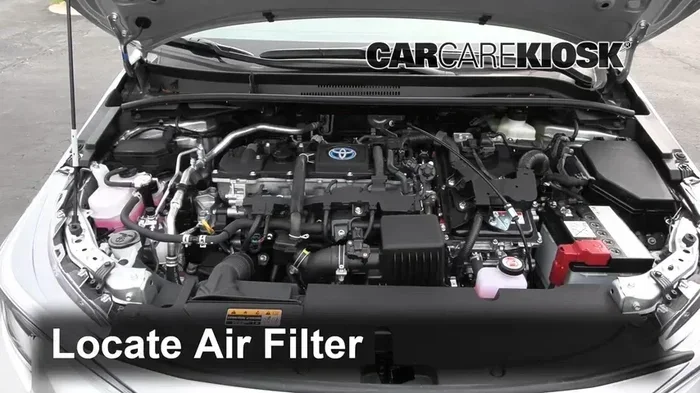
Open the hood and look for the large plastic box near the engine. It is connected to the throttle body by a large rubber hose. This is your air filter housing. The Toyota Corolla 2020 engine filter sits inside this box.
Step 2: Open the Housing
Use your screwdriver to remove the clips or screws holding the housing lid. Gently lift the lid off. You will see the engine filter sitting inside. Take a moment to inspect the old filter before removing it.
Step 3: Remove the Old Filter
Carefully lift the old filter out of the housing. Notice how much dirt and debris it has collected, even if it looked clean on top. Set the old filter aside. Use the clean cloth to wipe any dust from inside the housing.
Step 4: Install the New Filter
Take your new filter and place it into the housing. Make sure it sits flat and fits snugly. The filter should not be forced in or folded. If it does not fit easily, double-check that you have the correct filter model for your Toyota Corolla 2020.
Step 5: Close and Secure the Housing
Place the lid back on and secure it with the clips or screws. Make sure the seal is tight. A loose housing lets unfiltered air bypass the filter and enter the engine. This defeats the entire purpose of the replacement.
Step 6: Start the Engine and Test
Start your car and let it idle for a few minutes. Listen for any unusual sounds. You should notice smoother operation right away. Take a short test drive and pay attention to throttle response and engine smoothness.
Expert Tips for Extending Engine Filter Life
While you cannot avoid replacing the filter forever, you can take steps to keep it in good condition longer. These simple habits protect your Toyota Corolla 2020 engine filter and improve overall vehicle health.
Keep Your Car Garaged When Possible
Parking in a garage reduces the amount of dust and debris your filter ingests. It also protects the filter from extreme temperature swings that can degrade the filter material over time.
Avoid Driving on Unpaved Roads When Possible
Gravel roads and construction zones are the enemy of engine filters. If you must drive on unpaved surfaces, consider replacing the filter sooner than the standard interval.
Inspect the Filter Monthly
Make it a habit to check your engine filter once a month. A quick visual inspection takes less than two minutes. You will catch problems early and avoid unexpected performance issues.
Use Quality Replacement Filters
Not all filters are created equal. OEM Toyota filters are designed specifically for your vehicle’s engine. High-quality aftermarket filters from reputable brands offer similar performance. Avoid cheap, no-name filters that use low-grade materials and provide poor filtration.
Common Mistakes People Make With Engine Filters
Even well-meaning car owners make mistakes when it comes to engine filter maintenance. Here are the most common ones to avoid.
Mistake 1: Washing and reusing paper filters. Most engine air filters are disposable. Washing a paper filter damages the fiber structure and reduces its effectiveness. Do not try to clean and reuse it.
Mistake 2: Using the wrong filter size. Not all filters fit every car. Using an incorrectly sized filter allows unfiltered air to enter the engine. Always verify the part number matches your Toyota Corolla 2020.
Mistake 3: Ignoring the cabin air filter. The cabin air filter is different from the engine filter. It cleans the air inside your car. Many owners confuse the two and neglect one or the other. Replace both on schedule for the best results.
Mistake 4: Waiting for obvious symptoms. By the time you notice reduced fuel economy or rough idling, the filter has been dirty for a while. Proactive replacement prevents damage before symptoms appear.
Why Regular Filter Changes Save You Money in the Long Run
Some owners hesitate to replace a filter that looks clean. They want to squeeze every mile out of it. But the math tells a different story. Regular filter changes improve fuel economy, extend engine life, and prevent costly repairs.
Consider this. A new engine filter costs around $20 to $40. A clogged filter reduces fuel efficiency by 5 to 10 percent. If you drive 15,000 miles per year and gas costs $3.50 per gallon, a 10 percent drop in efficiency wastes roughly $100 per year. That is five to ten times the cost of the filter itself.
And that is just the fuel cost. Engine damage from prolonged filter neglect can run into thousands of dollars. Regular replacement is the cheapest insurance your Toyota Corolla 2020 engine filter can offer.
Final Thoughts
So, do you really need to change your Toyota Corolla 2020 engine filter if it looks clean? The answer is a resounding yes. Visual cleanliness does not tell the whole story. Your engine filter works behind the scenes to protect your engine from harmful particles. Over time, even a filter that looks fine can restrict airflow, reduce fuel economy, and cause engine wear.
Following Toyota’s recommended maintenance schedule is the smartest thing you can do for your vehicle. Replace the filter every 15,000 to 30,000 miles depending on your driving conditions. Watch for warning signs like rough idling, reduced fuel economy, and check engine lights. And if you are handy, swap the filter yourself in just a few minutes.
Your Toyota Corolla 2020 engine filter is a small part with a big job. Treat it well, and your engine will reward you with years of reliable, efficient performance. Do not wait for problems to appear. Stay proactive and keep your filter fresh. Your car and your wallet will thank you.
Frequently Asked Questions
Can I drive my Toyota Corolla 2020 with a dirty engine filter?
You can drive short distances, but a dirty filter reduces engine performance and fuel efficiency. Over time, it can cause serious engine damage. It is best to replace the filter as soon as you notice signs of clogging.
How much does it cost to replace a Toyota Corolla 2020 engine filter?
The part costs between $15 and $40. If you do it yourself, there is no labor cost. A dealership or mechanic may charge $50 to $100 including labor. Replacing it at home is the most affordable option.
What happens if I never change my engine air filter?
A neglected filter becomes severely clogged over time. This restricts airflow, reduces fuel economy, causes rough idling, and can lead to engine misfires. In extreme cases, it causes permanent engine damage that requires expensive repairs.
Can I clean and reuse my Toyota Corolla 2020 engine filter?
No. Standard paper and synthetic engine filters are designed for single use. Washing them damages the filtration material and reduces their ability to trap particles. Always install a new filter when replacing the old one.
How do I know if my engine filter is dirty if it looks clean?
A filter can look clean on the outside while being clogged internally. The best way to check is by following the replacement schedule. If you are past the recommended mileage or time interval, replace it regardless of how it looks.
Does driving in dusty areas require more frequent filter changes?
Yes. Driving on unpaved roads or in dusty environments causes the filter to clog faster. Toyota classifies this as severe driving and recommends replacing the filter every 10,000 to 15,000 miles under these conditions.
=== CONCLUSION ===
Taking care of your Toyota Corolla 2020 engine filter is one of the simplest and most impactful things you can do for your vehicle. Even when the filter looks clean on the outside, hidden particles and restricted airflow can quietly harm your engine. Stick to Toyota’s recommended replacement schedule, watch for warning signs, and consider doing the swap yourself to save time and money. A fresh engine filter means better fuel economy, smoother performance, and a longer-lasting engine. Your Toyota deserves this small but essential act of care.