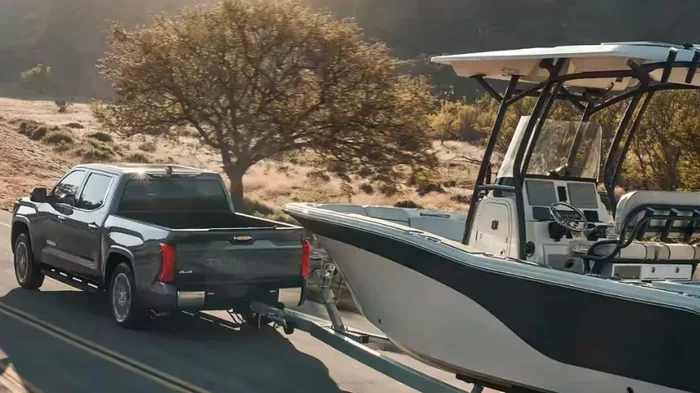
How to Tow a Center Console with a Tacoma the Right Way
Towing a center console with a Tacoma is totally doable when you do it the right way. This guide walks you through everything from choosing the right hitch to managing tongue weight and staying safe on the road. Whether you have a 2016 or the latest 2024 model, you will find clear, practical steps to make your towing experience easy and stress-free.
There is something special about heading out on the water with your center console in tow. The Tacoma has long been a favorite truck for boat owners, and for good reason. It is tough, reliable, and built to handle serious work. But towing a center console with a Tacoma is not just about hooking up and driving. There is a right way and a wrong way to do it.
Whether you are a first-time tower or a seasoned pro looking to fine-tune your setup, this guide covers everything you need. We will walk through hitch selection, weight management, safety tips, and common mistakes to avoid. By the end, you will feel confident and ready to hit the road with your boat in tow.
The Toyota Tacoma has earned a reputation as one of the most dependable midsize trucks on the market. Its strong frame, solid rear axle, and available towing package make it a great match for center console boats. But every Tacoma model is different, and knowing your specific truck’s limits is the first step toward safe and successful towing.
Key Takeaways
- Know your Tacoma’s towing capacity: It ranges from 3,500 to 6,500 lbs depending on the model year and trim.
- Choose the right hitch setup: A weight distribution hitch with a brake controller makes a huge difference.
- Check tongue weight regularly: Aim for 10-15% of your total trailer weight for stable towing.
- Use proper trailer wiring and towing mirrors: These are non-negotiable for safety and legal compliance.
- Practice before hitting the highway: A test drive in a safe area helps you get comfortable with the setup.
- Maintain your rig throughout the trip: Inspect tires, brakes, and connections before every outing.
📑 Table of Contents
Understand Your Tacoma’s Towing Capacity
Before you even think about hooking up a trailer, you need to know what your Tacoma can handle. Towing capacity varies widely based on the model year, engine, cab size, and bed length. A base 2012 Tacoma with a four-cylinder engine will have a much lower limit than a 2023 Tacoma TRD Pro with a V6.
Check Your Owner’s Manual
The easiest way to find your truck’s towing specs is to open the owner’s manual. Look for the section on towing and payload. You will also find a sticker on the driver’s door jamb that lists the gross vehicle weight rating, or GVWR. This number tells you the maximum weight your Tacoma can safely carry, including the truck itself, passengers, cargo, and the trailer.
Know the Difference Between Towing and Payload
Many people confuse towing capacity with payload capacity. They are not the same thing. Towing capacity refers to the maximum weight your truck can pull behind it on a trailer. Payload capacity is the maximum weight your truck can carry in its bed and cabin combined. When you are towing a center console, both numbers matter. The trailer weight counts toward your towing capacity, but the weight of the boat, motor, and gear also adds to your payload.
Towing Capacity by Tacoma Model
Here is a quick look at how towing capacity changes across different Tacoma configurations:
- Base 4-cylinder models: Around 3,500 to 4,500 lbs
- V6 models with towing package: Around 5,000 to 6,500 lbs
- TRD Off-Road and TRD Pro trims: Up to 6,500 lbs with proper equipment
- Newer 2023-2024 models: Improved towing specs with updated engineering
Always double-check the exact numbers for your specific year and trim. Overloading your Tacoma can damage the engine, transmission, and frame. It also creates a serious safety risk on the road.
Choose the Right Towing Setup
Once you know your Tacoma’s limits, the next step is picking the right equipment. A proper towing setup makes all the difference between a smooth ride and a dangerous one. You do not need the most expensive gear on the market, but you do need the right pieces for your specific boat and truck combination.
Select the Correct Trailer Hitch
The hitch is the foundation of your entire towing setup. For most center console boats, a Class IV receiver hitch is the go-to choice. These hitches mount to the frame of your Tacoma and provide a secure connection point. Look for a hitch with a 2-inch receiver tube, as this is the standard size for most boat trailers and offers the best versatility.
Make sure the hitch is rated for the weight of your fully loaded trailer. A hitch that is too small for the job is a serious safety hazard. Also, consider whether you need a removable or fixed hitch. Removable hitches are great if you do not tow every day, since they keep your truck looking clean when not in use.
Add a Weight Distribution Hitch
If your trailer is close to your Tacoma’s towing limit, a weight distribution hitch is almost essential. This system uses spring bars to spread the trailer’s weight across all four wheels of your truck. It helps with weight distribution and keeps your Tacoma level when loaded down.
Without a weight distribution system, you may notice the rear of your Tacoma sagging under the trailer weight. This affects steering, braking, and overall handling. A weight distribution hitch solves that problem and makes your rig much safer and more stable.
Install a Brake Controller
A brake controller is one of the most important towing accessories you can add. It lets you apply your Tacoma’s brakes in sync with the trailer’s brakes. Most states require a brake controller when towing over a certain weight, usually around 1,500 to 3,000 lbs depending on the state.
There are two main types: time-delayed and proportional. A proportional brake controller senses how hard the trailer is pushing and applies the right amount of braking force. This is the better option for most center console towing situations because it provides smoother, more controlled stops.
Prepare Your Center Console for Towing
Your Tacoma is only half of the equation. The boat and trailer also need proper preparation before you tow. Taking the time to prep everything will save you headaches on the road and keep your gear safe.
Secure the Boat on the Trailer
Make sure the center console boat is strapped down tightly to the trailer bunks or rollers. Check every strap and buckle before you leave. A loose boat on a trailer is extremely dangerous. Give each strap a firm tug to confirm it is holding tight. Use ratchet straps for the best grip, and replace any straps that show signs of wear or fraying.
Check the Trailer Tires and Bearings
Trailer tires wear out faster than you might think. Before every trip, inspect the tire condition, pressure, and tread depth. Underinflated trailer tires are a leading cause of towing accidents. Also, check the wheel bearings for any play or roughness. A seized bearing on the highway can turn a great day into a nightmare.
Verify Trailer Lights and Wiring
Your trailer needs working brake lights, turn signals, and running lights. Connect the trailer wiring harness to your Tacoma and test every light before you pull out of the driveway. A trailer wiring kit with a 4-way or 7-way connector ensures proper electrical connection. If your Tacoma does not have a factory towing wiring harness, an aftermarket kit is easy to install and well worth the cost.
Master the Art of Towing Safely
Having the right gear is only part of the equation. How you drive and manage your rig on the road matters just as much. Safe towing requires attention, patience, and a few smart habits.
Get the Right Towing Mirrors
Standard side mirrors on a Tacoma may not be enough to see past a wide boat trailer. Extended towing mirrors give you a much better view of the road behind and beside your trailer. Blind spots become much more dangerous when you are towing, so clear visibility is critical.
Clip-on mirror extensions are an affordable option that works well for most setups. If you tow frequently, consider installing permanent towing mirrors that are rated for your trailer width.
Manage Your Speed and Following Distance
When you are towing a heavy load, you need more time and distance to stop. Increase your following distance to at least 6 seconds behind the vehicle in front of you. Reduce your speed compared to what you would normally drive. Most experts recommend staying at or below 55 to 60 mph when towing a center console boat.
Going too fast on the highway creates extra wind resistance, strains your engine, and increases the risk of trailer sway. Slow and steady wins the towing race.
Handle Trailer Sway with Confidence
Trailer sway is one of the scariest things you can experience while towing. It happens when the trailer starts to swing side to side, often caused by wind gusts, improper weight distribution, or passing trucks. If you feel sway starting, do not slam on the brakes. Ease off the accelerator gently and let the rig slow down naturally.
Using a weight distribution hitch and proper tongue weight helps prevent sway from the start. As a general rule, your tongue weight should be 10 to 15 percent of the total trailer weight. You can check this with a tongue weight scale at a truck stop or weigh station.
Common Mistakes to Avoid
Even experienced towers make mistakes sometimes. Knowing what to watch out for can save you time, money, and most importantly, keep you safe.
Overloading the Trailer
This is the number one mistake people make. It is tempting to load up the boat with all your gear, fuel, and extras, but exceeding the trailer’s weight rating is dangerous. Always weigh your fully loaded trailer before hitting the road. Most public scales at truck stops are free to use.
Ignoring Tongue Weight
Too little tongue weight causes the trailer to fishtail. Too much tongue weight pushes the rear of your Tacoma down and lifts the front, reducing steering control. Finding the sweet spot is essential for a stable and safe tow.
Skipping Pre-Trip Inspections
It is easy to skip the walk-around check when you are in a hurry. But taking five minutes to inspect tires, connections, lights, and straps can prevent a catastrophic failure on the highway. Make this a habit every single time you tow.
Using the Wrong Ball Size
Trailer balls come in different sizes, typically 1-7/8 inches, 2 inches, and 2-5/16 inches. Using the wrong size ball for your trailer hitch can cause the coupler to pop off or not seat properly. Always match the ball size to your trailer’s coupler and double-check before each trip.
Expert Tips for a Better Towing Experience
Here are some extra tips from experienced towers and Tacoma owners that will make your life easier on the road.
- Break in your new trailer setup: Take a short test drive in a quiet area before tackling busy highways. This lets you get comfortable with how your Tacoma handles the extra weight.
- Use a towing guide or app: Apps like Garmin RV can help you plan routes that avoid low bridges, steep grades, and weight-restricted roads.
- Upgrade your rear suspension: If you tow often, consider adding helper springs or a rear air bag system. These improve stability and ride quality when your Tacoma is loaded down.
- Keep a towing checklist: Write down your pre-trip inspection steps and keep the list in your truck. A checklist ensures you never forget a critical step.
- Join Tacoma towing communities: Online forums and local truck groups are full of helpful advice from other Tacoma owners who tow center consoles regularly.
Maintenance Tips for Towing Long-Term
Towing puts extra stress on your Tacoma, so regular maintenance becomes even more important. Staying on top of your truck’s service schedule will extend its life and keep your towing setup running smoothly.
Change your engine oil more frequently if you tow regularly. Towing generates more heat and puts extra strain on the engine and transmission. Check your transmission fluid, brake fluid, and coolant levels before every trip. Inspect your hitch receiver for any signs of rust or wear, and grease the hitch ball regularly to prevent corrosion.
Your Tacoma’s tires also deserve extra attention. Check the tire pressure on both the truck and the trailer before every outing. Underinflated tires are the leading cause of tire blowouts, and a blowout while towing is extremely dangerous.
If you notice any unusual sounds, vibrations, or handling issues while towing, pull over safely and inspect the situation. Do not ignore warning signs. Addressing small problems early prevents bigger and more expensive repairs down the road.
Conclusion
Towing a center console with a Tacoma is a rewarding experience that opens up a world of fishing and boating adventures. With the right setup, proper preparation, and safe driving habits, you can tow with confidence and peace of mind. Remember to know your Tacoma’s limits, invest in quality towing equipment, and never skip your pre-trip inspections.
Every successful towing trip starts with knowledge and preparation. Use the tips in this guide to build a setup that works for you and your center console boat. Stay patient on the road, respect your truck’s capabilities, and enjoy every mile of the journey. Happy towing!
Frequently Asked Questions
What is the towing capacity of a Toyota Tacoma?
It depends on the model year, engine, and trim. Most Tacoma models can tow between 3,500 and 6,500 lbs. Always check your specific truck’s owner’s manual or the door jamb sticker for the exact number. Never exceed your Tacoma’s rated towing capacity.
Do I need a weight distribution hitch for my Tacoma?
If your trailer weight is more than half of your Tacoma’s towing capacity, a weight distribution hitch is highly recommended. It helps distribute the load evenly across all four wheels and improves stability. For lighter center console setups, a standard hitch may be sufficient.
What is the correct tongue weight for towing a center console?
Tongue weight should be between 10 and 15 percent of the total trailer weight. You can measure it with a tongue weight scale available at most truck stops. Proper tongue weight prevents trailer sway and keeps your Tacoma handling correctly.
Can I tow a center console with a Tacoma that does not have a towing package?
It depends on the weight of your boat and trailer. A Tacoma without a towing package may have a lower towing capacity and lack features like a brake controller or upgraded cooling. Check your owner’s manual to confirm your specific model’s towing limits before attempting to tow.
What type of hitch do I need for a center console boat trailer?
A Class IV receiver hitch with a 2-inch receiver tube is the standard choice for most center console setups. Make sure the hitch is rated for your trailer’s gross trailer weight. Always pair it with a compatible ball mount and hitch ball sized to match your trailer coupler.
How do I prevent trailer sway while towing?
Proper weight distribution is the key to preventing trailer sway. Make sure your tongue weight is within the recommended 10 to 15 percent range, distribute cargo evenly on the trailer, and avoid sudden steering movements. A weight distribution hitch and proper tire pressure on both the truck and trailer also help significantly.