Why would there be oil in water in your car engine
Finding oil in water in your car engine is a serious warning sign that should never be ignored. It usually points to a blown head gasket, a cracked engine block, or a failing oil cooler. The sooner you diagnose the problem, the better your chances of avoiding costly engine repairs.
You pop the hood and notice something strange. The coolant reservoir looks oily. Or maybe you dip the dipstick and see a milky brown substance instead of clean amber oil. Either way, you are looking at a problem that needs your attention right now.
Oil in water in car engines is not a minor issue. It means two fluids that should never meet are mixing inside your engine. This can happen for several reasons, and each one carries a different level of seriousness. Some causes are easy and cheap to fix. Others can turn into major engine repairs if you ignore them.
In this article, we will walk you through every possible reason you might find oil in your coolant or water in your oil. We will cover the symptoms to watch for, the repairs involved, and what you should do right now to protect your engine. Let us get into it.
Key Takeaways
- Oil in coolant or water in oil signals a serious internal engine problem.
- A blown head gasket is the most common cause of oil mixing with coolant.
- Driving with oil contamination can lead to complete engine failure.
- Early detection saves you thousands of dollars in repair costs.
- Simple checks like the milky oil test can help you spot the problem fast.
- Regular maintenance reduces the risk of oil and water mixing in your engine.
📑 Table of Contents
- What Happens When Oil and Water Mix in Your Engine
- Common Causes of Oil in Water in Your Car
- How to Spot Oil and Water Mixing Before It Gets Worse
- Diagnosing the Problem: What to Check
- Repair Options and Costs
- Prevention Tips to Avoid Oil and Water Mixing
- Expert Insights: What Mechanics Wish Car Owners Knew
- Key Takeaways
- Conclusion
What Happens When Oil and Water Mix in Your Engine
Your engine relies on two separate fluid systems. The oil system lubricates moving parts like the crankshaft, camshaft, and pistons. The coolant system pulls heat away from the engine block and heads. These systems are designed to stay completely apart from each other.
When oil and water meet, they do not blend the way you might expect. Instead, they form a thick, frothy mixture. This oil emulsification destroys the lubricating properties of your oil. Without proper lubrication, metal parts grind against each other. The result is increased friction, heat, and eventually engine damage.
Why Oil and Water Should Never Mix
Oil is hydrophobic, which means it pushes water away. Water is a poor lubricant. When they combine, the oil loses its ability to form a protective film between engine parts. Here is what goes wrong fast:
- Reduced lubrication causes increased wear on bearings and cylinder walls.
- Overheating happens because coolant is no longer flowing properly.
- Sludge buildup clogs oil passages and blocks the oil filter.
- Corrosion damages internal engine components from the inside out.
Even a small amount of oil contamination in your coolant can cause big problems over time. The key is catching it early.
Common Causes of Oil in Water in Your Car
So what actually causes oil and water to mix? Several mechanical failures can break the barrier between these two systems. Let us look at each one in detail.
Blown Head Gasket
The head gasket sits between the engine block and the cylinder head. Its job is to seal the combustion chambers and keep oil and coolant in their separate channels. When this gasket fails, it creates a pathway for the two fluids to cross over.
A blown head gasket is the number one cause of oil in coolant and coolant in oil. Here are the most common reasons a head gasket fails:
- Engine overheating over time weakens the gasket material.
- Improper installation during a previous repair.
- Age and wear after hundreds of thousands of miles.
- Hot spots in the engine block that create uneven pressure.
If your car has overheated in the past, the head gasket may already be compromised. Watch for white smoke from exhaust, a rising coolant level with no visible leak, or a milky residue under the oil cap. These are classic signs of a head gasket leak.
Cracked Engine Block
A cracked engine block is a more severe problem. The block is the main structure of your engine. It houses the cylinders, crankshaft, and other critical components. When a crack forms, it can create a direct channel between the oil galleries and the coolant passages.
Cracks in the engine block usually happen because of:
- Severe overheating that causes the metal to expand and warp.
- Freezing temperatures when the coolant system was low.
- Metal fatigue from years of driving and thermal cycling.
- Poor quality repairs or aftermarket parts that do not fit properly.
A cracked block is harder to repair than a head gasket replacement. In many cases, it requires either a full engine rebuild or a replacement engine. The repair cost can be significant, which is why catching a small head gasket leak early is so important.
Damaged Oil Cooler
Many modern vehicles come equipped with an oil cooler. This device uses coolant to regulate oil temperature, especially in high-performance or turbocharged engines. The oil cooler has its own set of internal channels. If those channels develop a leak, oil and coolant can mix directly.
A leaking oil cooler is one of the easier problems to fix on this list. The repair usually involves replacing the cooler unit and flushing both the oil and coolant systems. The good news is that this cause does not typically lead to the same level of internal engine damage as a head gasket or block crack.
Cracked Cylinder Head
The cylinder head sits on top of the engine block and contains the combustion chambers, valves, and camshafts. If the head cracks, it can allow coolant to seep into the combustion chamber or into the oil passages.
Cracked cylinder heads are often caused by the same issues that damage head gaskets: overheating and thermal stress. The repair involves either machining the crack and sealing it or replacing the head entirely. This is a more expensive fix than a head gasket but less costly than a full engine replacement.
Failed Piston Ring or Cylinder Wall Damage
Your piston rings seal the combustion chamber and control oil consumption. When a ring fails or the cylinder wall gets scored, combustion gases can push past the piston and into the crankcase. This creates pressure that can force coolant into the oil system.
This type of oil contamination is often accompanied by:
- Increased oil consumption.
- Blue or gray exhaust smoke.
- Reduced oil pressure readings.
- Power loss during acceleration.
How to Spot Oil and Water Mixing Before It Gets Worse
The earlier you catch the problem, the less damage it does. Here are the most common symptoms that tell you oil and water are mixing inside your engine.
Milky or Frothy Oil on the Dipstick
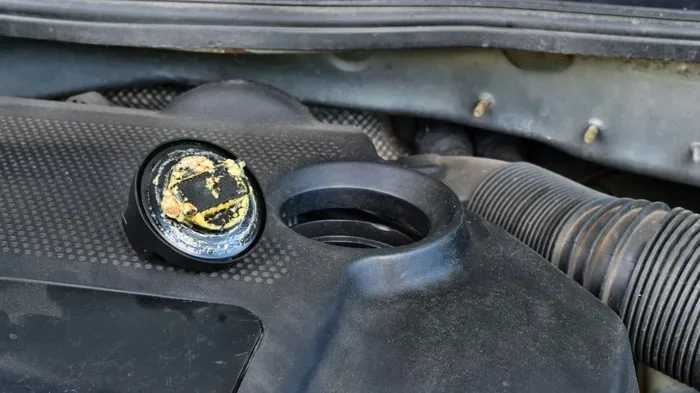
This is the most obvious sign. Pull out your dipstick and look at the oil. Healthy oil should be amber or brown and translucent. If it looks like a chocolate milkshake or has a frothy, creamy texture, water has entered your oil system. This is sometimes called milky oil, and it is a clear red flag.
Oil Slick on Top of the Coolant
Open your coolant reservoir and look for a rainbow-colored film on the surface of the coolant. This oil in coolant reservoir situation happens when oil leaks into the cooling system. Even a small amount creates a visible sheen that is easy to spot.
White Smoke From the Exhaust
Thin white vapor on cold mornings is normal. But if you see thick white smoke that smells sweet and does not go away after the engine warms up, coolant is likely burning in the combustion chamber. This is one of the most common signs of a head gasket failure.
Coolant Loss Without Visible Leaks
If you keep topping off your coolant but cannot find any external leaks, the coolant may be going somewhere it should not be. It could be leaking into the oil system, the combustion chamber, or even leaking externally in a hidden spot. Either way, unexplained coolant loss needs investigation.
Engine Overheating
When coolant mixes with oil, the cooling system loses its effectiveness. The oil in water in car situation reduces the coolant volume and disrupts heat transfer. Your temperature gauge may start climbing, especially under load or in stop-and-go traffic.
Diagnosing the Problem: What to Check
You do not need to be a professional mechanic to start diagnosing the issue. A few simple checks can point you in the right direction.
The Coolant Pressure Test
A mechanic can pressurize the cooling system and check for internal leaks. If the pressure drops and there is no external leak, the problem is likely internal. This test confirms that coolant is escaping into the oil system or combustion chambers.
The Combustion Leak Test
Also called a block test, this uses a special fluid that changes color when it contacts exhaust gases in the coolant. If the fluid turns yellow or green, combustion gases are present in the cooling system. This is strong evidence of a head gasket leak or cracked head.
Oil and Coolant Fluid Analysis
Some shops offer lab analysis of your fluids. They can detect trace amounts of coolant in your oil and oil in your coolant even before visible symptoms appear. This is a great proactive step, especially for high-mileage vehicles.
Visual Inspection of the Oil Filter and Oil Pan
Drain your oil and inspect the oil filter and oil pan for any signs of coolant contamination. If you see a milky residue or a milky brown layer at the bottom of the oil pan, water has definitely entered the oil system.
Repair Options and Costs
The repair you need depends entirely on what is causing the oil and water to mix. Here is a breakdown of the most common fixes and what they typically cost.
| Repair | Estimated Cost Range | Difficulty Level |
|---|---|---|
| Head gasket replacement | $1,000 – $2,500 | Moderate to High |
| Oil cooler replacement | $300 – $800 | Low to Moderate |
| Cylinder head repair or replacement | $1,500 – $3,500 | High |
| Engine block repair or replacement | $3,000 – $7,000+ | Very High |
| Full engine replacement | $4,000 – $8,000+ | Very High |
As you can see, the cost ranges widely depending on the root cause. A head gasket replacement is expensive but far less costly than replacing a cracked engine block. This is exactly why early diagnosis matters so much.
Can You Drive with Oil in the Coolant?
The short answer is no. Even if the car seems to run fine, driving with oil in water in car systems will cause progressive damage. The emulsified mixture does not lubricate properly, and the coolant cannot cool effectively. Over time, this leads to increased wear, overheating, and potentially catastrophic engine failure.
If you notice any of the symptoms we discussed, have the vehicle towed to a shop if needed. It is not worth risking a complete engine breakdown on the highway.
Prevention Tips to Avoid Oil and Water Mixing
The best way to deal with oil in water problems is to prevent them from happening in the first place. Here are some practical steps you can take.
- Monitor your coolant levels regularly. A sudden drop in coolant is often the first sign of an internal leak.
- Check your oil color and consistency often. A quick dipstick check takes seconds and can catch problems early.
- Never ignore engine overheating. Even a single overheating event can damage your head gasket.
- Keep up with scheduled maintenance. Regular oil changes and coolant flushes keep both systems healthy.
- Use quality fluids and parts. Cheap coolant or aftermarket gaskets may fail prematurely.
- Watch your temperature gauge. If it creeps up, pull over and let the engine cool before continuing.
Taking these simple precautions can extend the life of your engine and save you from expensive repairs down the road.
Expert Insights: What Mechanics Wish Car Owners Knew
Experienced mechanics see the results of neglected oil and coolant issues every day. Here is what they want you to know.
One overheating episode can start a chain reaction. Many car owners think a single overheat event is no big deal if the car cools down. But the truth is that heat damage to a head gasket can begin immediately. The gasket material warps, and even after the engine cools, it may never seal properly again.
Milky oil does not always mean a head gasket. Some people see milky oil and immediately assume the worst. In reality, condensation can build up in the oil if you only take short trips in cold weather. However, if the milky appearance does not clear up after the engine reaches full operating temperature, you should get it checked by a professional.
Flushing both systems is essential after any repair. If you replace a head gasket or oil cooler, make sure the mechanic flushes the entire oil and coolant system. Old contaminated fluid left behind can damage the new parts and reduce their lifespan.
Key Takeaways
- Oil mixing with water in your engine is always a sign of a failed seal or crack.
- A blown head gasket is the most common culprit behind oil in coolant and coolant in oil.
- Symptoms include milky oil, white exhaust smoke, coolant loss, and engine overheating.
- Ignoring the problem leads to severe engine damage and expensive repairs.
- Early diagnosis through pressure tests and fluid analysis can save you thousands.
- Regular maintenance and fluid monitoring are your best defenses against this problem.
Conclusion
Finding oil in water in your car engine is never something to brush off. Whether it is a small head gasket seep or a major crack in the engine block, the mixing of oil and coolant is a clear sign that something inside your engine has gone wrong. The fluids are supposed to stay in their own separate worlds, and when they cross over, the results can be devastating.
The good news is that you do not have to face this problem blind. Now you know the common causes, the symptoms to watch for, and the diagnostic steps you can take. You also understand the repair options and the importance of acting quickly.
Do not wait for the problem to get worse. If you suspect oil and water are mixing in your engine, get it inspected as soon as possible. A timely repair today can save you from a complete engine replacement tomorrow. Your engine works hard for you every day. Give it the care and attention it deserves.
Frequently Asked Questions
Can a small amount of oil in coolant cause damage?
Yes, even a small amount of oil contamination in your coolant can cause damage over time. The oil reduces the coolant’s ability to transfer heat, which can lead to hot spots and localized overheating. It is always better to address the issue immediately, no matter how small it seems.
How much does it cost to fix oil in water in a car engine?
The cost depends on the root cause. A head gasket replacement typically costs between $1,000 and $2,500. A leaking oil cooler is much cheaper at $300 to $800. A cracked engine block or full engine replacement can cost $3,000 to $8,000 or more. Getting an accurate diagnosis first is the best way to avoid surprises.
Is it safe to drive if I notice white smoke from the exhaust?
It is not recommended. Thick white smoke that smells sweet usually means coolant is burning in the combustion chamber, which is a sign of a blown head gasket or cracked head. Continuing to drive can cause further engine damage. Have the vehicle towed to a repair shop instead.
Can I fix oil in coolant myself at home?
Some minor oil cooler leaks can be handled by a skilled DIYer, but most causes of oil mixing with coolant require professional tools and expertise. The cooling system must be properly flushed, and the root cause must be diagnosed with specialized equipment like a block tester or pressure tester.
What is the difference between oil in coolant and coolant in oil?
Both situations mean the same thing: the barrier between the oil and coolant systems has failed. Oil in coolant usually shows as an oily film on top of the coolant in the reservoir. Coolant in oil shows as a milky, frothy substance on the dipstick or under the oil cap. Both indicate the same type of internal leak.
How can I prevent oil and water from mixing in my engine?
The best prevention is regular maintenance. Check your coolant and oil levels often, never ignore signs of engine overheating, and use quality fluids and parts. Keeping up with scheduled services like coolant flushes and oil changes helps your engine stay healthy and prevents the seals and gaskets from failing prematurely.